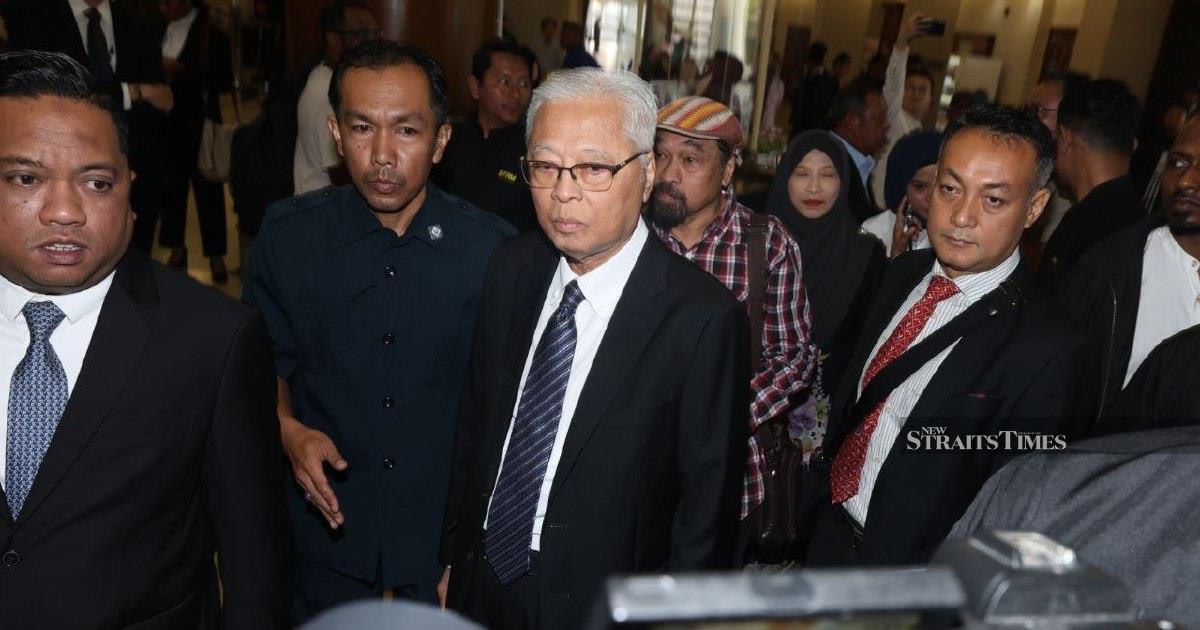
Datuk Seri Ismail Sabri Yaakob, who served as Malaysia's prime minister from 2021 to 2022, has been released from court custody following the posting of a RM300,000 bail by his son. The former leader left the Kuala Lumpur court complex after the bail arrangement was finalised, marking a significant moment in what has become an increasingly scrutinised period surrounding his political and legal circumstances.
The bail posting represents a pivotal development in proceedings that have drawn considerable attention from Malaysian observers and political commentators. The involvement of family members in securing bail highlights the personal dimensions of ongoing legal matters affecting senior figures within Malaysia's political establishment. The sum of RM300,000 underscores the gravity with which judicial authorities view the situation, even as it remains within acceptable parameters for an individual of Ismail Sabri's former stature.
Ismail Sabri's tenure as prime minister, though relatively brief, proved consequential for Malaysian politics. He assumed office in August 2021 following Muhyiddin Yassin's resignation, inheriting a government navigating the complexities of the COVID-19 pandemic, economic recovery efforts, and fractious coalition politics. During his fourteen-month administration, he managed to consolidate governmental stability by securing support from the opposition People's Alliance coalition, an unprecedented step that stabilised the cabinet but inevitably attracted scrutiny regarding political motivations.
The exit from the Kuala Lumpur court complex comes at a time when Malaysia's political landscape continues absorbing the reverberations of the previous administration's decisions and their consequences. The judicial process surrounding Ismail Sabri reflects broader accountability mechanisms operating within Malaysia's system of governance, where figures at the highest echelons increasingly face legal examination related to their conduct whilst in office or subsequent to their departure from power.
Family support during legal proceedings remains culturally significant within Malaysian society and demonstrates the mobilisation of personal resources to navigate institutional challenges. The immediate posting of bail by his son rather than through alternative financial arrangements suggests the family's commitment to securing his prompt release and maintaining continuity in his personal and professional affairs during this demanding period.
The bail conditions and their implications will likely dominate political discourse in coming weeks, particularly among Umno party members and coalition partners seeking to interpret developments and their ramifications for the party's broader positioning. Ismail Sabri maintains substantial influence within Umno's organisational structure and retains considerable grassroots support, elements that complicate any narrative regarding his current circumstances.
Malaysian legal observers note that bail procedures in cases involving former senior government officials frequently attract heightened media attention and public interest, reflecting democratic societies' investment in ensuring no individual, regardless of former position, remains beyond judicial scrutiny. The transparency of court proceedings and public accessibility to information regarding bail arrangements reinforce institutional legitimacy even amid politically sensitive circumstances.
The departure from court marks the conclusion of a specific procedural phase rather than resolution of underlying matters. The bail arrangements establish parameters for Ismail Sabri's conduct and movements whilst legal processes continue their course through Malaysia's judicial system. These conditions typically incorporate provisions regarding reporting obligations, travel restrictions, and other safeguards designed to ensure compliance and appearance before the courts for subsequent proceedings.
Observers within Umno and across Malaysia's political spectrum will monitor developments closely, recognising that outcomes of these legal proceedings may carry implications extending beyond individual consequences to encompass broader questions regarding accountability, governance standards, and institutional credibility. The case exemplifies recurring tensions within Malaysia between political stability considerations and demands for rigorous adherence to rule-of-law principles.
The RM300,000 bail posted by Ismail Sabri's son facilitates his return to everyday activities whilst guaranteeing his availability for future court appearances and required procedures. His departure from the court complex therefore represents not a conclusion but rather a transition toward the next phase of what promises to remain a closely watched chapter in Malaysia's contemporary political and legal history.

