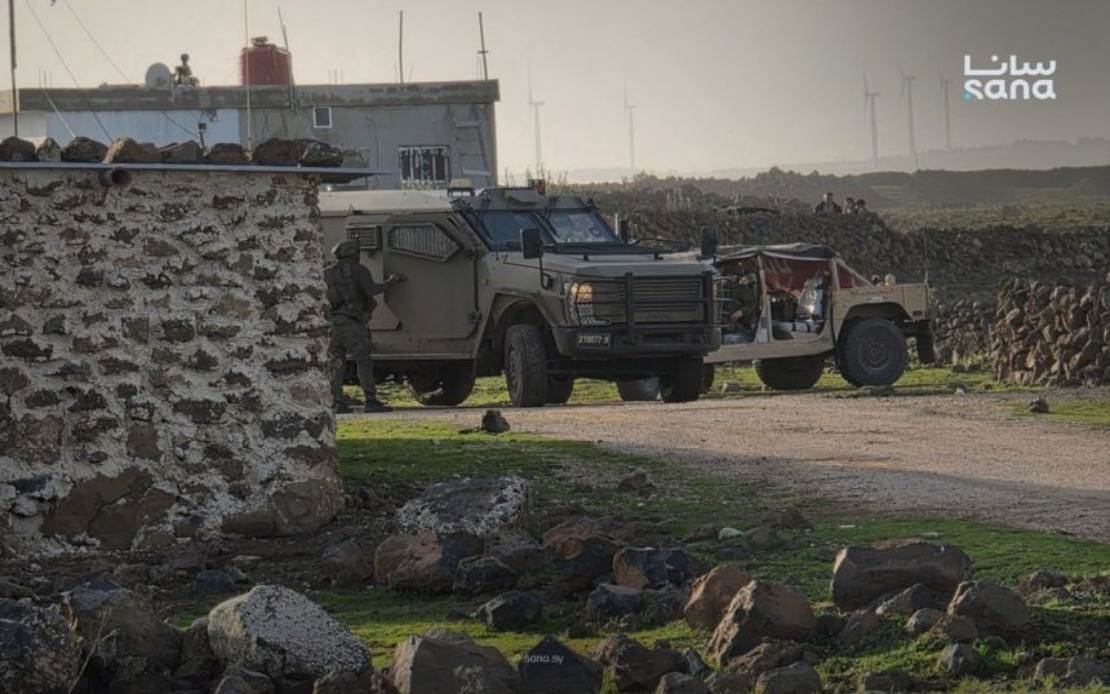
An Israeli military contingent comprising six vehicles penetrated Syrian territory in the southwestern Quneitra province on Saturday, according to reports from the Syrian Arab News Agency. The operation included not only ground forces but also unmanned aerial systems conducting surveillance or strike operations over the affected area. Syrian officials said the vehicles advanced specifically toward the Kudna Dam located in central Quneitra's countryside, raising concerns about Israeli intentions regarding critical civilian infrastructure in the region.
This latest incursion represents another chapter in an escalating pattern of military activity by Israel in Syria's south following the dramatic geopolitical shift in Damascus. When Bashar al-Assad's government collapsed in December 2024 after years of civil conflict, the regional security architecture shifted fundamentally. Israel subsequently declared the 1974 disengagement agreement null and void, freeing itself from the constraints of that Cold War-era accord that had governed Israeli-Syrian military interactions for half a century.
For Malaysian observers of Middle Eastern affairs, these developments carry significant strategic weight. The breakdown of established buffer agreements demonstrates how rapidly diplomatic frameworks can dissolve when governments change, a lesson relevant to any nation managing complex regional security arrangements. The 1974 agreement had maintained a demilitarised zone between Israeli and Syrian forces, enforced by United Nations peacekeepers, providing predictability in an otherwise volatile region. Its unravelling removes institutional constraints and creates space for unilateral military actions.
The frequency and scale of Israeli operations in southern Syria have noticeably accelerated since Assad's fall. During the previous regime, despite periodic tensions, a de facto understanding existed that limited large-scale military escalation. Today, Israeli forces operate with apparent impunity, conducting raids, establishing checkpoints, conducting arrest operations, and searching facilities throughout southern Syria. This represents a fundamental change in operational tempo and scope that signals Israel's determination to reshape security conditions in areas it deems strategically critical.
The timing and location of Saturday's operation warrant particular attention. The Kudna Dam holds significance as civilian infrastructure serving Syria's population. Israeli military interest in such facilities raises questions about broader strategic objectives beyond routine security operations. Whether the operation targeted specific militant assets, intelligence gathering, or represented positioning for future operations remains unclear from public reporting. The involvement of aerial assets suggests reconnaissance, targeting, or strike capabilities were integrated into the ground operation.
Syrian sovereignty erosion under these circumstances creates a vacuum that extends beyond military concerns. The inability or unwillingness of any Syrian authority to contest these violations reflects the collapse of state capacity in the country's south. With Assad's departure and no unified successor government fully controlling all territory, Syria's southwestern regions lack credible indigenous security forces capable of mounting meaningful resistance. This power vacuum invites external actors to fill the space according to their interests.
Regional states monitoring these developments include those with significant stakes in Syria's future. Turkey, which maintains military presence in northern Syria, watches Israeli actions carefully. Neighbouring Lebanon, already destabilised by Israeli operations and Hezbollah activities, faces implications if Israeli operational zones expand. Jordan, which shares borders with Quneitra and hosts thousands of Syrian refugees, must evaluate security implications of intensified Israeli military activity so close to its borders. For Southeast Asian nations with interests in broader Middle Eastern stability, the lesson centres on how quickly regional order can fragment when anchoring agreements collapse.
The Israeli decision to abrogate the 1974 accord reflects a calculated assessment that changed circumstances in Syria now permit more expansive military operations without acceptable diplomatic cost. The international response to Assad's fall has been muted and fragmented, with no unified regional or global coalition emerging to challenge Israeli actions. This absence of coordinated pushback likely emboldened Israeli decision-making regarding deeper military incursions and the formal dissolution of restraining agreements.
Looking forward, the pattern suggests further Israeli operations remain probable. The collapse of state authority in southern Syria creates structural conditions that favour continued external military intervention. Without a functioning central government capable of re-establishing control, reasserting sovereignty, or negotiating new security arrangements, Syria's south faces an indeterminate period of external military presence and operations. The absence of clear international mechanisms for constraining Israeli actions—particularly following the unilateral abrogation of the 1974 agreement—removes institutional brakes on escalation.
For Malaysia and other nations concerned with international law and respect for sovereignty, these events underscore the fragility of agreements dependent on specific political configurations. When governments change, particularly through conflict or collapse rather than negotiated transition, successor regimes may inherit neither the diplomatic frameworks nor the enforcement capacity their predecessors maintained. This dynamic carries lessons extending far beyond Syria's borders, suggesting that sustainable regional security arrangements require deeper foundations than bilateral understandings between particular governments.

