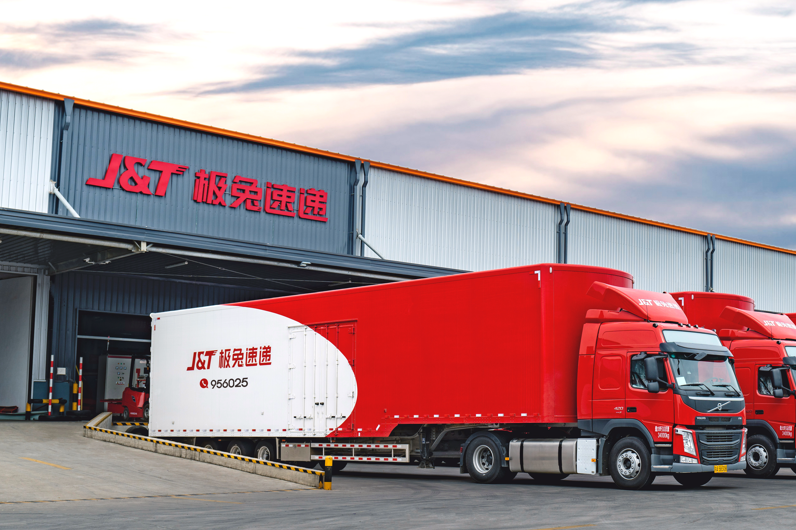
Hong Kong-listed logistics giant J&T Global Express Ltd has reached a historic milestone, processing an average of 100 million parcels daily during the second quarter as its international operations, particularly in Southeast Asia, deliver accelerating returns. The company's Q2 performance signals a fundamental shift in the global logistics landscape, where emerging markets are becoming principal growth engines rather than supplementary revenue streams. For Malaysian businesses and investors, this development carries immediate implications for regional e-commerce competitiveness and supply chain efficiency.
The company's total Q2 parcel throughput reached 9.18 billion units between April and June, representing robust year-on-year growth of 24.2 percent despite intensifying competition and market saturation in its traditional Chinese base. More tellingly, parcels originating outside China surged 66.9 percent to 2.97 billion, now representing nearly a third of J&T's global volume. This composition shift reflects a deliberate strategic reorientation away from dependence on China's domestic market towards diversified geographic revenue sources, reducing vulnerability to regulatory changes or domestic market contraction.
Southeast Asia emerged as the undisputed growth champion during the period, with parcel volume climbing 63.2 percent year-on-year to reach 2.76 billion units in Q2 alone. The region's average daily volume touched 30.3 million parcels, demonstrating that J&T has successfully scaled operations to handle sustained demand from the region's burgeoning e-commerce sector. For the half-year period, Southeast Asian volumes reached 5.52 billion parcels, up 71.2 percent from the corresponding period in 2025, underscoring the region's position as a consistent bright spot in J&T's portfolio. This trajectory reflects underlying demographic shifts, rising digital adoption, and expanding online retail penetration across Malaysia, Indonesia, Thailand, Vietnam, and other regional economies.
J&T's physical infrastructure expansion in Southeast Asia provides concrete evidence of management confidence in long-term regional demand. The company increased its sorting centres by six facilities to 127 across the region by end-June, while simultaneously bolstering automated sorting capacity by adding 11 lines to reach 75 installations. These facilities represent substantial capital commitments, typically yielding returns only if management projects sustained volume growth justifying the expenditure. For Malaysian logistics firms and retailers, this investment signal suggests that international competitors view the regional market as strategically important over a multi-year horizon, intensifying competitive pressure while simultaneously validating market fundamentals.
Within China itself, J&T demonstrated resilience amid evolving competitive conditions by achieving 10.6 percent year-on-year growth in Q2, reaching 6.21 billion parcels despite the market's maturity. The company's domestic average daily volume of 68.2 million parcels reflects continued dominance, though growth rates lag substantially behind the international trajectory. Management's emphasis on optimising network structure and customer composition suggests a pragmatic approach to defending market share through operational efficiency rather than aggressive price competition. The company expanded its Chinese automated sorting infrastructure by eight lines to 346 during the half-year, maintaining technological parity with rivals and supporting productivity improvements.
J&T's expansion into emerging markets beyond Southeast Asia demonstrates a strategy of geographic diversification beyond the region's borders. In Latin America and the Middle East combined, second-quarter parcel volume exploded 136.5 percent year-on-year to 211 million units, though this base remains modest relative to established markets. The company's deepened partnerships with major e-commerce platforms in these regions suggest it is positioning itself as a critical logistics partner for retailers seeking reliable cross-border fulfillment capabilities. This expansion reflects broader patterns of Southeast Asian companies internationalising operations, creating potential opportunities for regional supply chain expertise and emerging market knowledge.
Financial markets have taken notice of J&T's transformation. Morgan Stanley recently elevated its rating to overweight, citing superior growth prospects relative to industry peers, particularly driven by the company's concentrated exposure to high-growth e-commerce markets in Southeast Asia and South America. The investment bank's analysis explicitly highlighted the superior growth potential in regions where J&T maintains substantial operational footprint, suggesting that analyst consensus may be shifting towards rewarding geographic diversification and exposure to emerging markets over reliance on saturated developed economies. For regional investors and fund managers, this institutional validation provides external validation of Southeast Asia's logistics growth trajectory.
The implications for Malaysia's own logistics sector and e-commerce ecosystem merit careful consideration. J&T's aggressive investment in regional infrastructure, coupled with demonstrated volume growth, implies that international consolidation and technological advancement in logistics are accelerating. Malaysian operators face intensifying competition from well-capitalised, technologically advanced competitors with global scale advantages. Simultaneously, the growth in regional volumes validates underlying demand fundamentals, suggesting opportunities remain for specialists focusing on niche services, final-mile delivery, or value-added capabilities that larger players may deprioritise. The regional logistics market is simultaneously becoming more competitive and more sophisticated, requiring Malaysian participants to differentiate through service quality and local market knowledge.
J&T's milestone achievement of 100 million daily parcels represents not merely corporate success but a tangible indicator of how comprehensively e-commerce has penetrated Southeast Asian consumer behaviour and business practices. The company's ability to process, sort, and deliver this volume daily reflects decades of supply chain innovation now deployed across multiple continents simultaneously. For Malaysian businesses participating in cross-border e-commerce, whether as exporters or importers, this infrastructure maturation suggests that logistics no longer represents an insurmountable barrier to international participation. The real competitive battleground is increasingly shifting towards product differentiation, customer service, and brand building rather than operational logistics challenges that incumbents have largely solved.

