The Prime Minister's Department (Religious Affairs) has initiated an investigation into allegations that a JAKIM reference number was misused to validate a marriage document purportedly issued by the Malaysia Rohingya Ulama Council. The controversy emerged after a marriage declaration letter bearing the reference "JAKIM.PERH/LN.800-7(5)" circulated widely across social media platforms, prompting concerns about potential misrepresentation of government authority and the legitimacy of marriage recognition among the Rohingya community in Malaysia.
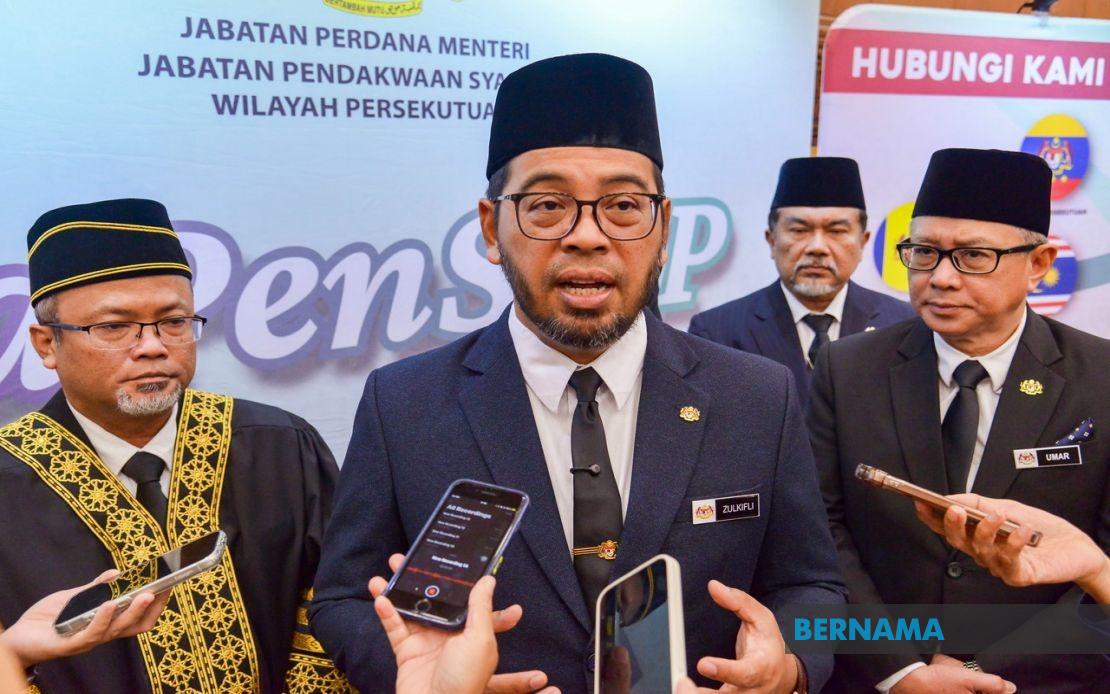
Minister Dr Zulkifli Hasan acknowledged the investigation during remarks made at the second Malaysian Syariah Prosecutors Conference in Putrajaya on July 15, though he noted that his office had not yet compiled comprehensive details about the incident. His cautious approach reflects the sensitivity surrounding issues affecting Malaysia's Rohingya population, estimated at over 180,000 individuals who have sought refuge in the country over decades. The matter touches upon competing jurisdictional authority between federal religious bodies and state-level Islamic departments, a recurring tension in Malaysia's federal system.
The Perak Islamic Religious Department (JAIPk) has explicitly refuted recognition of the disputed document, stating that marriages involving Rohingya individuals cannot be formally registered through existing channels. The department attributed this position to unresolved policy questions that remain under active review among state religious authorities, suggesting that broader institutional frameworks must be established before such registrations become possible. This administrative barrier creates practical complications for Rohingya families seeking legal recognition of their unions under Malaysian law.
The underlying issue points to a fundamental gap in Malaysia's handling of Rohingya civil matters. Rohingya refugees lack the citizenship status that would normally enable straightforward marriage registration through standard government procedures. State religious departments have historically resisted formalizing marriages within this community, partly because doing so implies state recognition of their status within Malaysian territory. The viral circulation of the disputed JAKIM reference number may therefore represent an attempt by community leaders to circumvent these official restrictions by invoking perceived government legitimacy.
Beyond the marriage document controversy, Zulkifli raised parallel concerns about unaccredited religious instruction proliferating across social media platforms. He emphasized that responsibility for regulating religious teaching credentials remains with state governments rather than federal authorities, though the Prime Minister's Department continues examining potential enforcement mechanisms. This distinction highlights Malaysia's constitutional division of powers, whereby Islamic affairs fall largely within state purview, complicating efforts to implement uniform national standards for online religious content.
The minister stressed that his department maintains internal protocols requiring accreditation verification for individuals invited to appear on government-affiliated media or official platforms, reflecting federal efforts to uphold standards within their direct sphere of influence. However, the broader challenge of monitoring thousands of unvetted religious instructors operating across private social media channels remains largely unaddressed. Enforcement officers face significant practical difficulties in tracking and curtailing such activities, particularly when content crosses state boundaries or originates from overseas sources.
Zulkifli underscored the government's commitment to modernizing Syariah law to confront evolving threats, particularly those emerging in digital environments. He advocated for strengthened institutional cooperation among JAKIM, the Malaysian Communications and Multimedia Commission (MCMC), the police (PDRM), and the Attorney General's Chambers to enhance prosecution effectiveness and Syariah enforcement capacity. This multi-agency approach acknowledges that religious crimes now frequently involve cybercrime components that transcend traditional jurisdictional boundaries.
Syariah prosecutors must develop sophisticated technical capabilities to effectively investigate and prosecute modern offences, Zulkifli argued, identifying digital forensics, data analysis, and technology proficiency as critical skill areas. This recognition reflects global trends whereby criminal justice systems increasingly rely on digital evidence and technical expertise. Malaysian Syariah courts, historically oriented toward traditional jurisprudential methods, require institutional investment in personnel training and technological infrastructure to remain operationally effective as criminal methodologies evolve.
The Rohingya marriage document investigation occurs against a backdrop of broader questions about how Malaysia manages civil matters for stateless populations. The country hosts one of Southeast Asia's largest Rohingya populations, yet policies governing their basic social transactions—including marriage, inheritance, and family law—remain fragmented and inconsistent across jurisdictions. Resolving the immediate matter of the disputed JAKIM reference number requires clarifying not merely whether specific documents are authentic, but whether and how Malaysian authorities will establish formal pathways for registering Rohingya marriages and other civil transactions.
Federal and state authorities must ultimately determine whether current restrictions on Rohingya marriage registration serve legitimate policy objectives or whether alternative administrative arrangements could accommodate community needs while preserving government control over legal documentation. The viral spread of the disputed document suggests that absent official channels, community members will attempt to create informal alternatives. Policy clarity from Malaysian religious authorities—whether permitting or explicitly prohibiting such registrations—would likely reduce both the incentive to forge government reference numbers and the broader uncertainty affecting Rohingya families seeking legal recognition of their personal status.

