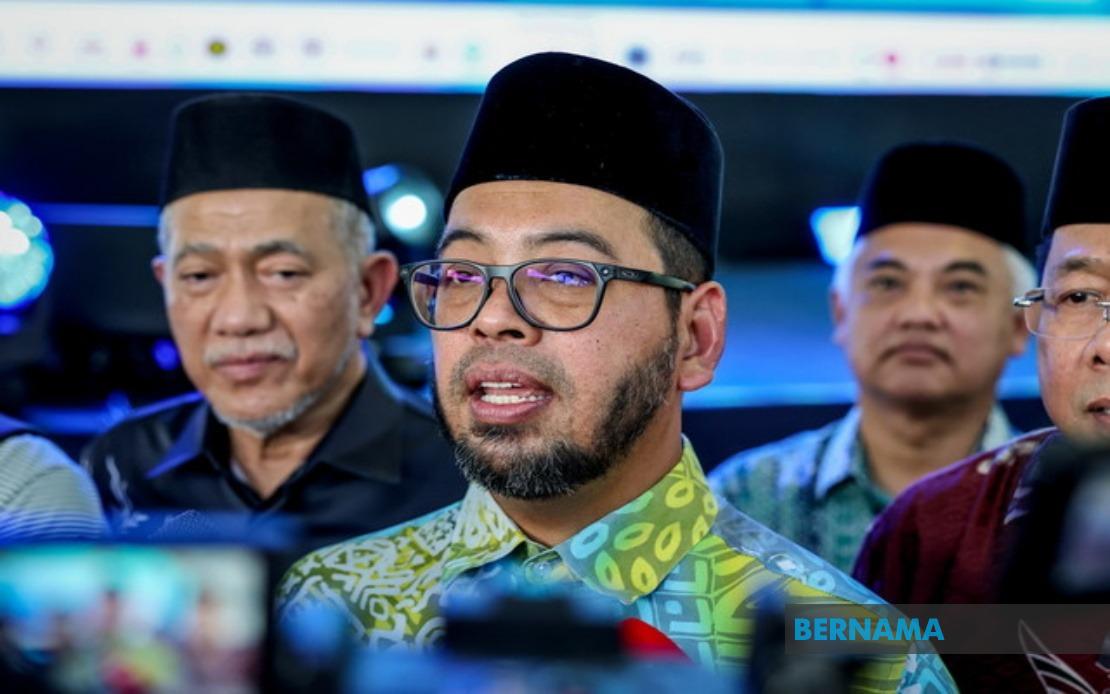
The Department of Islamic Development Malaysia (JAKIM) is moving to establish unified funeral management protocols nationwide, prompted by a controversy that recently circulated widely on social media. Religious Affairs Minister Dr Zulkifli Hasan disclosed the initiative while addressing the Multaqa MADANI Ulama and Umara Programme for the Northern Zone at Masjid Timah, Permatang Pauh, signalling the government's commitment to standardising Islamic funeral practices across the country.
While several Malaysian states have already implemented their own funeral guidelines, JAKIM has identified significant gaps and inconsistencies that warrant a more cohesive national framework. The agency recognises that existing protocols, though established in some jurisdictions, require substantial refinement to meet contemporary challenges and diverse regional circumstances. This represents a deliberate effort to move beyond fragmented, state-by-state approaches towards a unified reference document that funeral management stakeholders can rely upon consistently.
Dr Zulkifli emphasised that the development process incorporates both contemporary funeral management requirements and existing state legislation. Rather than imposing a one-size-fits-all solution, JAKIM's approach acknowledges the constitutional autonomy of individual states in religious matters while seeking to harmonise standards where feasible. This delicate balancing act reflects Malaysia's federal structure, where Islamic affairs remain partially devolved despite the need for national coordination on significant issues affecting Muslim communities.
The minister indicated that the finalisation timeline should not extend significantly, since foundational guidelines already exist in various forms. The refinement work essentially involves consolidating best practices, resolving conflicting provisions across state regulations, and enhancing clarity on contentious procedures. Nevertheless, JAKIM remains committed to ensuring that the final guidelines fully comply with each state's legal framework, a requirement that may necessitate careful negotiations with state religious authorities.
The immediate catalyst for this standardisation effort was a burial delay controversy in Selangor involving Masjid Nurul Hidayah in Kampung Pandan Dalam. Allegations emerged regarding postponed interment procedures at Ukay Perdana Muslim Cemetery in Hulu Kelang, an incident that generated substantial public concern and online discussion. Rather than centralising the response, Dr Zulkifli deferred the specific matter to Selangor's dedicated religious bodies—the Selangor Islamic Religious Department (JAIS) and the Selangor Islamic Religious Council (MAIS)—reflecting appropriate institutional divisions of responsibility.
MAIS chairman Datuk Salehuddin Saidin convened an urgent meeting bringing together the deceased's family members, Masjid Nurul Hidayah management, the Badan Kebajikan Salatulrahim welfare body, and JAIS representatives. This collaborative approach aimed to identify practical solutions satisfactory to all stakeholders while simultaneously establishing safeguards against similar occurrences. The emphasis on dialogue and mutual problem-solving rather than punitive measures demonstrates the authorities' intent to strengthen the system through consensus-building.
The funeral delay incident underscores deeper systemic vulnerabilities affecting Islamic burial administration in Malaysia. Delays can stem from administrative bottlenecks, insufficient coordination between religious authorities and cemetery management, unclear procedures regarding documentation verification, or resource constraints. For grieving families already experiencing considerable emotional distress, bureaucratic delays intensify suffering and occasionally generate public anger. The standardised guidelines being developed should address these pain points by establishing transparent timelines and unambiguous protocols.
For Malaysian Muslims and their families, these new guidelines carry substantial practical implications. A comprehensive national reference framework would clarify procedural expectations, reduce uncertainty, and accelerate the burial process—outcomes particularly valuable in a pluralistic country where funeral practices must be expedited in accordance with Islamic traditions. Standardisation also protects vulnerable populations from inconsistent treatment based on geographical location or institutional capacity variations.
Dr Zulkifli's call for calm and collaborative resolution reflects broader governance philosophy regarding sensitive religious matters in Malaysia's diverse society. Rather than allowing viral controversies to escalate divisions, the authorities framed the incident as an opportunity for systematic improvement. This pragmatic response prioritises institutional learning and preventive design over reactive blame-assignment, positioning the eventual guidelines as a positive outcome emerging from genuine problems identified by the community.
The standardisation initiative also carries implications for federal-state coordination in Islamic affairs governance. While Islam remains a state matter constitutionally, JAKIM's coordinating role can facilitate information-sharing, capacity-building, and harmonisation of best practices without infringing on state autonomy. This model, if successfully implemented, could serve as a template for addressing other pan-Malaysian Islamic issues requiring consistency while respecting federalism.
Regionally, Malaysia's approach to standardising funeral practices reflects broader Southeast Asian dynamics around Islamic governance. As Muslim-majority nations increasingly confront rapid urbanisation, migration, and social change affecting traditional practices, systematic modernisation of administrative procedures becomes essential. The Malaysian experience may offer instructive insights for neighbouring countries navigating similar challenges.
Stakeholders including funeral directors, cemetery administrators, mosque officials, and religious scholars will likely participate in the guideline consultation process. Their practical expertise will prove invaluable in crafting protocols that balance Islamic requirements with operational feasibility. The involvement of multiple institutional perspectives should generate guidelines that are simultaneously religiously sound and administratively implementable.

