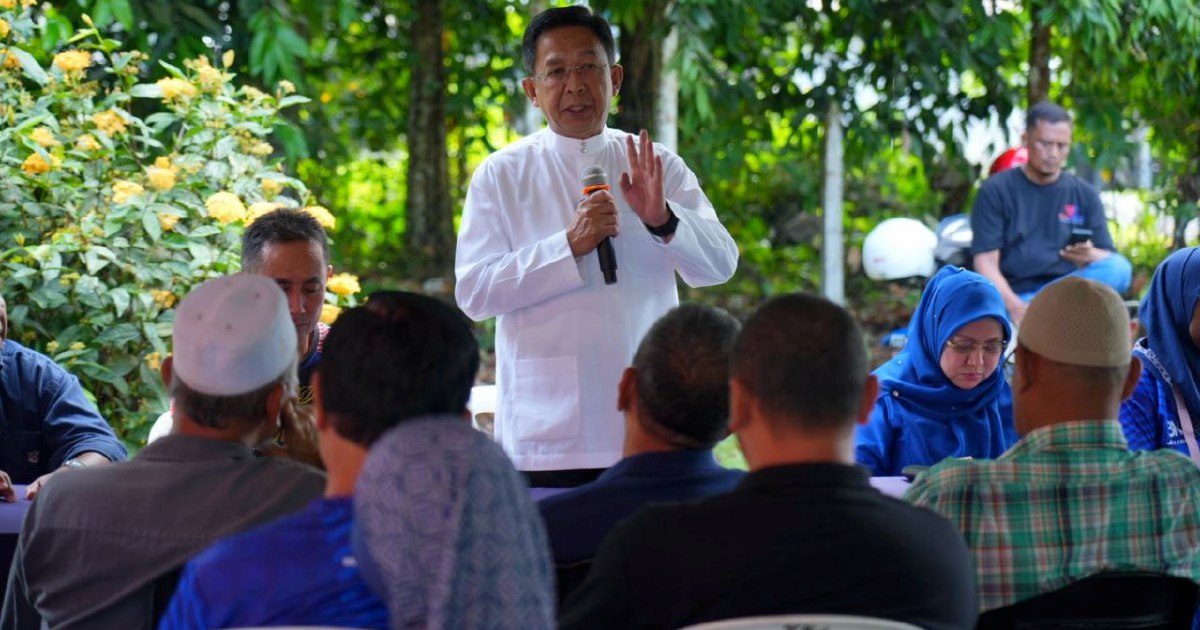
Negri Sembilan's political landscape has shifted into sharp focus with Perikatan Nasional signalling its preference for potential leadership ahead of the state election scheduled for August 1. The coalition, working in tandem with Barisan Nasional, has positioned Negri Sembilan Umno chairman Datuk Seri Jalaluddin Alias among its leading candidates for the menteri besar position, according to comments made by PN officials during a campaign visit to Jelebu.
The nomination of Jalaluddin represents a calculated move within the broader PN-BN partnership framework. By publicly acknowledging his credentials at this juncture, PN leadership is seeking to consolidate grassroots support while simultaneously signalling stability and continuity should the coalition secure victory. Jalaluddin's profile as Umno's state chairman carries particular weight given Umno's historical dominance in Negri Sembilan politics, a factor that could prove decisive in attracting swing voters concerned about governance competence.
The August 1 election carries significance beyond Negri Sembilan's borders. As one of Malaysia's smaller states in terms of population and assembly seats, Negri Sembilan frequently serves as a barometer for broader coalitional shifts within the country. The outcome will test the durability of the PN-BN understanding, a partnership that has reshaped Malaysian politics since the 2022 general election. Success here could reinforce the coalition's viability ahead of potential national political developments, while setbacks might encourage rival blocs to reassess their strategies.
Jalaluddin's emergence as a frontrunner reflects the intricate negotiations that characterise contemporary Malaysian state politics. Rather than appearing as an outsider or compromise candidate, his positioning suggests consensus among PN and BN components regarding suitable leadership for the state. This approach contrasts with the fractious state elections in other regions, where internal coalition disagreements have occasionally undermined unified campaign messaging and voter confidence.
The reference to Jalaluddin as "among potential" candidates rather than the sole nominee preserves flexibility for coalition negotiators. In Malaysian politics, such carefully calibrated language often signals that final determinations remain subject to electoral outcomes and post-election calculations. Should the coalition perform exceptionally strongly, leverage for various factions to assert additional demands could increase, potentially complicating the transition to a new state administration.
For Negri Sembilan voters, the election presents a choice between continuity and alternative visions for state development. Jalaluddin's nomination anchors the PN-BN campaign around existing governance frameworks and developmental trajectories. The coalition's emphasis on his Umno credentials may appeal to traditionally-minded constituencies while potentially alienating younger, urban-oriented voters seeking more reformist approaches to governance and development priorities.
The coalition's strategy reflects confidence in its electoral machinery and organisational capacity across Negri Sembilan's constituencies. By frontloading the menteri besar question weeks before voters cast their ballots, PN and BN aim to shape electoral narratives around competent administration rather than protest votes or personality-driven contests. This calculated approach contrasts with opposition strategies that often materialise only after voting concludes.
For Malaysian political observers, the Negri Sembilan contest illuminates broader patterns within both PN and BN organisations. The apparent consensus around Jalaluddin's candidacy suggests functional coordination between the two coalitions at the state level, despite occasional tensions at the national stage. Such pragmatic cooperation underpins the PN-BN arrangement's durability, even when individual parties or personalities clash over specific issues or policy priorities.
The implications extend to Negri Sembilan's development trajectory. Leadership changes typically trigger shifts in priority-setting for infrastructure investment, industrial policies, and resource allocation across districts. Jalaluddin's tenure would likely emphasise continuity with established patterns while potentially introducing incremental reforms reflecting his personal governance philosophy and policy preferences. Stakeholders in sectors ranging from plantation agriculture to manufacturing closely monitor leadership transitions for signals regarding regulatory environments and business facilitation measures.
Regional considerations also factor into the election's significance. Negri Sembilan's proximity to Kuala Lumpur and Selangor positions it within Malaysia's economic heartland, making state-level governance decisions consequential for broader Klang Valley dynamics. Any menteri besar must balance localist concerns against integration imperatives within the wider metropolitan region, a challenge that will test Jalaluddin's administrative acumen should he assume office.
The coalition's early positioning of Jalaluddin addresses potential opposition strategies targeting leadership uncertainty or governance gaps. By establishing clear succession prospects before election day, PN and BN forestall narratives suggesting political chaos or institutional breakdown following a coalition victory. This proactive approach reflects lessons learned from previous state elections where ambiguity over post-election arrangements undermined voter confidence in victor coalitions.
As the August 1 date approaches, Jalaluddin and other potential candidates will undergo increasing scrutiny regarding their policy platforms, constituency relationships, and administrative records. Voters will assess whether articulated visions for state development align with their expectations and priorities. The menteri besar question thus serves as a focal point for broader conversations about governance direction, resource distribution, and Negri Sembilan's role within Malaysia's evolving political economy.

