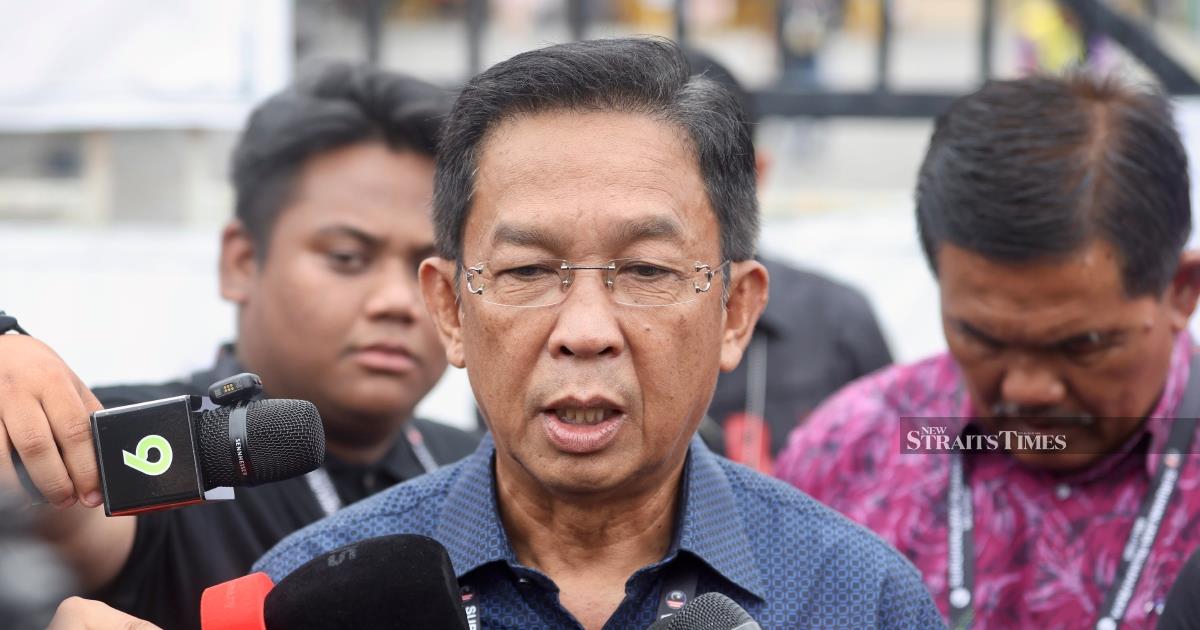
Negri Sembilan Umno Liaison Committee chairman Datuk Seri Jalaluddin Alias has moved to clarify circumstances surrounding his non-appearance at the menteri besar swearing-in ceremony held at Istana Besar Seri Menanti yesterday, attributing the absence to last-minute notification of the proceedings.
The explanation comes as the state navigates transitions in its political leadership, with the ceremony itself marking a significant milestone in Negri Sembilan's administrative calendar. Such formal occasions typically draw prominent state-level political figures and party representatives, making the absence of a senior Umno office-holder noteworthy enough to warrant public elucidation.
Jalaluddin's position as chairman of the Negri Sembilan Umno Liaison Committee places him among the party's hierarchy at state level, responsible for coordinating Umno's activities and representation across the state's political apparatus. His attendance at ceremonial functions involving state administration would ordinarily be expected, particularly for occasions as formal as a menteri besar swearing-in, which establishes the democratic legitimacy of the state's chief administrator.
The issue of advance notification to key political stakeholders reflects broader questions about coordination between the palace, state government, and party structures during transitional periods. In Malaysian politics, such ceremonies often involve intricate protocol and timing considerations involving multiple institutions—the Dewan Rakyat Negri Sembilan, the Sultan's office, and party leadership. The adequacy of notice periods to relevant parties becomes particularly important when high-profile attendees must arrange their schedules around confirmed engagements.
Negri Sembilan's political landscape has undergone notable shifts in recent years, with questions of governmental stability and leadership sometimes creating uncertainty about the precise timing of administrative transitions. When decisive political developments occur rapidly, the coordination machinery that normally ensures widespread awareness of ceremonial dates may sometimes face challenges, particularly if decisions involving the palace are finalised shortly before announcement.
Jalaluddin's clarification suggests that those responsible for event coordination either provided insufficient lead time to the Umno organisation, or that communication channels between the palace and party headquarters did not function with complete efficiency on this occasion. Such explanations are not uncommon in Malaysian political life, where competing demands on senior figures' time can necessitate rapid schedule adjustments.
The nature of the clarification also carries implications for how Umno manages its public image during moments when party representatives cannot attend state ceremonial functions. By proactively addressing the absence, Jalaluddin demonstrates awareness that such no-shows at significant state occasions can generate speculation or negative commentary if left unexamined. The statement serves to close off potential interpretations that might cast Umno's engagement with state institutions in an unfavourable light.
For observers of Negri Sembilan politics and the broader Malaysian federation, such incidents offer insight into the operational mechanics of how state-level political organisations coordinate with constitutional authorities. The incident underscores the reality that even formally scheduled events sometimes operate within compressed timeframes that can catch even senior political figures off-guard, despite their typically well-managed calendars.
The episode also reflects how transparency and rapid response to public queries has become increasingly important in Malaysian political communication. Rather than allowing questions to persist about his absence, Jalaluddin moved to provide explanation that attributes the situation to external logistical factors rather than any deliberate distance from the proceedings. This approach generally works to preserve the appearance of institutional harmony and cooperation across Negri Sembilan's political ecosystem.
Going forward, the incident may serve as a reminder to state administrations and palace officials that sufficient notification periods to party liaison bodies would enhance the visibility and symbolic unity of major ceremonial occasions. When key stakeholders receive adequate advance warning, their presence can be assured, strengthening the public narrative around significant governance transitions and the legitimacy of state leadership.
Jalaluddin's statement ultimately normalises what might otherwise have prompted speculation about Umno's relationship to the new administration or suggestions of political tension within the state's ruling structure. By attributing the absence to circumstance rather than substance, the clarification seeks to ensure the focus remains on the ceremony's constitutional significance rather than on questions about party representation or institutional discord.

