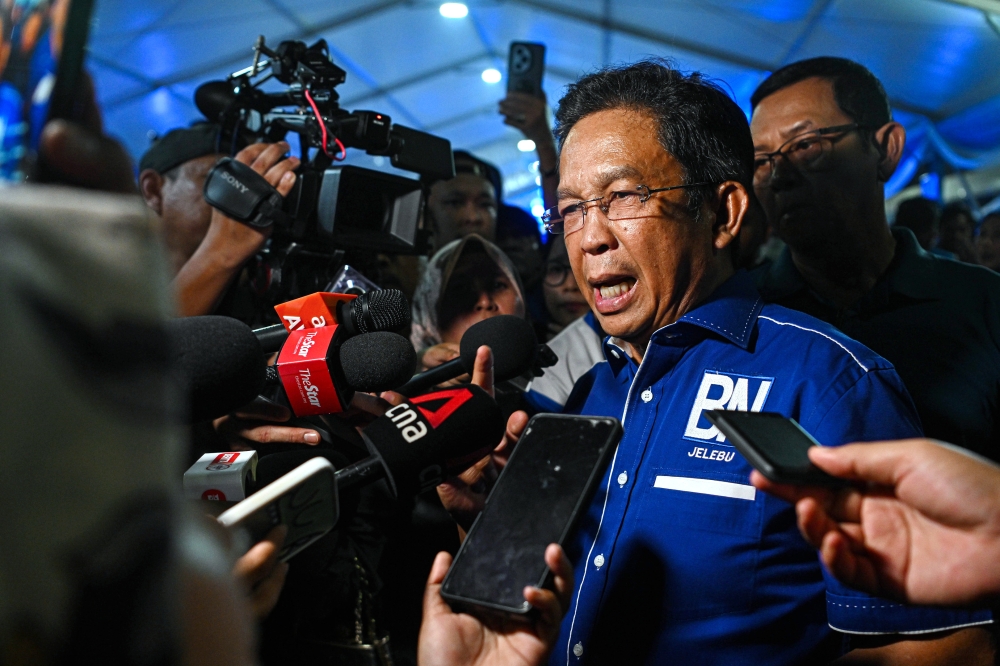
In a move reflecting the evolving coalition dynamics ahead of potential state elections, Negeri Sembilan Umno chief Datuk Jalaluddin Alias voiced his appreciation for Perikatan Nasional's strategic backing, acknowledging their willingness to defer leadership of the state to Barisan Nasional should the broader electoral alliance achieve victory. The gesture represents a calculated balancing act within Malaysia's increasingly complex political landscape, where smaller coalitions must negotiate their roles within larger alliances to maintain voter confidence while securing meaningful positions.
The statement, made in Jelebu, underscores the intricate power-sharing arrangements now characteristic of Malaysian politics following the 2022 general election. Rather than competing directly for dominance, these political blocs have begun adopting more collaborative frameworks, though such arrangements remain subject to shifting internal pressures and competing ambitions. For Negeri Sembilan specifically, the confirmation signals a structured approach to leadership succession that could stabilise governance structures following any electoral transition.
Jalaluddin's public acknowledgment serves multiple strategic purposes within the Umno hierarchy. First, it validates the negotiating capability of state-level party leadership, demonstrating their ability to secure favourable terms within broader coalition discussions. Second, it provides reassurance to Umno grassroots members who feared marginalisation within a fragmented political landscape. Third, it establishes clear expectations about institutional hierarchies, reducing ambiguity that might otherwise create post-election complications or factional disputes.
Perikatan Nasional's concession carries its own significance for Malaysian observers. The coalition has consistently sought to position itself as a credible governing alternative, yet its numerical strength often requires partnerships with established parties like Umno. By voluntarily accepting a subordinate role in Negeri Sembilan rather than demanding co-leadership or rotation arrangements, Perikatan appears willing to consolidate power in states where it holds stronger positions whilst accepting supporting roles elsewhere. This pragmatism suggests maturation within the coalition's strategic thinking.
The Negeri Sembilan context carries particular weight in national calculations. As a moderate-sized state economically and demographically, control of its state apparatus influences resource distribution, patronage networks, and symbolic political authority. Umno's historical stronghold status in the state would be reinforced through formal recognition of leadership prerogatives, yet the requirement for alliance support demonstrates that unilateral dominance has become impossible in contemporary Malaysian electoral mathematics.
For Malaysian voters and observers, such arrangements raise important questions about democratic accountability and transparency in coalition negotiations. Backroom agreements determining leadership succession before elections occur have long characterised Malaysian politics, yet their formalisation and public acknowledgment in this instance suggests shifting attitudes toward political transparency. Whether this represents genuine institutional reform or merely different presentation strategies remains subject to interpretation.
The broader implications extend beyond Negeri Sembilan's borders. As Malaysia approaches potential elections at both state and federal levels, similar negotiations are likely occurring across multiple states and political blocs. The established precedent that larger coalitions will negotiate specific leadership roles for component parties could become standard practice, potentially stabilising coalition governance whilst simultaneously restricting voter choice regarding executive leadership. Such developments typically favour established parties with strong organisational infrastructure, potentially deepening competitive advantages for Umno and similar establishment forces.
Perikatan Nasional's emergence as a significant political force over recent years has fundamentally altered negotiation dynamics across Malaysian politics. Previously, smaller partners had limited leverage; now, coalitions actively compete for these partners' support. This evolution has paradoxically strengthened institutional party leaders like Jalaluddin whilst constraining grassroots democratic processes. Members of larger coalitions increasingly exercise influence through elite-level negotiations rather than competitive democratic processes.
Jalaluddin's gratitude also reflects standard diplomatic practice within Malaysian political networks. Public recognition of partners' contributions, even when arrangements are widely understood, reinforces relationship stability and reduces possibilities of acrimonious disputes. Such performances of appreciation cost little whilst generating tangible benefits for relationship maintenance. In Malaysian political culture, where personal relationships and reciprocal obligations significantly influence institutional behaviour, such public gestures carry meaningful weight beyond their surface rhetoric.
Looking forward, Negeri Sembilan's political trajectory will reveal whether such pre-arranged leadership frameworks actually facilitate stable governance or merely defer contentious power struggles to post-election periods. Should electoral results substantially diverge from current expectations, or should internal coalition tensions escalate, the written commitments and public statements like Jalaluddin's could either stabilise arrangements or become sources of conflict. For Malaysian observers monitoring democratic health and institutional development, these emerging practices warrant sustained attention as potential indicators of broader governance trends.

