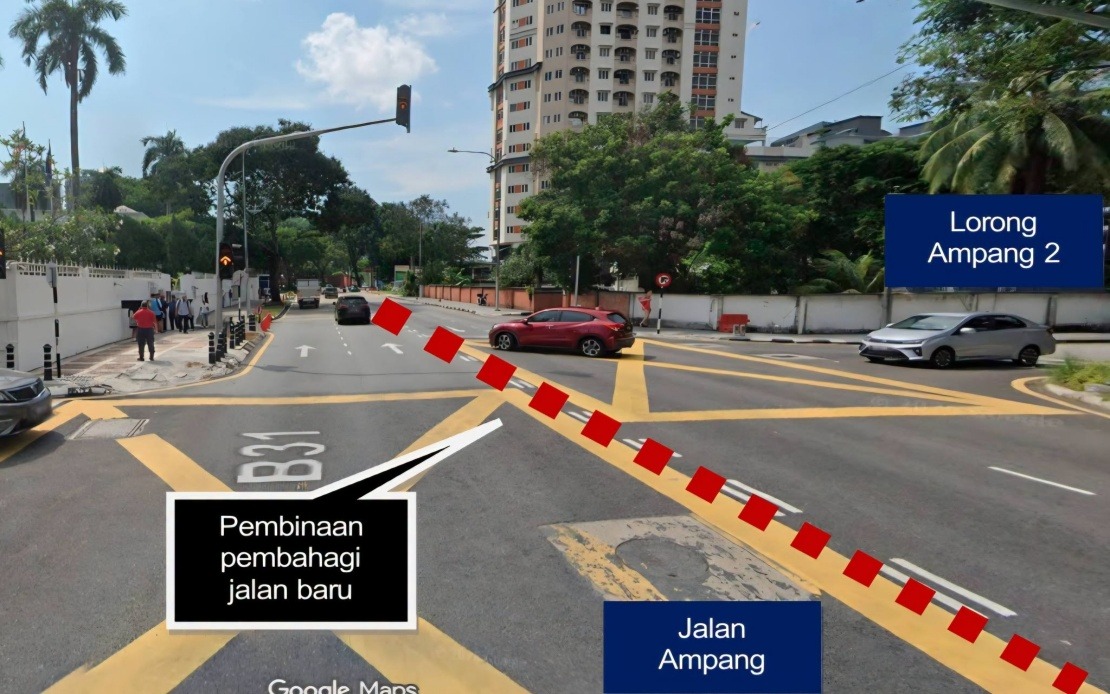
Two traffic light intersections along Jalan Ampang have entered permanent closure as of today, marking the commencement of a significant infrastructure rehabilitation project by Kuala Lumpur City Hall. The affected junctions—one in front of the Royal Thai Embassy and another at Lorong Ampang 2—will remain closed throughout the duration of the 3.2-kilometre upgrade initiative, which extends from the Jalan Tun Razak intersection eastward to the Middle Ring Road 2.
The broader Jalan Ampang upgrade project represents a comprehensive effort to modernise one of Kuala Lumpur's vital thoroughfares. Beyond the traffic signal closures, the initiative encompasses substantial infrastructure enhancements designed to fundamentally reshape how the corridor functions for the hundreds of thousands of commuters who traverse it weekly. The works address longstanding congestion challenges while simultaneously upgrading the road's physical condition and safety features.
At the heart of the project lies a systematic approach to road network restructuring. DBKL has specified that improvements will include the installation of road dividers, conversion of the affected segments to two-way four-lane configurations, and comprehensive upgrades to pedestrian infrastructure. Enhanced street lighting systems will also be deployed, addressing visibility concerns that have plagued the corridor during evening hours. These elements collectively target not only traffic volume capacity but also user experience and safety outcomes.
The rationale for closing the traffic light intersections reflects contemporary traffic engineering principles. Road dividers and eliminated signalised crossings work in tandem to reduce what traffic engineers term "weaving conflicts"—the dangerous and inefficient manoeuvres that occur when vehicles attempt multiple lane changes within short distances. By removing these conflict points entirely, the project anticipates substantial reductions in intersection delays and smoother overall traffic progression along the entire Jalan Ampang corridor.
For Malaysian motorists accustomed to navigating Kuala Lumpur's complex road network, the closure necessitates immediate adjustment to travel patterns. DBKL has designated two primary alternative routes to minimise disruption. Drivers heading towards Ampang can execute U-turns at Jalan Tun Razak, while those travelling cityward should utilise the U-turn facility at Jalan Ampang Hilir. These diversions represent the most efficient bypass options available, though they will inevitably introduce additional travel time during peak congestion periods.
The project arrives at a critical juncture for Kuala Lumpur's transportation infrastructure. As the federal capital continues expanding eastward and traffic volumes increase year-on-year, maintaining the efficiency of established arterial routes becomes increasingly urgent. Jalan Ampang, serving as a primary corridor linking the city centre to the Ampang residential and commercial zones, experiences particularly acute congestion during morning and evening peak hours. This upgrade addresses that pressure point directly.
The timing of implementation carries implications beyond mere traffic management. The project demonstrates commitment from municipal authorities to proactive infrastructure renewal rather than reactive crisis management. However, the execution phase will prove critical—any delays or mismanagement could exacerbate existing congestion on alternative routes, potentially affecting productivity across multiple commercial and residential districts that depend on Jalan Ampang for connectivity.
For businesses operating along the affected corridor, particularly those at the Royal Thai Embassy vicinity and surrounding commercial establishments, the closure period represents both challenge and opportunity. While reduced traffic visibility may temporarily impact foot traffic, the long-term improvement in traffic flow promises enhanced accessibility once works conclude. Similar businesses experienced comparable temporary disruptions during previous major infrastructure projects across the Klang Valley, typically recovering lost commerce within months of project completion.
The pedestrian infrastructure improvements deserve particular attention given Malaysia's general underinvestment in walkable urban environments. Enhanced pedestrian walkways along Jalan Ampang could meaningfully improve the experience of office workers, students, and residents who currently navigate the corridor on foot. Upgraded street lighting simultaneously addresses personal safety concerns that have historically discouraged evening pedestrian use of the corridor.
Regional implications extend beyond Kuala Lumpur's immediate interests. As Southeast Asian cities contend with rapid urbanisation and vehicular growth, successful implementation of comprehensive road upgrade projects like this provides valuable lessons. The Jalan Ampang initiative demonstrates how selective closure of inefficient intersection points, combined with systematic infrastructure modernisation, offers alternatives to purely capacity-expansion approaches that dominate many regional cities.
Compliance with traffic signage during this transition period proves essential for minimising accidents and ensuring the project's intended benefits materialise. DBKL has emphasised public cooperation, recognising that even well-designed alternative routes function optimally only when drivers understand and follow designated traffic flows. Previous similar projects in the region have sometimes experienced delays when public adherence to new traffic patterns proved inadequate.
The project timeline remains unspecified in official communications, though typical major road upgrade projects in Malaysia extend across twelve to twenty-four months. Motorists should anticipate the current restrictions remaining in place well into 2025, making this a medium-term adjustment rather than a brief disruption. Planning personal and business travel accordingly will prove prudent for those regularly utilising this corridor.

