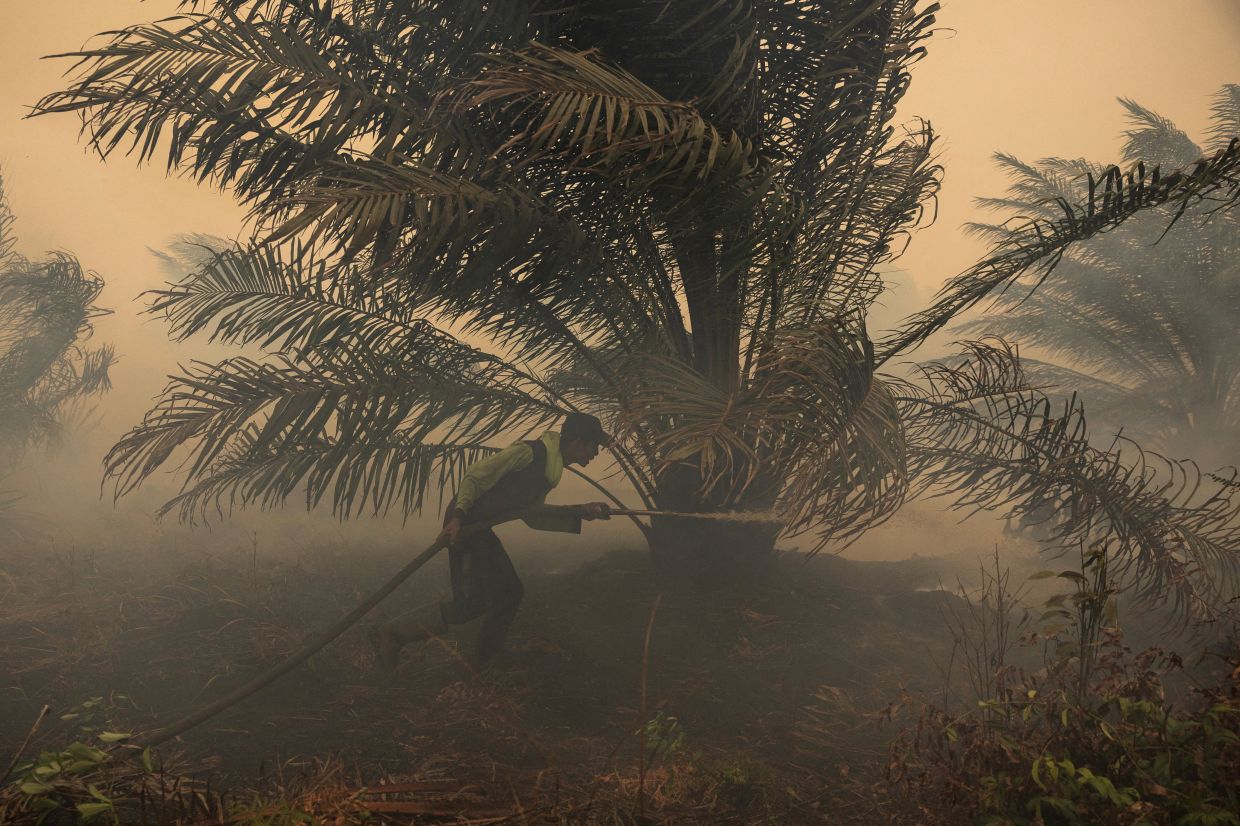
Japan has announced plans to provide direct military and logistical support to Indonesia's escalating battle against forest and land fires in Kalimantan, offering three helicopters for water-bombing operations as the region grapples with some of the worst air quality readings recorded this fire season. The initiative comes as air pollution measurements in affected areas have breached crisis thresholds, with the Air Pollutant Standard Index (ISPU) climbing past 1,000—levels considered hazardous to human health and requiring emergency interventions. Indonesia's National Disaster Mitigation Agency (BNPB) confirmed that preparations for the Japanese-assisted aerial campaign are progressing, with operational commencement scheduled for September 10 following necessary site surveys and coordination meetings.
According to Berton Panjaitan, Acting Head of the Data, Information and Disaster Communication Centre at BNPB, the Japanese assistance package will include a Chinook helicopter alongside two additional aircraft, representing a significant contribution to an already stretched domestic capacity. Speaking at an online media briefing on August 29, Panjaitan emphasised that the focus of upcoming discussions would centre on harmonising water-bombing techniques and operational protocols specific to Kalimantan's unique terrain and fire patterns. The deployment underscores the severity of the current crisis and reflects growing international recognition that Indonesia's fire management challenges have regional and potentially global implications through transboundary haze pollution.
The environmental data gathered by Indonesia's Ministry of Environment painted a grim picture of conditions on the ground. Jekan Raya district in Palangka Raya, Central Kalimantan, recorded an ISPU reading of 1,108 by late afternoon on Saturday, August 29, while South-East Pontianak in West Kalimantan hit 1,075—both categorised as hazardous air quality requiring restrictions on outdoor activities and heightened public health vigilance. These extreme measurements trigger automatic alerts for vulnerable populations including children, the elderly, and those with respiratory conditions, necessitating widespread distribution of protective masks and advisories to remain indoors.
The geographic spread of active fire hotspots demonstrates the scale of the current emergency across the Indonesian side of Borneo. BNPB documented 9,242 hotspots distributed across West, Central, and South Kalimantan provinces, with all three regions experiencing upward trends in fire activity. West Kalimantan exhibited the most concerning trajectory, with hotspot counts surging by 1,629 to reach a total of 3,371 locations—suggesting that fire suppression efforts have not yet achieved sufficient momentum to outpace new fire ignitions. Beyond these hotspots, authorities recorded 171 established fire spots, representing areas where fires have already taken hold and require active extinguishing rather than prevention efforts.
While weather modification operations—a key component of Indonesia's firefighting arsenal—have delivered some relief to affected areas, their effectiveness remains geographically inconsistent and dependent on atmospheric conditions beyond human control. Panjaitan reported that cloud-seeding operations successfully generated rainfall across several Sumatran regions including parts of Riau, South Sumatra, Jambi, and Lampung, providing temporary respite to communities choking under smoke. However, the same meteorological strategies proved ineffective in Central and South Kalimantan, where the absence of sufficiently dense cloud formations prevented successful weather modification. This limitation highlights how seasonal climate patterns and atmospheric dynamics can either amplify or constrain firefighting options, creating a complex operational environment where conventional water-bombing becomes essential.
Indonesia's existing firefighting infrastructure, while substantial by regional standards, faces capacity constraints as fires proliferate across multiple provinces simultaneously. The BNPB currently operates 52 aircraft dedicated to fire suppression activities, comprising 38 machines specifically equipped for water-bombing missions and 14 dedicated to aerial surveillance, reconnaissance, and weather modification operations. Despite this fleet size, these aircraft have collectively discharged approximately 3.5 million litres of water across six priority provinces—a volume that, while impressive in absolute terms, illustrates the enormous water requirements needed to contain fires across such vast areas. The addition of Japanese helicopters effectively increases available water-bombing capacity without requiring Indonesia to divert additional resources from other critical infrastructure.
The Japanese intervention carries broader diplomatic significance within the regional context, reflecting how transboundary environmental crises can galvanise international cooperation among neighbours. Indonesia's haze problem is not merely a domestic concern; smoke and particulate matter routinely drift across maritime boundaries, affecting air quality in Malaysia, Singapore, Brunei, and southern Thailand. Japan's proactive offer of military and logistical assets signals recognition that controlling Indonesian fires benefits the entire region's public health and environmental stability. This form of preventive diplomacy—investing in another nation's crisis management before the problem intensifies—represents a pragmatic approach to shared environmental challenges that increasingly characterise Southeast Asian geopolitics.
For Malaysian policymakers and citizens, the Kalimantan fire situation carries direct relevance given historical patterns of haze transboundence. Previous fire seasons have imposed measurable health costs and economic disruptions across Malaysia's western states, with ISPU readings in Kuala Lumpur and Selangor climbing into unhealthy ranges during peak periods. Supporting international efforts to suppress Indonesian fires at their source proves considerably more cost-effective than managing public health emergencies and respiratory illness spikes after smoke has crossed borders. The Japanese assistance therefore benefits Malaysia indirectly by reducing the probability and severity of future transboundary haze episodes that have previously prompted emergency measures and public health advisories.
The underlying drivers of Kalimantan's fire crisis warrant consideration alongside immediate firefighting responses. These fires predominantly affect peatland and palm oil plantation zones, ecosystems where fire spreads rapidly and produces particularly dense smoke owing to peat's high carbon content. Agricultural expansion, drainage of wetlands for cultivation, and ongoing land use conversion have fundamentally altered fire dynamics across Borneo, transforming areas that historically experienced minimal burning into fire-prone landscapes. Understanding these structural factors remains essential for developing long-term prevention strategies that reduce future fire frequency and intensity, complementing the immediate Japanese firefighting assistance.
Looking forward, the success of Japan's helicopter operations beginning September 10 will depend on sustained coordination between Japanese military personnel and Indonesian fire management teams, effective logistics for fuel and maintenance, and continued favourable weather conditions permitting flight operations. The deployment represents a test case for international cooperation on regional environmental crises, with lessons applicable to future transboundary disasters. Malaysia and other neighbouring nations are watching closely, understanding that effective fire suppression in Kalimantan directly improves air quality and environmental conditions across Southeast Asia.

