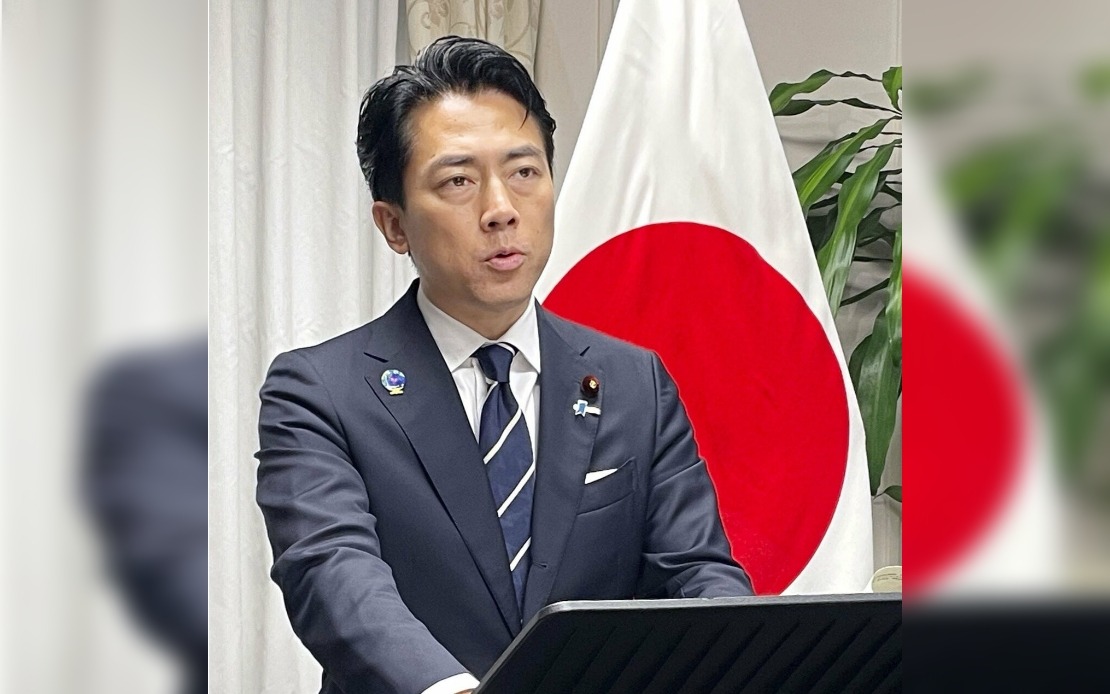
Japan's Defence Minister Shinjiro Koizumi has broken new political ground by publicly advocating that his nation must engage in serious discussion about nuclear weapons, marking a significant departure from decades of official restraint on the subject. Speaking in an online programme released on Friday, Koizumi framed the discussion as necessary given the dramatically altered security landscape, particularly observing how several European countries are actively pursuing expanded nuclear deterrence capabilities. His intervention comes as the government prepares to finalise revisions to three foundational national security documents by year's end, suggesting the debate may have concrete policy implications rather than remaining purely theoretical.
The Defence Minister specifically highlighted France and Finland as cautionary examples of nations reassessing their nuclear strategies in response to contemporary threats. Finland's parliament approved legislation in June that would permit nuclear weapons deployment on its soil, a stunning reversal for a Nordic nation long synonymous with military non-alignment. French President Emmanuel Macron complemented this European shift by announcing in March that his country intends to expand its nuclear arsenal. These developments have created diplomatic ripples across the world, prompting Tokyo to reconsider whether Japan's longstanding principles remain sustainable in an era of great power competition and regional instability.
Japan occupies an unusual position in global nuclear affairs, a distinction shaped by historical tragedy and postwar idealism. As the only nation ever subjected to nuclear bombardment—the atomic attacks on Hiroshima and Nagasaki in August 1945—Japan crystallised its opposition into three binding principles: it will neither produce, possess, nor permit nuclear weapons on its territory. These commitments have endured through seven decades of Cold War tensions, regional conflicts, and strategic upheavals. Yet they have always rested on a paradoxical foundation: Japan's security is underwritten by the United States nuclear umbrella, meaning the country benefits from nuclear deterrence without formally acknowledging or hosting weapons systems.
Koizumi's reasoning reflects mounting anxiety within Tokyo's security establishment about the durability of existing arrangements. He argued that Japan faces an increasingly inhospitable strategic environment and cannot afford to exclude any policy option from serious examination. This framing represents a calculated shift in public messaging—by positioning the debate as one about necessity rather than preference, Japanese officials attempt to desensitise domestic and international audiences to what would once have been considered heretical discussion. The Defence Minister explicitly criticised what he characterised as self-imposed taboos that prevent rational assessment of national interests, suggesting that Japan's reluctance to discuss nuclear weapons leaves it strategically disadvantaged compared to peer nations making hardheaded calculations.
The timing of Koizumi's statement reflects broader patterns within Prime Minister Sanae Takaichi's administration, which has demonstrated greater willingness to challenge postwar orthodoxies. In December of the previous year, a security policy advisor close to the government triggered considerable controversy by openly suggesting Japan should acquire nuclear weapons. The proposal generated fierce pushback from opposition lawmakers and several neighbouring countries, yet the government did not distance itself as completely as traditional practice might have dictated. Former Defence Minister Itsunori Onodera similarly ventured into contentious territory by asserting late last year that Japan must debate the future of its non-nuclear commitments, signalling that such discussion has migrated from fringe theorising into mainstream policy circles.
For Southeast Asian nations and the broader Indo-Pacific region, Japan's recalibration carries substantial implications. The region has long benefited from Japan's pacifist constitution and non-nuclear stance, which provided reassurance and reduced proliferation pressures. Malaysian policymakers, along with counterparts across ASEAN, have built security frameworks partly on assumptions of Japanese restraint and on the stability provided by the existing US-Japan alliance without nuclear complications. Any Japanese decision to pursue nuclear weapons would fundamentally alter regional power dynamics, potentially triggering similar recalculations by other nations and destabilising long-established diplomatic arrangements.
China's expanding nuclear arsenal and North Korea's accelerating weapons programme form the immediate context driving these discussions within Tokyo. The Democratic People's Republic of Korea has conducted multiple nuclear tests and demonstrated ballistic missiles capable of reaching Japanese territory, while Beijing's nuclear modernisation programme proceeds at an unprecedented pace. These developments have created genuine security anxieties among Japanese planners, who worry that American extended deterrence may become less credible or reliable as US capabilities face potential peer competition. In this environment, even the intellectual groundwork for reconsidering Japan's nuclear stance acquires strategic significance.
The path forward remains fundamentally uncertain. Any actual Japanese move toward nuclear weapons would require extraordinary political alignment and would face substantial domestic opposition rooted in atomic bomb survivors' memories and peace movements. International ramifications would be equally profound—such a step could trigger security crises with South Korea, complicate alliances within NATO, and potentially violate the Non-Proliferation Treaty depending on implementation details. Yet by publicly opening the discussion, Koizumi and his colleagues are establishing the intellectual and political space for Japan to manoeuvre if circumstances deteriorate sufficiently or if American commitments prove inadequate to Japanese threat perceptions.
The government's security document revisions scheduled for completion by year's end will likely flesh out exactly what role nuclear discussion occupies in Japan's strategic thinking. These documents function as blueprints for military policy and diplomatic positioning, carrying consequences far beyond Japan's borders. For Malaysia and Southeast Asia, closely monitoring how Tokyo frames these revisions will be essential to understanding whether the region faces a gradual Japanese pivot toward security autonomy or whether the present debate represents tactical positioning within an ultimately stable architecture. The chemistry between security anxiety, alliance dynamics, and diplomatic restraint will determine whether Koizumi's intervention proves a genuine inflection point or a temporary adjustment within established parameters.

