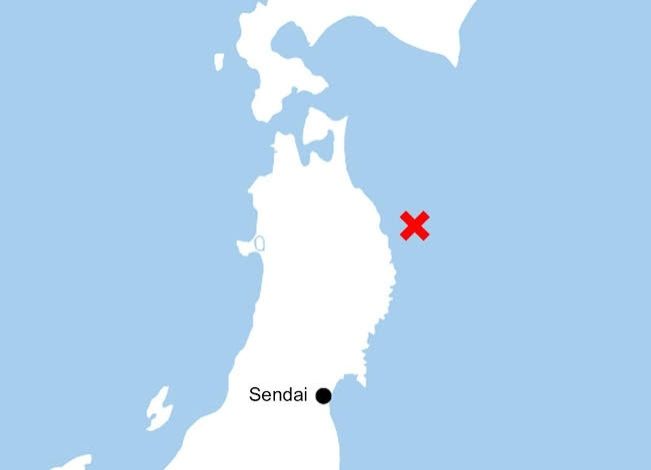
A formidable 7.2-magnitude earthquake jolted northern Japan on Thursday morning, centred in waters off Iwate prefecture on the main island of Honshu, yet authorities swiftly confirmed that the incident had produced no deaths or substantial structural damage across the affected regions. The seismic event occurred at 7:30 am local time, with its epicentre located 44 kilometres beneath the ocean floor, generating tremors powerful enough to be felt several hundred kilometres away in Tokyo. The Japan Meteorological Agency initially recorded the magnitude as 6.9 before revising upwards to 7.2 following further analysis, while officials confirmed that no tsunami warning was warranted despite the offshore location.
The impact on daily life remained largely manageable, though the quake's intensity was sufficient to dislodge household items and disrupt routine activities across the northern prefectures. Mutsumi Shimohata, a 61-year-old food processing employee in Hashikami, Aomori prefecture, described how her smartphone alarm sounded almost instantaneously as tremors began, catching her off guard with the extended duration of shaking. While her residence sustained only minor damage—a picture frame dislodged from its mounting—her employer took precautionary measures by instructing staff to remain home, citing damage to the office building's automatic door system and partial ceiling collapse as concerns requiring assessment.
Television coverage of the aftermath showed scattered kitchen utensils strewn across floors and store shelves in disarray, visual evidence of the quake's violent lateral movements. Emergency services in the Hashikami and Hachinohe area fielded at least four distress calls, including a report of elevator entrapment and incidents involving jammed doors and an overturned tanker truck. The tremor's force registered in the upper sixth category on Japan's seven-level Shindo intensity scale, a threshold at which unsecured furniture typically overturns, window panes fracture, and individuals struggle to maintain their balance without support. The sheer strength of the ground motion prompted temporary closures at a primary school in Hashikami, while selected shinkansen bullet train services were halted as a precaution.
Government officials moved quickly to reassure the public and coordinate response efforts across affected jurisdictions. Prime Minister Sanae Takaichi directed all ministries and governmental bodies to collaborate closely with regional administrators, emphasizing the importance of sustained vigilance in anticipation of potential aftershocks of comparable intensity. Japanese state broadcaster NHK captured images of Hachinohe city's traffic systems functioning normally, suggesting that critical infrastructure remained largely operational despite the seismic event. Crucially, the Nuclear Regulation Authority reported no irregularities at nuclear installations throughout the region, a matter of significant concern given Japan's history with radiation incidents.
The incident underscores Japan's precarious geological position astride four major tectonic plates along the western perimeter of the Pacific Ring of Fire, rendering it one of Earth's most seismically volatile nations. With approximately 125 million inhabitants distributed across an archipelago that routinely experiences hundreds of tremors annually, Japan accounts for roughly eighteen percent of the world's total earthquake activity. While the majority of these tremors cause negligible damage, their consequences depend heavily upon location, depth, and construction resilience in affected communities. The nation's seismic infrastructure and emergency protocols reflect hard-won experience accumulated through decades of managing this geological reality.
Memory of catastrophic seismic disaster continues to shape Japanese emergency planning and public consciousness. The devastating 9.0-magnitude undersea earthquake of March 2011 unleashed a tsunami that killed approximately 18,500 people and left thousands more unaccounted for, while simultaneously destroying the Fukushima nuclear facility and triggering the world's second-worst nuclear accident on record. That tragedy fundamentally altered how Japan approaches disaster preparedness and nuclear safety oversight, establishing stringent standards intended to prevent similar collapses of protective systems. The 2011 disaster remains a sobering reference point for evaluating national vulnerability to natural hazards.
The frequency of substantial seismic activity in recent months has heightened official and public awareness regarding earthquake risk. Just two months prior to Thursday's occurrence, Japan experienced a 7.7-magnitude tremor on April 20 that inflicted injuries upon at least ten people and visibly shook tall structures throughout the capital region. That event prompted authorities to issue a specialized advisory bulletin cautioning residents about elevated probability of earthquakes reaching magnitude 8.0 or exceeding that threshold—a possibility that carried profound implications for infrastructure, safety systems, and potential cascade effects across the vulnerable archipelago. The advisory, though lifted after seven days, reflected measured but genuine concern about accumulated tectonic stress.
Thursday's incident demonstrates the effectiveness of Japan's earthquake detection networks, building code standards, and emergency response mechanisms developed over generations of seismic experience. The immediate availability of early warning systems allowed residents to brace themselves seconds before major shaking commenced, potentially reducing injury risk during the initial violent phase. Modern construction standards, regularly updated and enforced across the nation, prevented catastrophic structural failures despite the quake's considerable magnitude and the relatively shallow depth placing greater force upon surface installations. The fact that a 7.2-magnitude earthquake produced no reported casualties reflected both technological advancement and institutional preparedness.
For regional observers beyond Japan, the event illustrates why Southeast Asian nations sharing similar tectonic characteristics—including Indonesia, the Philippines, and Malaysia—maintain robust earthquake monitoring systems and regularly conduct disaster preparedness exercises. The Ring of Fire extends throughout the western Pacific, creating geological hazards affecting multiple nations and emphasizing the importance of coordinated regional approaches to seismic risk management. Japan's experience provides a cautionary reference regarding both vulnerability and capacity for resilience when populations inhabit seismically active zones alongside modern industrial infrastructure. The comparative rarity of casualties from Japanese earthquakes reflects choices made about building standards, emergency preparation, and public education rather than luck or geological clemency.
Government spokesman Minoru Kihara emphasized that while preliminary assessments indicated no human deaths, ongoing monitoring would continue as damage assessment progressed across northern prefectures. This measured official stance—acknowledging the initial absence of confirmed fatalities while reserving judgment pending complete investigation—reflects standard Japanese crisis communication protocols designed to avoid premature reassurance that might encourage complacency regarding aftershock risks or undiscovered structural damage. The continuing professional assessment phase represents standard procedure following significant seismic events, ensuring that overlooked injuries or infrastructure compromises receive appropriate attention before normal activities resume throughout affected communities.

