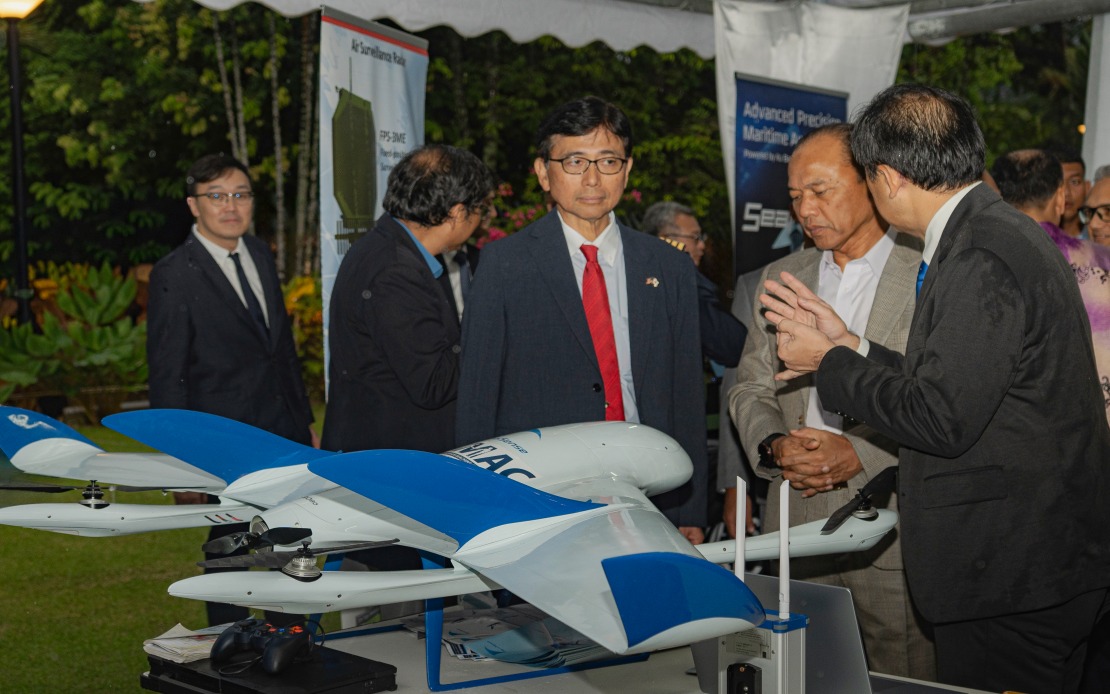
Japan's ambassador to Malaysia has signalled Tokyo's intention to significantly expand defence and security collaboration with Kuala Lumpur, underscoring the deepening strategic importance of the bilateral relationship amid rising tensions across the Indo-Pacific. The announcement by Ambassador Noriyuki Shikata at the 72nd Japan Self-Defence Forces Day reception highlights how both nations view security cooperation as central to maintaining regional stability in an era of increasing geopolitical complexity.
The timing of this commitment is significant. Prime Minister Sanae Takaichi and Malaysian Prime Minister Datuk Seri Anwar Ibrahim recently reaffirmed their shared vision for deeper strategic ties during Anwar's visit to Japan earlier this month, with defence sitting at the heart of the agenda. This mutual dedication reflects broader regional anxieties about maritime security, freedom of navigation, and the balance of power in Southeast Asia—concerns that resonate deeply with Malaysian interests in protecting crucial shipping lanes and maintaining the rules-based international order.
Central to the expanded partnership is the alignment between Japan's Free and Open Indo-Pacific (FOIP) vision and ASEAN's own Outlook on the Indo-Pacific. Rather than competing frameworks, these initiatives are being positioned as complementary approaches to achieving greater regional stability and prosperity. For Malaysia, which chairs ASEAN in 2025, this convergence offers an opportunity to position the region as a thoughtful actor in great power competition, balancing relationships across multiple partners while maintaining autonomy in security decisions.
The bilateral relationship itself has already reached a new institutional level. Japan and Malaysia upgraded their ties to a Comprehensive Strategic Partnership in 2023, a move that preceded the current security emphasis. Ambassador Shikata's remarks suggest that the relationship will continue accelerating, particularly as the two nations approach the 70th anniversary of diplomatic relations next year—a milestone that both governments appear determined to commemorate through concrete security achievements rather than ceremonial gestures alone.
Practical maritime cooperation already demonstrates how these commitments translate into operational reality. The bilateral MALPAN exercise, regularly conducted in the South China Sea and Strait of Malacca, represents the kind of interoperability-building activity that creates muscle memory between allied forces. The April iteration proved particularly significant when Japan's Maritime Self-Defence Force coordinated with both the Royal Malaysian Navy and, for the first time, the Royal Malaysian Air Force, creating a more integrated picture of regional maritime awareness. These joint operations serve multiple purposes: they build trust between militaries, sharpen tactical coordination, and send subtle messages about the commitment of like-minded partners to maintaining open sea lanes critical to global commerce.
Japan's Official Security Assistance programme, launched in 2023 with Malaysia among its inaugural recipients, represents a concrete expression of security partnership that goes beyond ceremonial cooperation. The provision of unmanned aerial vehicles and rescue boats in previous years has been supplemented by more advanced contributions planned for 2025. Most notably, Japan intends to supply ceasefire monitoring equipment to the ASEAN Observer Team and a dedicated diving support vessel to the Royal Malaysian Navy—equipment that addresses immediate operational needs while signalling Japan's long-term commitment to Malaysian defence capabilities.
The defence industry dimension adds another layer to the partnership. The participation of ten Japanese companies at Defence Services Asia 2026 in Kuala Lumpur, combined with the signing of a Terms of Reference to establish a bilateral defence industry dialogue, suggests Tokyo is cultivating commercial relationships alongside government-to-government security ties. This approach mirrors successful defence partnerships elsewhere in the region and creates incentive structures that bind the two nations together through defence industrial collaboration, potentially leading to joint production initiatives or technology transfer arrangements.
For Malaysia, these developments carry strategic implications that extend beyond the bilateral relationship. As a nation heavily dependent on maritime trade routes and deeply concerned about maintaining stability in busy chokepoints, Malaysia benefits from Japan's sophisticated naval capabilities and its demonstrated commitment to regional security architecture. Japanese engagement also provides a counterweight to any concerning shifts in the regional balance, offering an additional layer of reassurance amid broader uncertainties about great power competition in Asian waters.
The emphasis on de-escalation and international law in Shikata's remarks also signals important messaging priorities. Both nations are clearly positioning themselves as advocates for restraint and rules-based order, even as military cooperation intensifies. This framing is significant for Malaysian audiences and for regional observers, as it emphasises that enhanced security ties aim to prevent conflict rather than provoke it, and that the cooperation serves stability rather than destabilisation.
Looking forward, the relationship appears poised for continued expansion. Ambassador Shikata's explicit commitment to taking cooperation to the next level in defence and security, combined with concrete mechanisms like the defence industry dialogue and equipment assistance programmes, suggests this is not merely rhetorical positioning but rather the beginning of a sustained effort to deepen ties. For Malaysia, which has traditionally pursued a non-aligned foreign policy while maintaining robust security partnerships, the Japanese relationship represents an important and palatable option for strengthening defence capabilities without excessive strategic entanglement with any single major power.

