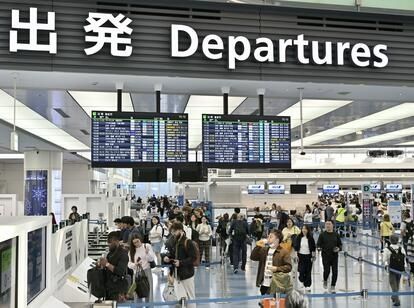
Japan's government has significantly expanded its approach to managing the consequences of record inbound tourism by tripling the departure tax and dramatically increasing visa processing fees, marking a pivotal shift in how the nation intends to distribute visitor flows and fund infrastructure improvements. Effective from July 1, the international tourist tax has jumped from 1,000 yen to 3,000 yen per departing passenger, regardless of nationality, while foreign nationals requiring visas now face substantially steeper charges—15,000 yen for single-entry visas and 30,000 yen for multiple-entry permits. These represent the first visa fee increases in nearly half a century, signalling Tokyo's determination to recalibrate its tourism strategy as visitor numbers continue to strain popular destinations.
The rationale behind the tax escalation is straightforward yet ambitious. Officials intend to deploy the expanded revenue pool primarily toward congestion relief measures at iconic locations that have become overwhelmed by foreign tourists seeking the perfect photograph. The government plans to designate specific viewing areas and manage foot traffic at the most hotly trafficked spots, reducing the chaotic conditions that have increasingly defined the experience at Japan's most famous attractions. This targeted infrastructure approach acknowledges that visitor management requires more than passive acceptance of crowd pressures—it demands active spatial reorganisation and controlled access mechanisms.
Beyond managing congestion at headline destinations, the Japanese government has structured the tax to fund a broader regional tourism strategy. The funds will support initiatives designed to disperse visitors away from overcrowded urban centres toward secondary and tertiary destinations throughout the archipelago. These measures include converting local railway networks into tourist experiences and renovating station buildings to enhance their appeal as destinations in their own right. Such decentralisation efforts represent a recognition that sustainable tourism growth depends on rebalancing visitor distribution, not simply restricting overall visitor volumes. By channelling funds toward making smaller cities and regional areas more attractive, Tokyo hopes to create multiple magnets rather than allowing all demand to concentrate at a handful of world-renowned sites.
The financial projections underlying these changes reveal the scale of Japan's tourism transformation. During the fiscal year ending March 2025, the tax at its previous 1,000 yen rate generated approximately 49 billion yen in government revenue. Officials project that the tripled rate will yield around 130 billion yen during the fiscal 2026 period, providing substantially greater funding for the decentralisation and infrastructure programmes. This dramatic revenue increase effectively transforms the tax from a modest administrative fee into a meaningful financial instrument capable of reshaping the tourism landscape across multiple regions simultaneously.
The implementation structure ensures broad coverage while maintaining administrative efficiency. Airlines, cruise lines, and travel agencies collect the tax at the point of ticket purchase for air and sea departures from Japan, then remit the funds to the government through the Japan Tourism Agency. Travellers transiting through Japan with stays shorter than 24 hours, as well as children under two years old, remain exempt from the tax. Those who purchased their departure tickets before the implementation date on Tuesday remained subject to the original 1,000 yen rate, providing a brief transition window for advance bookings.
The visa fee increases, though more controversial in their potential impact on visitor numbers, reflect Japan's assessment that its charges have lagged significantly behind comparable developed economies. Foreign Minister Toshimitsu Motegi characterised the hike as a necessary adjustment for inflation and the weakening yen, framing the move as technical recalibration rather than a deliberate deterrent. Japan's visa fees had ranked among the lowest in the Group of Seven, creating a perception of underpricing relative to comparable nations. However, Motegi acknowledged that the government does not expect these increases to produce any immediate decline in visitor arrivals, suggesting confidence that the fee adjustment will operate at the margins rather than fundamentally shifting traveller behaviour.
To partially offset the burden of the departure tax increase on Japanese citizens, the government simultaneously reduced passport application fees through both counter-based and online channels. The charge for a ten-year passport at designated facilities such as passport centres fell from 16,300 yen to 9,300 yen for applicants aged 18 and older, while five-year passports were standardised at 4,800 yen for younger applicants. Online applications received further discounts, with the ten-year option available at 8,900 yen and the five-year option at 4,400 yen. These reductions address a strategic concern for Tokyo: Japan's passport ownership rate remains comparatively low among major advanced economies, suggesting that affordability barriers may be limiting citizens' international mobility.
The timing of these coordinated policy changes reveals sophisticated thinking about tourism's role in contemporary Japan. As visitor numbers have reached unprecedented levels following the relaxation of pandemic-era restrictions and the relative strengthening of foreign currencies against the yen, the capacity of popular destinations to absorb crowds has reached critical points. Rather than implementing visitor quotas or entrance restrictions—which would risk diplomatic friction and negative international perception—Japan has opted for financial mechanisms that generate revenue while theoretically allowing demand to adjust naturally. The departure tax funds visible improvements to visitor experience, while visa fee increases operate as subtle demand moderators targeting those with the least commitment to visiting.
For Southeast Asian nations monitoring Japan's approach, these policy shifts offer instructive lessons in managing tourism-driven growth. As countries across the region experience similar pressures from rising international arrivals, Japan's dual strategy of financial extraction combined with infrastructural investment and geographic dispersal provides a tested model. The emphasis on funding regional tourism development rather than simply restricting visitors suggests that sustainable growth requires active management of supply rather than passive reduction of demand. For Malaysian and regional tourism authorities grappling with their own capacity constraints at signature destinations, Japan's experience suggests that financial instruments paired with strategic infrastructure investment may offer more politically and economically palatable solutions than outright visitor limitations.

