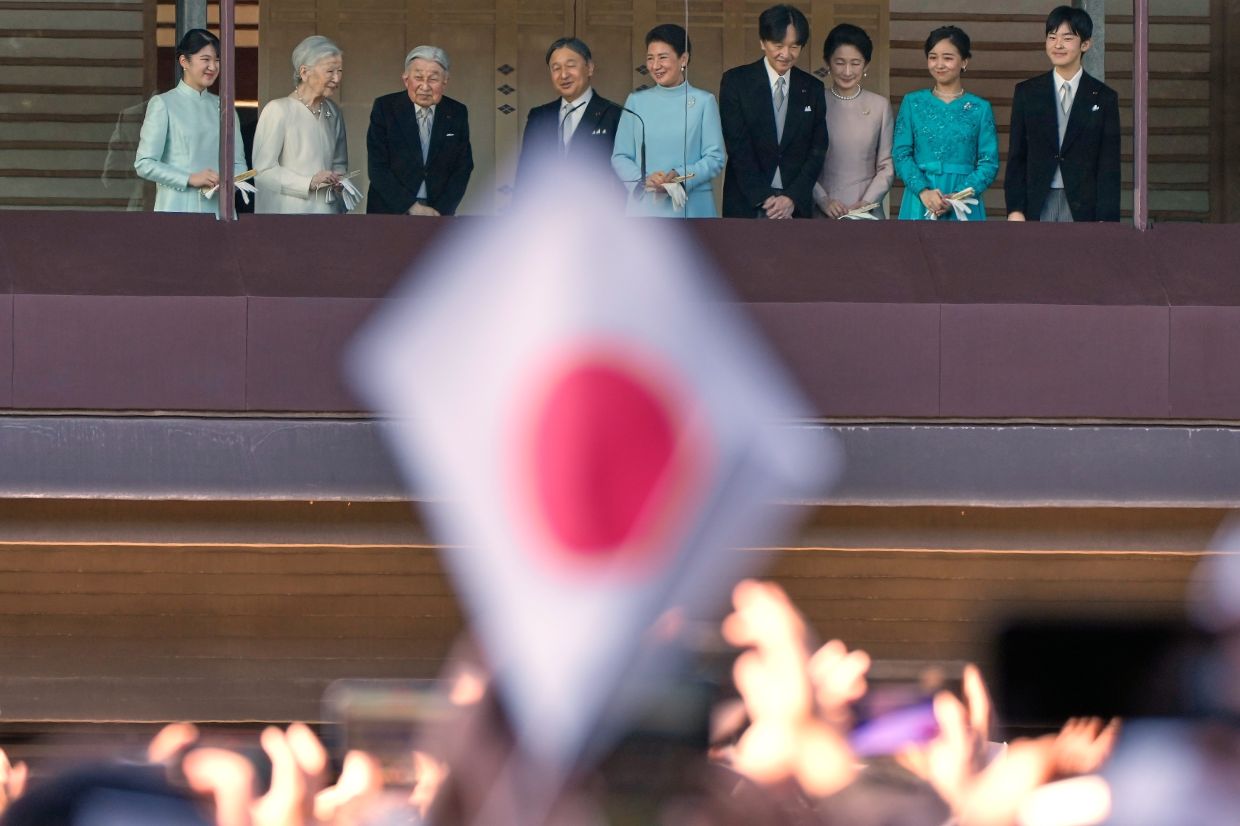
Japan's parliament has made its first substantial adjustments to imperial succession rules in decades, yet the conservative legislative approach sidesteps the more contentious question of allowing women to occupy the Chrysanthemum Throne. The upper house gave overwhelming approval to the revised legislation on Friday, ushering in modifications that address certain practical challenges facing the world's oldest continuous monarchy, though fundamental restrictions on female succession remain unchanged.
At the heart of the succession question lies an increasingly precarious demographic situation. Emperor Naruhito, now 66, has only one son: Prince Hisahito, a 19-year-old whose life has been largely sheltered from public view. The young prince, currently focused on his university studies in biology and entomology and without a spouse, represents the imperial bloodline's continuation. Should Hisahito fail to produce a male heir, Japan faces the prospect of an unbroken imperial succession stretching back more than a millennium coming to an end under the existing legal framework.
The reforms enacted Friday attempt to create flexibility within strict patrilineal confines. Most notably, the legislation permits the adoption of male relatives from imperial branch families who were severed from the official imperial register following World War II. These potential adoptees must be at least 15 years old and unmarried at the time they rejoin the imperial institution. This mechanism theoretically expands the pool of eligible male heirs without breaching the fundamental principle that only men may inherit the throne itself.
Parallel to succession questions, the new law grants women in the imperial family a previously unavailable right: the ability to maintain their royal status following marriage to commoners. This provision mirrors rights already extended to male imperial family members, addressing an asymmetry in the 1947 Imperial Household Law that has long governed Japan's monarchy. While progressive in its own context, this concession to gender equality remains limited in scope, offering enhanced social position rather than access to supreme authority.
The legislative process revealed significant tensions within Japan's ruling establishment. Prime Minister Sanae Takaichi, herself a historic figure as Japan's first female leader, emerged as a stalwart opponent of allowing women to ascend to the throne. Her position forced considerable internal negotiation within the ruling Liberal Democratic Party, delaying what might otherwise have been a more straightforward reform. Some party veterans, including Seiichiro Murakami, openly challenged the exclusion during parliamentary debate, calling the maintenance of male-only succession "utterly outrageous" given the household's actual circumstances.
Public opinion presents a sharp counterpoint to legislative caution. An Asahi Shimbun poll conducted in May found that 72 percent of Japanese surveyed favoured amending the law to permit women to become emperor. Princess Aiko, the 24-year-old daughter of the reigning emperor, commands particular affection in Japanese society. Her exclusion from consideration troubles many who see no logical impediment to her assuming imperial responsibilities. Hisahito's two elder sisters similarly remain permanently barred from succession regardless of circumstances.
Criticism of the cautious approach extends beyond policy specialists and opinion surveys. The Yomiuri Shimbun, Japan's circulation leader and ordinarily a staunch LDP supporter, published a scathing editorial criticising the government's refusal to expand female succession possibilities. This institutional questioning from normally reliable conservative quarters underscores the unusual political tension surrounding imperial matters, which typically command broad consensus across Japan's ideological spectrum.
Former imperial family member Asahiro Kuni, now 81 and part of one of eleven branch families expelled from the imperial register after 1945, has cautioned that the strategy of recruiting male relatives faces practical obstacles. Drawing from lived experience of imperial life's stringent constraints, Kuni argues that few individuals, once they comprehend the actual lifestyle demands and loss of personal autonomy involved, would voluntarily accept adoption into the imperial household. His warnings proved prescient; several individuals previously considered potential candidates have declined involvement.
The contemporary imperial family comprises just 16 members in total, a historically diminished number. Among these, only five men remain: the retired Emperor Akihito, aged 92; his brother, 90; the current Emperor Naruhito; Naruhito's brother; and Prince Hisahito. This precarious numerical situation—unusual for an institution accustomed to surplus male heirs—partially explains the legislative urgency. Yet the solution adopted remains primarily structural rather than principled, attempting to engineer male successors rather than reconsidering whether gender must remain the determinant of eligibility.
For Southeast Asian observers, Japan's imperial succession debate illuminates broader regional patterns of modernisation meeting tradition. As established monarchies across Asia confront questions of female succession—from Thailand to the region's other kingdoms—Japan's cautious gradualism offers a case study in institutional conservatism. The reforms represent real progress on specific fronts, particularly regarding women's retention of status, yet they sidestep the more fundamental reconsideration many Japanese citizens apparently desire.
The legislative outcome reflects the particular political calculus of the current moment rather than any definitive settlement of the succession question. Should Prince Hisahito eventually fail to produce a male heir despite the expanded adoption provisions, pressure for more fundamental legal change will almost certainly resurface. Japan's imperial institution, despite its reputation for unchanging tradition, has repeatedly adapted to historical circumstances. Whether the continuation of male-only succession ultimately proves workable or merely delays more radical reconsideration remains an open question that will likely dominate Japanese political discourse for decades to come.

