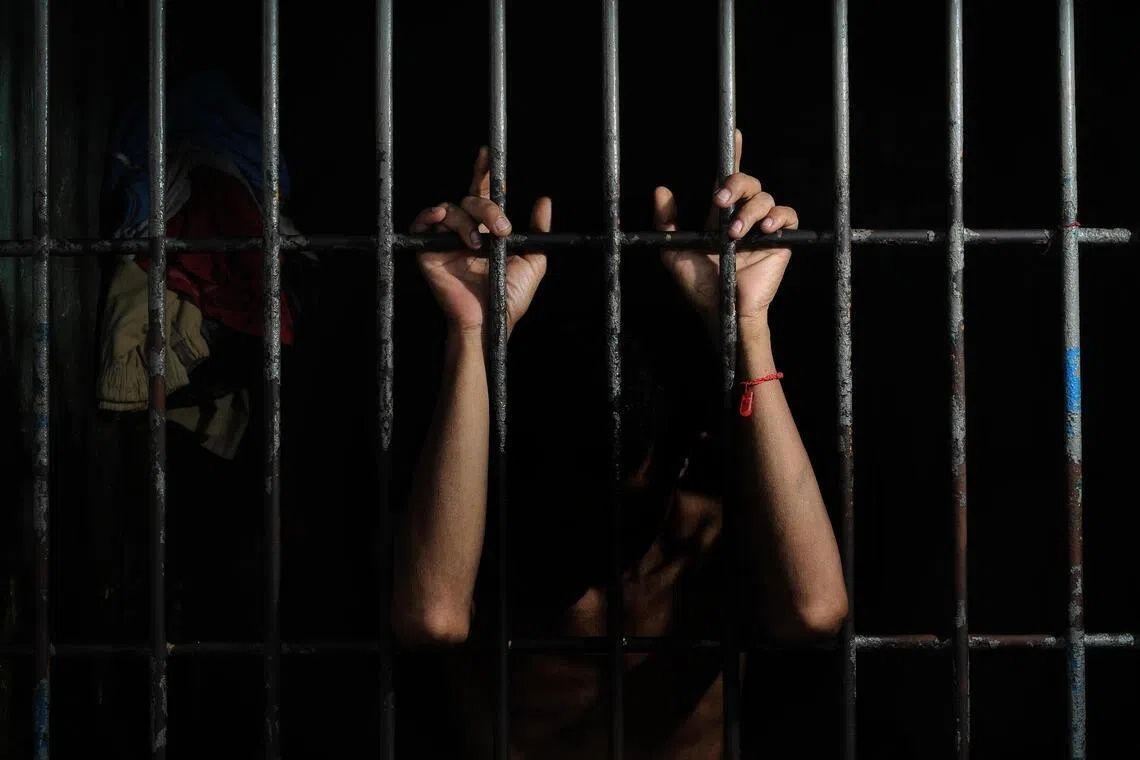
A grief-stricken mother has filed a landmark lawsuit against the Japanese state, seeking 100 million yen in damages after her teenage daughter died following detention in a case that exemplifies the country's controversial approach to criminal justice. The woman, whose daughter Runa (a pseudonym) died in December from severe malnutrition, filed the complaint at Kobe District Court in western Japan on Wednesday, June 17, contending that 18 days of jail custody and aggressive police interrogations so profoundly damaged her physically and psychologically that she weighed just 20 kilograms at the time of her death five months later.
Runa was arrested in June of the previous year while working at a disability care facility in Hyogo Prefecture, accused of assaulting a resident during a Valentine's Day celebration. Her alleged transgression was remarkably minor: she had gently pressed her hand against the patient's chin to prevent them from biting another person. Despite maintaining her innocence throughout her ordeal, the teenager endured 18 days in custody before prosecutors abandoned the charges entirely, deciding not to pursue any case against her. Throughout this period, she was separated from her family, permitted only to contact her legal representatives, and subjected to repeated pressure to confess to an assault she did not commit.
During police interrogations, investigators employed psychological coercion that would be considered alarming by international standards. According to Masahiro Sasaki, the lawyer representing Runa's mother, interrogators told the teenager that she would be sent to a reformatory and prevented from seeing her mother unless she confessed. Investigators repeatedly suggested that confession was inevitable, with one documented statement reading, "You did it, didn't you? Just tell the truth." These interactions were so distressing that Runa kept detailed notes in a journal documenting her mistreatment, which now forms part of the legal evidence in her mother's complaint.
The systematic pressure inflicted lasting psychological and physical damage. Medical examinations conducted after her release diagnosed Runa with acute stress disorder, eating disorder, and post-traumatic stress disorder. The severe eating dysfunction that emerged during her detention persisted long after her release from custody, contributing to her catastrophic weight loss and ultimately her death. Her mother's statement at a news conference underscored the tragedy, describing how her daughter was "unrecognisable when she died." The lawsuit seeks to answer fundamental questions about how such a minor incident could justify the detention of a young person with no previous criminal history and how the legal system failed to protect her basic rights and wellbeing.
Runa's case illuminates a systemic problem in Japan's criminal justice framework known colloquially as "hostage justice." Under this system, prosecutors and police leverage prolonged pre-trial detention as a tool to coerce confessions, effectively treating suspects' continued freedom as conditional on their admission of guilt. Innocent people who insist on their innocence and exercise their right to silence face extended periods behind bars, while those willing to confess are often released. This inverts the fundamental principle of presumption of innocence that underpins modern democratic legal systems, instead creating a perverse incentive structure that rewards false admissions and penalises steadfast denial.
Critics and human rights advocates have long objected to this approach, noting that Japan's reliance on confessions as the primary evidence in criminal cases creates an environment where coerced admissions flourish. International rights organisations have repeatedly condemned the practice, yet it remains embedded in Japanese prosecutorial and police procedures. The Supreme Court itself acknowledged in a high-profile case that interrogation methods can become "inhumane," referring to the decades-long ordeal of Iwao Hakamada, who spent more than half a century on death row before his convictions were quashed in 2024. That case similarly depended partly on confessions obtained through interrogations the court ultimately deemed unacceptable, suggesting that Runa's experience, while tragic, reflects broader institutional failures.
Sasaki, the family's lawyer, has challenged the fundamental justification for Runa's arrest and detention. He contends that the alleged assault was "extremely trifling" in nature, making her detention unjustifiable under any reasonable legal standard, particularly given her youth and the legal requirement that detention of minors occur only when absolutely necessary. With no criminal history and living under parental supervision, there existed no credible basis to fear that she would flee or destroy evidence, the standard rationale for remand. Yet prosecutors twice sought extensions of her detention, while simultaneously blocking her lawyer's requests to a judge for her release, a procedural imbalance that underscores how the system prioritises prosecutorial convenience over individual rights.
The authorities' eventual decision to release Runa came only after she suffered a medical crisis. Following an incident in which she vomited and collapsed, she received brief emergency medical treatment at an outside hospital. Only the following day, apparently prompted by her evident physical deterioration, did prosecutors announce they would not pursue the case and release her. This sequence suggests that rather than recognising the injustice of her detention on its merits, authorities needed concrete evidence of physical harm before abandoning the prosecution. By then, irreversible damage had been done to her health, damage that would ultimately prove fatal within months.
The implications of Runa's death extend beyond her individual tragedy, resonating throughout Southeast Asia and raising questions about how developed democracies administer justice. Japan's economic advancement and technological sophistication stand in stark contrast to the concerning aspects of its criminal justice system, a contradiction that highlights how democratic institutions and legal protections cannot be taken for granted. For Malaysian readers and those across the region, the case serves as a cautionary reminder about the importance of judicial safeguards, the right to legal representation, and the presumption of innocence. Countries examining or refining their own criminal justice frameworks should take note of how easily systemic pressures can undermine the rights of vulnerable individuals, particularly young people.
The Kobe District Public Prosecutors Office declined to provide substantive comment to the media, stating that they had not yet received formal notice of the complaint. This stance, while procedurally correct, does little to address the serious questions raised about investigative methods and prosecutorial decision-making in Runa's case. The lawsuit will likely proceed through the courts, examining whether authorities' actions amounted to negligence or misconduct, and whether compensation can provide any measure of justice to a family devastated by preventable loss. Beyond the immediate legal questions, the case demands broader institutional reflection about whether Japan's reliance on confession-based prosecution can coexist with genuine respect for human rights and the rule of law.
Runa's mother's determination to pursue legal action represents more than a personal quest for redress; it constitutes a public challenge to a system that has tolerated practices inconsistent with international human rights standards. By bringing her case to court, she and her legal team hope to create precedent and public pressure for substantive reform. The lawsuit articulates a vision of justice in which a teenager's rights to bodily autonomy, family contact, and protection from psychological coercion are inviolable, even when authorities believe a crime has been committed. Whether the courts will embrace this vision, and whether Runa's tragic death will finally catalyse the systemic change that advocates have long sought, remains uncertain but profoundly important.