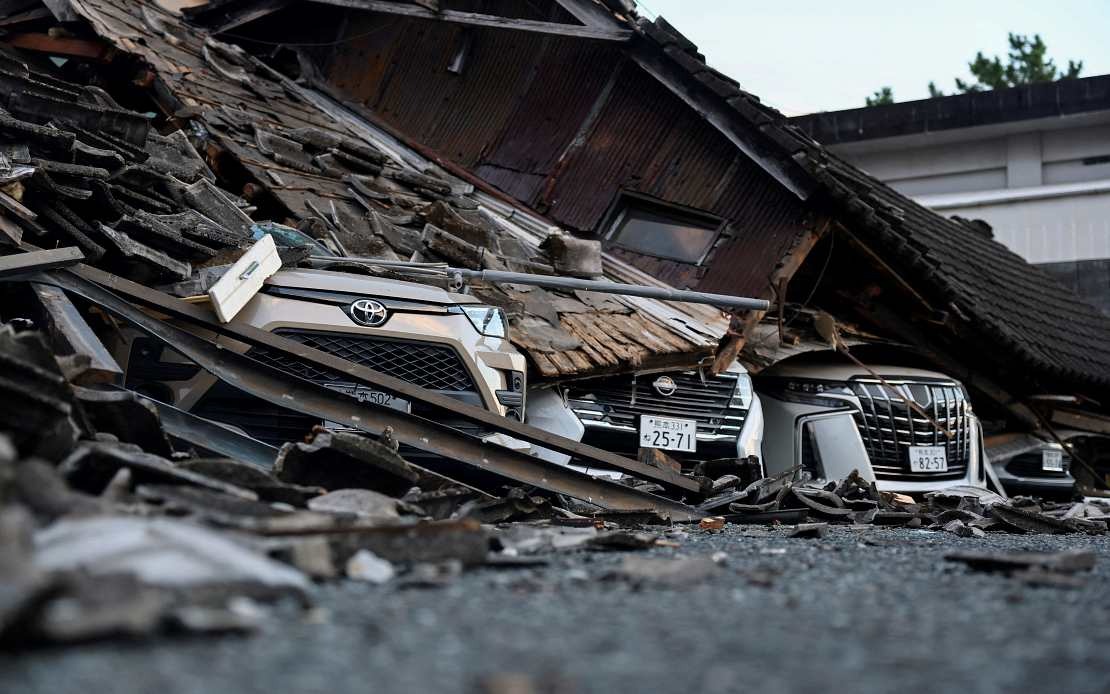
A damaging admission from Japanese retail chain operator Habita has cast a harsh spotlight on workplace safety decisions made during the immediate aftermath of a catastrophic seismic event. The company confirmed on Monday that it had instructed two of its employees to return inside an Aeon shopping mall in Kumamoto Prefecture, southwestern Japan, after they had already safely evacuated following a powerful earthquake. Both employees perished in a subsequent explosion that ravaged the building, raising difficult questions about the prioritization of monetary assets over human life during emergency situations.
The sequence of events unfolded with tragic swiftness on Tuesday when a magnitude 7.1 earthquake struck the region, registering at level 7—the highest classification on Japan's seismic intensity scale. The violent tremors caused severe structural damage across multiple buildings, and the Aeon Mall Kumamoto in Kashima Town became the site of a catastrophic explosion that claimed seven lives. Among the deceased were the two Habita employees, one of whom was only 22 years old, who had made the fatal decision to comply with their employer's instruction to venture back into the damaged structure.
Koji Yuse, a 64-year-old sales manager at the Kumamoto-based Habita company, faced journalists on Monday afternoon to explain the reasoning behind the controversial order. Yuse stated that he had instructed the store manager to send the two employees back into the building to transfer the day's accumulated sales revenue from the second floor store location to a safe positioned on the first floor. His rationale centred on the standard business protocol of securing cash receipts, a procedure that had presumably been executed routinely without incident for years prior to this particular day.
The gravity of the decision appeared to weigh heavily on Yuse as he addressed the media. He acknowledged the fundamental inappropriateness of the instruction given the extraordinary circumstances and expressed deep regret for the consequences that followed. The company subsequently reached out to the bereaved families with formal apologies and provided a detailed written account documenting the chain of events and decisions that led to the tragedy. This gesture of accountability, while significant, offered little solace to families who had lost loved ones in circumstances that many observers deemed avoidable.
The broader context of this incident reflects a tension that exists across many hierarchical corporate environments, particularly in Japan where organizational protocol and deference to authority carry substantial cultural weight. Employees faced with directives from management, even during emergencies, may feel considerable pressure to comply despite legitimate safety concerns. The Habita case illustrates how this dynamic can result in devastating outcomes when normal business priorities override the imperative to prioritize human safety during extraordinary circumstances.
The earthquake itself caused widespread devastation across Kumamoto Prefecture. Official tallies from the prefectural government indicated that as of Tuesday morning, 36 people had been confirmed dead as a direct result of the seismic event, with an additional two deaths remaining under investigation as authorities worked to determine causality. The blast that destroyed the Aeon Mall represented one of the most dramatic secondary disasters triggered by the earthquake, and the loss of life there formed a significant portion of the overall casualty count.
Japan's stringent building codes and earthquake preparedness measures have historically minimized casualties during seismic events compared to similar-magnitude earthquakes in other regions. However, this tragedy underscores that structural engineering alone cannot mitigate all risks when human judgment fails during emergency response. The vulnerability revealed here pertains not to infrastructure resilience but to the decision-making protocols that govern workplace conduct during crisis situations.
For Malaysian and Southeast Asian readers, this incident carries particular relevance given the seismically active nature of the broader Asian-Pacific region. The Philippines, Indonesia, and parts of Malaysia sit within the Ring of Fire, meaning businesses and organizations throughout Southeast Asia face comparable earthquake risks. The Habita case provides a cautionary example about the necessity of establishing clear emergency protocols that explicitly prohibit the return of personnel to damaged structures for any reason, regardless of financial considerations.
The incident will likely prompt Japanese regulatory bodies to reexamine workplace safety guidelines specifically addressing earthquake response procedures. Insurance and liability frameworks may shift as well, with organizations facing potential legal and financial consequences for decisions that endanger employees during natural disasters. For international corporate operators with facilities throughout Asia, the case reinforces the importance of uniform emergency protocols that transcend local business customs and place unambiguous emphasis on staff safety.
The tragedy also illustrates how economic imperatives, even when expressed through routine institutional channels, can silently erode safety margins until a crisis exposes the accumulated risk. The cash securing procedure that Habita implemented was likely developed with sound intentions—protecting company assets and establishing accountability for daily revenue. Under normal circumstances, the instruction would have been unremarkable. The earthquake, however, transformed routine operations into a life-or-death scenario, yet the underlying directive remained unchanged, resulting in two preventable deaths.

