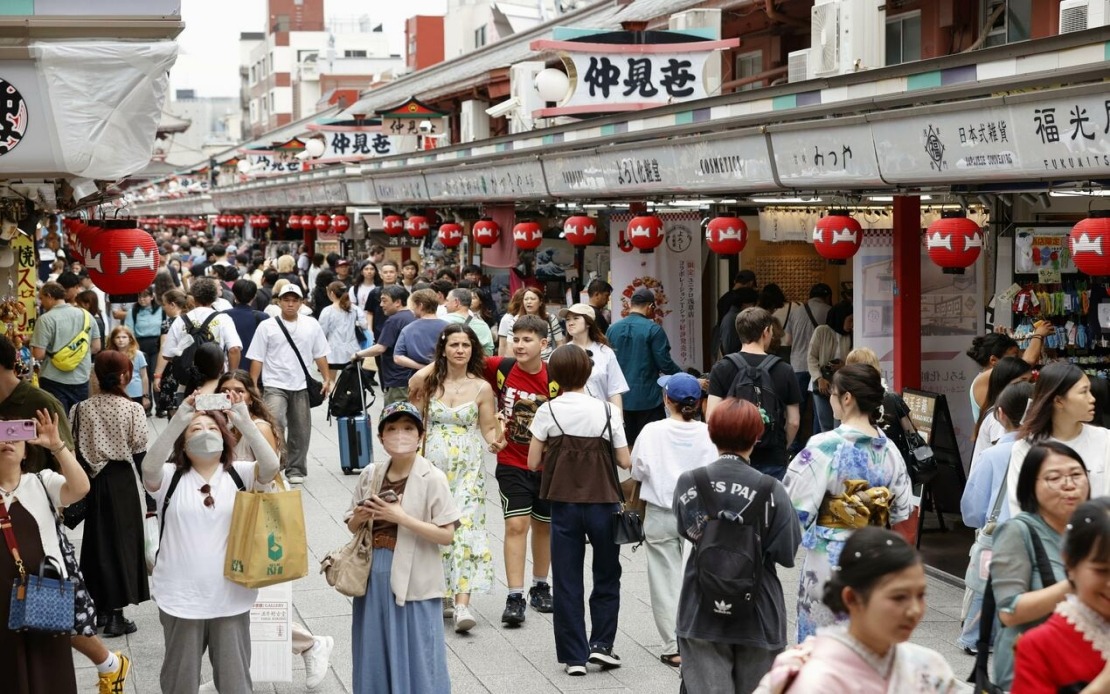
The Japanese holiday season is shaping up to deliver disappointing news for tourism operators across the region, as residents of the world's third-largest economy are expected to reduce their summer wanderlust. Major travel agency JTB Corp estimates that Japanese citizens will undertake 2.17 million overseas trips during the July 15 to August 31 holiday window, representing an 8.8 per cent contraction from the same period last year. This reversal marks a significant shift in sentiment, signalling the first retreat in outbound travel since Japan's tourism industry began recovering from pandemic restrictions in 2023.
The culprit behind this downturn is neither pandemic-related nor cyclical—it is structural economic pressure stemming from the yen's persistent weakness against major currencies and the broader inflationary environment gripping Japanese households. The yen has remained near historic lows against the US dollar, making international travel substantially more expensive for Japanese consumers accustomed to higher purchasing power abroad. This currency headwind is particularly acute because Japanese tourists, who traditionally favour longer-haul trips to premium destinations, now find themselves priced out of their preferred vacation patterns.
Paradoxically, while fewer Japanese travellers are venturing overseas, those who do embark on international trips are spending more per person. JTB projects that per-person expenditure on overseas travel will climb 6.3 per cent to 323,000 yen, equivalent to approximately USD 2,000. This apparent contradiction reflects the reality that Japan's travel market is bifurcating: wealthier consumers are prioritising experiences and absorbing higher costs, while middle-income and budget-conscious travellers are either cancelling trips entirely or dramatically scaling down their ambitions. The airline industry's fuel surcharges, driven by volatile oil markets and geopolitical tensions in West Asia, have added another layer of cost burden, making even economy-class international fares substantially dearer than they were a year ago.
The geography of Japanese travel is experiencing a fundamental reorientation. Long-haul destinations that previously attracted significant numbers—particularly North America and Australia—are witnessing sharp pullbacks as families reassess their vacation spending. Instead, nearby markets in Southeast Asia and East Asia are emerging as the attractive alternative. South Korea has become the top destination, expected to capture 26.2 per cent of Japanese overseas trips, benefiting from its proximity and well-established tourism infrastructure. Taiwan trails closely at 16.2 per cent, also leveraging geographic proximity and the strength of cultural ties to Japan. Both destinations offer relatively short flight times and correspondingly lower airfare components than long-haul alternatives.
China, however, presents a more complicated picture. Despite being geographically proximate, the number of Japanese visitors to the mainland is forecast to plummet to just 10.1 per cent of total outbound trips, representing approximately half of last year's figures. This sharp decline stems directly from diplomatic strain between Tokyo and Beijing, which intensified following Prime Minister Sanae Takaichi's November remarks regarding Taiwan. The deterioration in Japan-China relations has created a chill on tourism, suggesting that geopolitical factors can override economic considerations in travel decision-making. The situation underscores how regional political dynamics directly impact tourism flows and consumer behaviour in East Asia.
Domestic travel is not immune to these economic pressures. JTB projects that Japanese citizens will undertake 69 million domestic trips over the same summer period, a 4.4 per cent decrease from the previous year. The domestic market, however, reveals a slightly different spending pattern—while trip volume falls, per-person expenditure rises modestly by 3.2 per cent to 48,500 yen. This suggests that Japanese consumers are consolidating their vacation activity: rather than taking multiple trips, they are selecting fewer but more deliberate journeys, whether domestic or international. The regional distribution of domestic tourism reflects traditional patterns, with the Kanto region (encompassing Tokyo) remaining dominant at 19.0 per cent of domestic trips, followed by Kinki in western Japan at 14.9 per cent and Hokkaido in the north at 11.2 per cent.
The broader narrative emerging from travel industry data reveals a fundamental shift in Japanese consumer psychology. JTB officials have characterised the market as experiencing growing polarisation, with one segment of the population cutting back substantially—shortening vacation lengths, choosing budget accommodations, or substituting shorter trips for longer ones—while another segment remains willing to pay premium prices to secure their desired experiences. This bifurcation reflects Japan's own internal inequality dynamics and suggests that macroeconomic headwinds are not equally distributed across the population. Affluent households continue to travel extensively, while those on fixed or modest incomes are demonstrating newfound restraint.
For Southeast Asian tourism operators and governments, these trends carry immediate implications. The expected reduction in Japanese visitor numbers represents lost revenue for hotels, restaurants, and attraction operators across the region who have increasingly relied on Japanese tourists as a premium-spending segment. While South Korea and Taiwan are positioned to capture the lion's share of displaced Japanese tourism, countries like Thailand, Malaysia, Vietnam, and Indonesia should recognise that the competitive landscape has shifted. The relative affordability of regional travel—compared to long-haul Western destinations—may provide a modest counterweight to the overall volume decline, but it is unlikely to fully compensate for lower per-capita spending from cost-conscious Japanese tourists.
The JTB projections are based on robust empirical foundation: an online survey conducted in June among Japanese consumers planning one-night or longer trips during the summer holiday window. This survey methodology captures actual booking intentions and spending plans rather than speculative estimates, lending credibility to the agency's forecasts. The timing of the survey—one month before the holiday period—means these projections reflect relatively recent consumer sentiment and economic expectations, though currency and fuel price volatility could still produce variations in actual outcomes.
Looking ahead, the implications extend beyond this single summer season. If the yen remains weak and inflation continues to constrain Japanese household budgets, the downward trajectory in outbound travel could persist into subsequent years. Conversely, if the yen strengthens or domestic inflation moderates, we might anticipate a rebound in Japanese tourism to previous levels. For now, the data suggests that the golden age of seemingly unlimited Japanese tourism spending abroad may be entering a prolonged correction phase, forcing regional tourism economies to adapt their strategies and pricing models to accommodate travellers with tighter budgets and more selective preferences.

