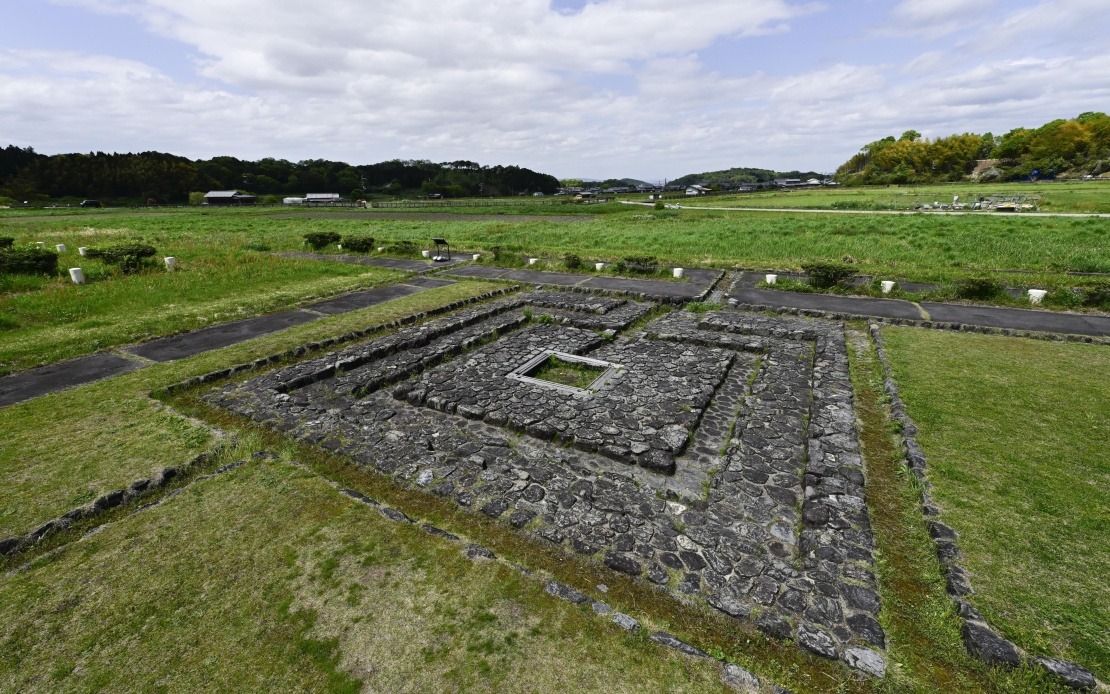
UNESCO's World Heritage Committee has formally recognised Japan's Asuka-Fujiwara archaeological sites as a World Heritage property, elevating the nation's total designations to 27. The decision, announced during the committee's meeting in Busan, South Korea on Sunday, marks a significant acknowledgement of the sites' global cultural importance and their role in understanding how Japan developed as a centralised state during a transformative historical period.
The Asuka-Fujiwara cluster encompasses 19 distinct archaeological sites spread across Nara Prefecture, spanning from the late sixth century through the early eighth century. This timeframe proved critical for Japan's political development, when the archipelago was consolidating disparate regional powers into a unified governmental structure. The inclusion on UNESCO's list follows a favourable recommendation from the organisation's advisory body in June, clearing the path for formal inscription.
What distinguishes these remains in the eyes of international heritage experts is their documentary power regarding Japan's formative state-building process. Rather than existing in isolation, the Asuka-Fujiwara sites illuminate the intricate cultural and political exchanges that occurred across East Asia during this era. The ruins provide tangible evidence of how the Japanese court drew institutional models and religious practices from both China and the Korean Peninsula, adapting these influences to create distinctly Japanese systems of governance and administration.
Among the most significant locations within the cluster are the ruins of Asuka Palace and Fujiwara Palace, both instrumental in early state formation and the consolidation of imperial authority. These palace sites serve as physical repositories of administrative innovation, revealing how the emerging Japanese state organised its power structures. Equally important are the remains of Japan's first fully developed capital city, which represents a watershed moment in urban planning and centralised rule in the archipelago.
The religious dimension of the sites cannot be overlooked, as Buddhist temple ruins scattered throughout the cluster underscore the profound influence of Buddhism on Japan's emerging state identity. The adoption and integration of Buddhism became intertwined with political legitimacy, and these temple complexes stand as testament to how the ruling elites instrumentalised faith to consolidate power and project authority. The archaeological record at these locations documents this crucial intersection between religious institution and state building.
Particularly remarkable among the burial mounds are the Takamatsuzuka and Kitora tombs, which contain extraordinary artistic and scientific artefacts. The Takamatsuzuka mound preserves vividly coloured murals that display sophisticated artistic techniques and aesthetic sensibilities from the seventh century. The Kitora tomb contains what scholars identify as East Asia's oldest extant astronomical chart, suggesting advanced knowledge of celestial observation and mathematical understanding among the ancient Japanese elite. These discoveries push back the boundaries of what historians understood about technological and intellectual development in the region.
For Malaysian and Southeast Asian observers, the UNESCO inscription carries relevance beyond Japan's borders. It underscores how ancient East Asian societies engaged in sustained cultural exchange and adapted foreign models to local contexts, a pattern that resonates across the region's history. The Asuka-Fujiwara sites exemplify how nations can leverage archaeological evidence to demonstrate continuity between ancient achievements and contemporary identity—a dynamic that parallels how Southeast Asian nations have increasingly highlighted their own pre-colonial heritage sites.
Japan's expanded World Heritage portfolio, now comprising 22 cultural sites and five natural designations, positions the nation as a custodian of globally significant heritage. This recognition carries implications for tourism, scholarly research, and international cooperation on heritage preservation. The inscription also reflects growing international attention to how states transformed politically and administratively during the medieval period across East and Southeast Asia, a comparative framework that enriches understanding of the region's past.
The decision by UNESCO's committee represents validation of Japan's stewardship of these archaeological resources and its commitment to preservation and scholarly investigation. The Asuka-Fujiwara designation will likely generate increased international attention and visitation to Nara Prefecture, potentially benefiting local economies and creating incentives for continued conservation efforts. For heritage professionals across Asia, the inscription serves as a precedent for recognising archaeological clusters that illuminate foundational moments in national development and regional cultural exchange.

