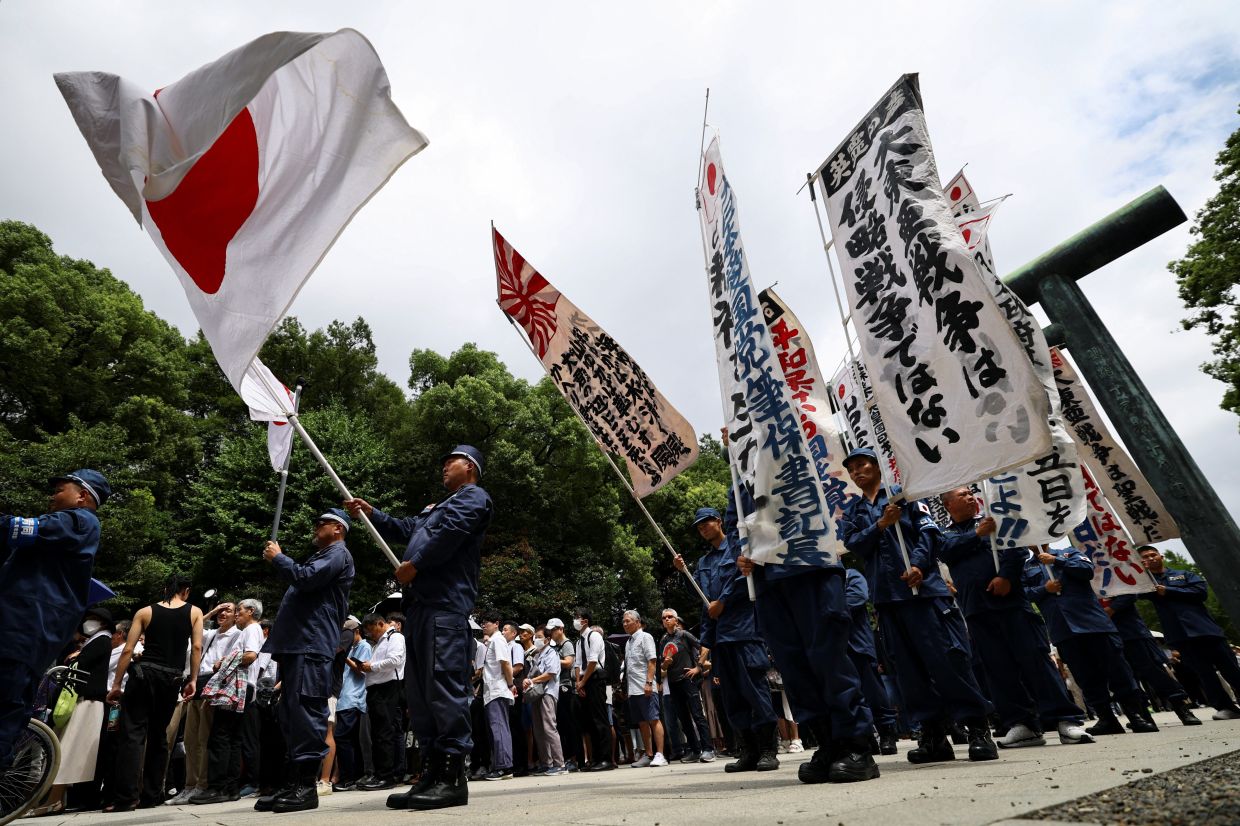
Japan's defence minister Shinjiro Koizumi paid respects at the Yasukuni shrine on Saturday, marking the 81st anniversary of the nation's World War II surrender, but Prime Minister Sanae Takaichi conspicuously abstained from attending the ceremony. The symbolic divergence in approach underscores mounting diplomatic sensitivities surrounding the shrine, which honours 2.5 million war dead yet remains a persistent flashpoint in Tokyo's relations with neighbouring Asian powers, particularly China and South Korea.
The Yasukuni shrine has become one of East Asia's most contentious historical sites, embodying competing narratives about Imperial Japan's wartime conduct and post-war accountability. Beyond honouring soldiers and civilians who perished, the site maintains memorials to individuals convicted as war criminals by international tribunals for their roles in Japan's invasion and occupation of much of Asia during the 1930s and 1940s. Neighbouring nations view pilgrimages by senior Japanese officials as evidence of insufficient remorse for imperial aggression and the atrocities committed under military rule, creating a recurring diplomatic crisis that tests regional stability.
Koizumi's visit as defence chief carries particular weight given his portfolio overseeing military affairs. While Japanese defence ministers have attended Yasukuni previously—most recently Minoru Kihara in 2024—the current political climate amplifies its implications. The move risks rekindling anger in Beijing and Seoul at a moment when Japan is visibly rearmng and adopting more assertive regional security postures. Takaichi's absence, by contrast, signals diplomatic circumspection, yet her decision to send an offering to the shrine rather than attending in person represents a middle path that may satisfy neither critics nor domestic constituencies demanding stronger gestures.
Takaichi assumed the prime ministership in October following previous tenures that established her as a regular Yasukuni visitor. Her restraint this year diverges notably from the precedent set by her political mentor, Shinzo Abe, who visited the shrine in December 2013 during his second premiership. That pilgrimage provoked swift condemnation from China and South Korea, and an unusually direct diplomatic protest from the United States, Japan's closest security ally. The backlash demonstrated how sensitive the issue remains globally, forcing any sitting premier to weigh domestic political expectations against international consequences.
Takaichi's broader policy trajectory has already strained regional relations, particularly with China. In November, she suggested Japan might intervene militarily if conflict erupted over Taiwan, a statement that directly challenged Beijing's sovereignty claims over the self-governed island of 23 million people. China regards such rhetoric as evidence of Japanese neo-militarism and potential collusion with American efforts to contain Chinese regional influence. Beijing subsequently warned its citizens against travel to Japan and imposed targeted trade restrictions, measures that signal economic coercion accompanying diplomatic protest.
The timing of these tensions coincides with Japan's accelerated military modernisation and gradual abandonment of the strict pacifism embedded in its post-war constitution. Takaichi has championed defence spending increases and expanded weapons capabilities, reshaping Japan's security architecture fundamentally. Beijing views this transformation with deep alarm, seeing parallels to pre-war Japanese militarism. Senior Colonel Chen Xi, spokesman for China's defence ministry, explicitly warned against Japanese "neo-militarism" ahead of the anniversary, calling on Tokyo to "earnestly reflect" on wartime crimes and abandon "dangerous acts of remilitarisation."
Russia added its voice to the criticism, with Ambassador statements highlighting Russian sacrifices in World War II while implicitly reproaching Japan's military revival. The symbolic coordination between Chinese and Russian diplomatic messaging reflects broader geopolitical alignment against Japanese security activism, even as Moscow simultaneously provoked Tokyo by conducting Vladimir Putin's first visit to the disputed Kuril Islands on Thursday. Japan claims these territories, making the Russian move a deliberate show of force timed to coincide with the war anniversary commemoration.
Meanwhile, recent years have witnessed modest improvements in Japan-South Korea ties, suggesting that Seoul's objections to Yasukuni visits may have softened compared to Beijing's intransigence. Takaichi and South Korean President Lee Jae Myung shared a drumming session in January, while Defence Minister Koizumi engaged in friendly ping-pong competition with his Korean counterpart, signalling warming military-to-military contacts. Yet these gestures remain fragile, dependent partly on restraint regarding historical sites and contentious symbolism. South Korea's relative silence on this year's Yasukuni visit reflects this diplomatic recalibration.
The Yasukuni shrine itself attempted damage control by appealing to visitors to avoid wearing military-style uniforms, requesting that attendees refrain from imagery that might disturb other worshippers seeking peaceful commemoration. The guidance reflected concern that nationalist elements might weaponise the shrine visit for ideological purposes, potentially escalating international backlash. An AFP reporter estimated approximately 20-30 individuals in military attire attended nonetheless, suggesting limits to the shrine's persuasive authority over a segment of its constituency.
For Malaysian and Southeast Asian observers, Japan's internal balancing act between historical memory, regional diplomacy, and military modernisation carries direct implications. A Japan increasingly militarised and assertive—whether through Taiwanese contingency planning, South China Sea operations, or historical rhetoric—reshapes security calculations across the region. ASEAN nations maintain careful equilibrium between Chinese economic dominance and Japanese strategic partnership, making Tokyo's geopolitical trajectory consequential for regional stability and autonomy. The Yasukuni question, while ostensibly domestic, reflects Japan's broader repositioning from post-war pacifism toward proactive defence posturing that will influence Southeast Asian security architecture for decades.
Takaichi's cautious approach to Yasukuni, despite domestic pressure, demonstrates her awareness of diplomatic costs. Yet her simultaneous embrace of military expansion and willingness to comment publicly on Taiwan intervention suggests she calculates that enhanced defence capabilities ultimately serve Japanese interests more than historical appeasement. This calculation will shape not only Japan's relations with China and Korea but also its role within the evolving Indo-Pacific security landscape where Southeast Asian nations navigate between competing great powers.

