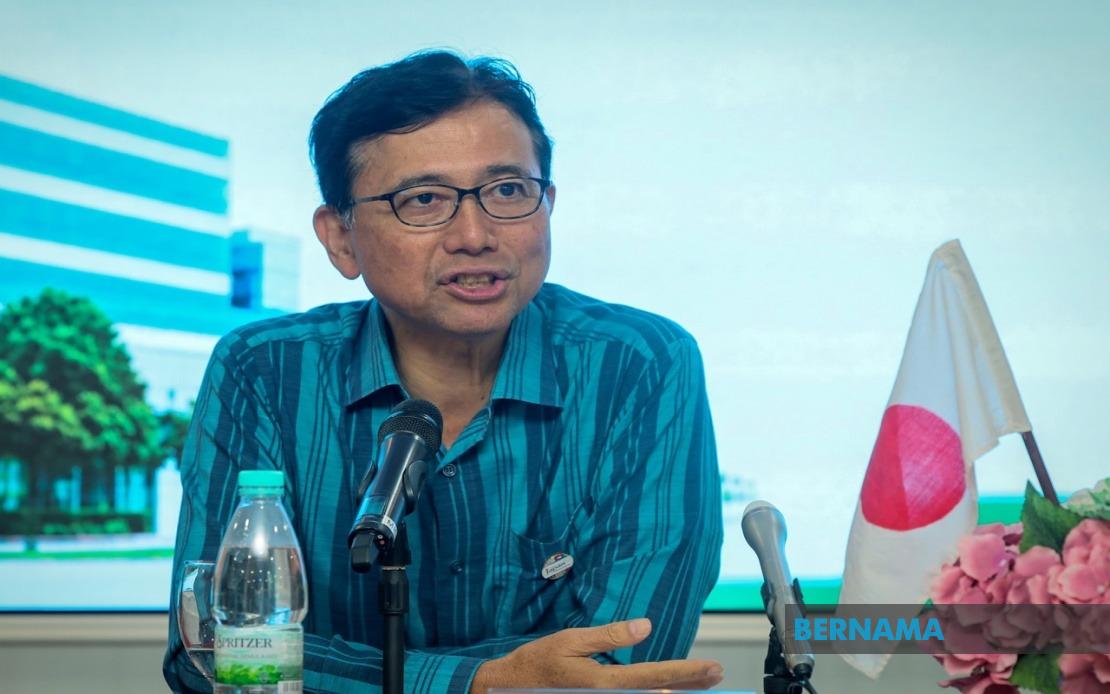
Japan's recalibrated approach to regional engagement presents a timely opportunity for Malaysia to consolidate its standing as Southeast Asia's premier digital and technology destination. Ambassador Noriyuki Shikata highlighted how the updated Free and Open Indo-Pacific (FOIP) framework, unveiled by Prime Minister Sanae Takaichi in May, directly supports Malaysia's broader economic transformation agenda through targeted cooperation in emerging technologies and strategic infrastructure.
The FOIP represents an evolution of Japan's regional vision that stretches back to 2016, when former Prime Minister Shinzo Abe first introduced the concept to anchor Japan's long-term strategic interests in maintaining a stable, prosperous Indo-Pacific. Rather than retreating from its original framework, Tokyo has refined its approach to emphasise practical outcomes and tangible economic benefits for partner nations. This pragmatic repositioning reflects Japan's recognition that regional influence increasingly flows through technological leadership and industrial partnership rather than traditional diplomatic channels alone.
At the heart of Japan's renewed commitment lies a substantial financial commitment. The POWERR Asia initiative brings US$10 billion to the table, specifically designed to strengthen ASEAN nations' capacity in energy resilience, critical material procurement and fuel security. For Malaysia, this represents more than financial assistance—it signals Japan's willingness to embed itself within the region's supply chains and infrastructure development at a time when geopolitical competition for influence is intensifying across multiple dimensions.
Shikata emphasised that the updated framework deliberately shifts emphasis towards what Tokyo terms "economic security" and "industrial resilience." This terminology masks a more substantial strategy: Japan is positioning itself as the reliable technological partner for Southeast Asian nations seeking to diversify away from dependence on any single power. The alignment between Japan's updated FOIP and ASEAN's own Indo-Pacific Outlook (AOIP) is not coincidental but rather reflects careful diplomatic coordination to present a unified regional voice.
Malaysia's specific advantages within this framework are considerable and multifaceted. The country has already established credentials as a semiconductor manufacturing hub, attracting significant Japanese investment in chip production and related supply chains. Shikata flagged that Japanese corporations now view Malaysia as the ideal location to expand into higher-value activities, particularly in advanced chip packaging, artificial intelligence infrastructure and cloud computing services. This progression from basic assembly work to sophisticated technology operations would represent a genuine step up the manufacturing value chain for the Malaysian economy.
The bilateral relationship between Japan and Malaysia has entered a new strategic phase following the establishment of the Comprehensive Strategic Partnership in December 2023. This arrangement supersedes earlier frameworks built around the Look East Policy, which for decades anchored Malaysian-Japanese relations to manufacturing cooperation and technical knowledge transfer. The CSP framework opens pathways for co-creation and innovation-driven partnerships that transcend traditional hierarchies where Japan acts as technology provider and Malaysia as recipient.
Prime Minister Anwar Ibrahim's recent engagement with major Japanese industrial players—including Mitsubishi Corporation, ENEOS, DENSO, IBM and Marubeni—during his Japan visit signals Malaysia's serious intent to upgrade these relationships. Such high-level industrial diplomacy typically precedes substantial investment commitments and technology partnerships. The fact that Malaysia's premier is meeting directly with executives from these conglomerates suggests that both sides see Malaysia as positioned to attract the next generation of Japanese foreign direct investment in technology-intensive sectors.
Looking forward, the most significant opportunities centre on artificial intelligence and quantum computing. These emerging fields represent genuine frontiers where Malaysian and Japanese experts can work as equals rather than in traditional supplier-customer relationships. Joint development initiatives would leverage Japan's formidable technical capabilities with Malaysia's growing expertise and entrepreneurial energy in the technology sector. Such partnerships could position both nations to compete more effectively with technology leaders elsewhere in the global economy.
Beyond commercial considerations, Shikata stressed the importance of protecting critical infrastructure and supply chains as a shared concern for both nations. Regional uncertainty around trade tensions, geopolitical realignment and potential disruptions to vital supply routes has elevated the importance of bilateral and multilateral cooperation on security-adjacent economic matters. By working together on supply chain resilience, Japan and Malaysia can reduce vulnerability to external shocks while building deeper institutional connections that serve broader strategic purposes.
For the Japanese business community operating in Malaysia, this framework offers a more predictable and secure operating environment. Companies can pursue investment in cutting-edge technology with greater confidence that supportive policies and infrastructure development will continue. This creates a virtuous cycle where business confidence drives additional investment, which in turn justifies further government support for technology infrastructure and talent development.
The convergence of Japan's strategic interests with Malaysia's aspirations is not automatic but reflects deliberate alignment by both governments. Malaysia's geographic position, existing industrial base, educated workforce and commitment to regional integration make it an ideal partner for Japan's evolving Indo-Pacific strategy. As competition for influence in Asia-Pacific intensifies, Japan's choice to deepen engagement with Malaysia through technology partnership rather than traditional diplomacy sends clear signals about where Tokyo believes regional opportunities lie.
For Malaysian policymakers and business leaders, this moment offers a window to accelerate the transition toward a technology-driven economy. By capturing Japanese investment and expertise in semiconductors, AI and advanced infrastructure, Malaysia can establish itself not merely as a manufacturing location but as an innovation hub capable of developing solutions for regional and global markets. The question now is whether Malaysia can move quickly enough to lock in these opportunities before other Southeast Asian nations successfully compete for the same Japanese investment and expertise.
%22%2F%3E%3C%2Fpattern%3E%3C%2Fdefs%3E%3Crect%20width%3D%22100%25%22%20height%3D%22100%25%22%20fill%3D%22url(%23ph3na2wg)%22%2F%3E%3Crect%20width%3D%22100%25%22%20height%3D%22100%25%22%20fill%3D%22url(%23ph3na2wp)%22%2F%3E%3Ctext%20x%3D%2250%25%22%20y%3D%2250%25%22%20text-anchor%3D%22middle%22%20dominant-baseline%3D%22central%22%20fill%3D%22rgba(255%2C255%2C255%2C0.95)%22%20font-family%3D%22Georgia%2C%20'Times%20New%20Roman'%2C%20serif%22%20font-weight%3D%22700%22%20font-size%3D%22272%22%20letter-spacing%3D%22-0.02em%22%3EPerak%3C%2Ftext%3E%3C%2Fsvg%3E)