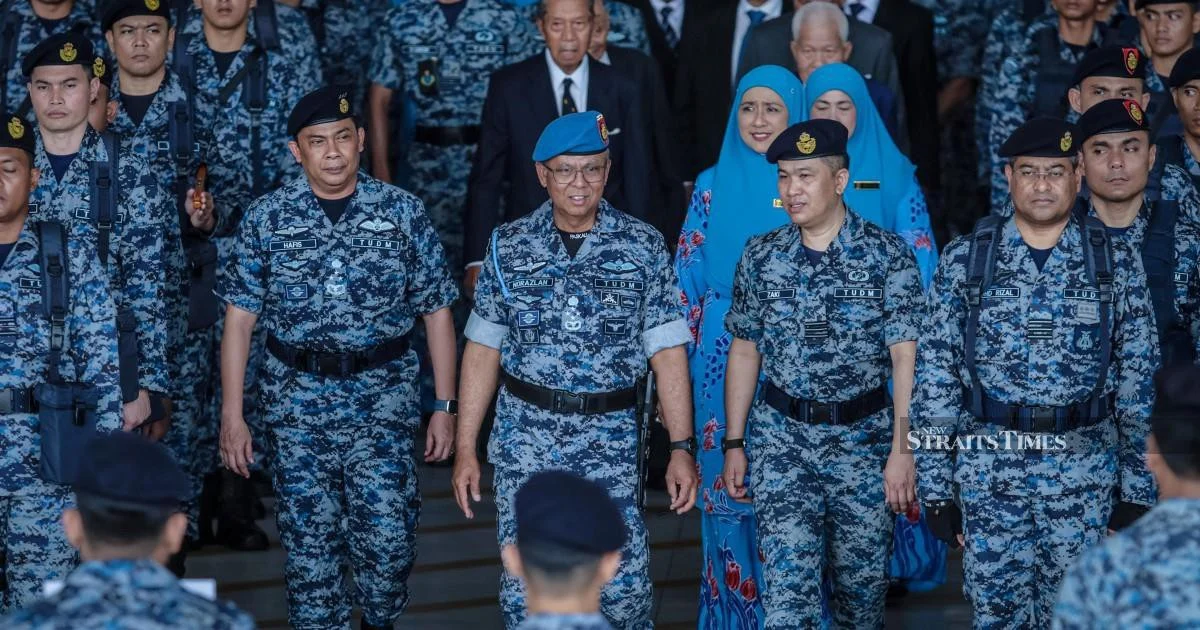
Malaysia's ability to safeguard its extensive maritime routes hinges increasingly on robust air defence capabilities, according to Royal Malaysian Air Force (RMAF) chief General Tan Sri Muhamad Norazlan Aris. Speaking at Subang, the military commander underscored how evolving regional tensions and strategic competition make air cover indispensable for protecting the nation's vital sea lanes and economic interests.
The emphasis on air power reflects a fundamental shift in how Malaysia must approach maritime security in the 21st century. Rather than relying solely on traditional naval patrols, military planners recognise that aerial surveillance, reconnaissance, and rapid response capabilities provide superior coverage of the vast ocean expanses surrounding the country. This strategic assessment aligns with broader defence trends across Southeast Asia, where nations are investing heavily in aircraft, helicopters, and advanced radar systems to extend their maritime awareness and reaction times.
Malaysia's geographic position makes this consideration particularly acute. The country sits astride some of the world's busiest shipping lanes, including vital passages through the Strait of Malacca. These waterways represent not merely local shipping corridors but critical global arteries through which trillions of dollars in international trade flow annually. Any disruption to these routes ripples through global supply chains and affects economies far beyond Southeast Asia. Securing these passages therefore carries implications that extend well beyond national defence to become a matter of international economic stability.
The security environment around Malaysia's maritime zones has grown more complex in recent years. Beyond traditional piracy concerns, regional tensions involving multiple claimants to maritime territories, the increased militarisation of disputed areas, and the presence of extraregional military assets all create layered security challenges. Air-based monitoring and response provides the agility necessary to address these diverse threats quickly and effectively across wide geographic areas where naval vessels alone would struggle to maintain constant presence.
General Tan Sri Muhamad Norazlan Aris's statement reflects strategic thinking that extends beyond immediate defence needs to encompass broader regional stability. Malaysia, as a non-claimant in several maritime disputes yet a nation whose waters border disputed territories, occupies a delicate position. Strong air capabilities enhance the country's ability to maintain a credible security posture without aggressive militarisation, projecting capability rather than intent.
The RMAF's role in maritime domain awareness has expanded considerably over the past decade. Modern air operations involve not merely fighter patrols but also transport aircraft, surveillance platforms, and maritime helicopters capable of coordinating with naval assets. This integrated approach allows Malaysia to monitor a vastly larger area than traditional methods alone would permit, creating persistent awareness across zones of strategic concern.
Investment in air power for maritime security does, however, present significant budgetary considerations. Advanced aircraft, maintenance, training, and personnel costs represent substantial commitments for any nation's defence budget. Malaysia must carefully balance maritime defence investments against other security priorities and broader national development needs. The challenge becomes determining which capabilities provide the greatest strategic return while remaining fiscally sustainable over the long term.
Regional context further complicates Malaysia's maritime security calculus. Neighbouring countries are similarly enhancing their air capabilities, creating a competitive dynamic where falling behind in aerial technology and readiness could potentially affect Malaysia's ability to assert its maritime interests. Simultaneously, cooperation with allied nations and participation in regional mechanisms provide force-multiplying opportunities that can enhance security without proportional increases in defence spending.
The statement also carries implications for Malaysian defence procurement and technological development. Building and maintaining a credible air force for maritime operations requires access to modern aircraft, spare parts, maintenance expertise, and trained personnel. Whether Malaysia sources these capabilities through purchases from established defence manufacturers or explores regional partnerships and indigenous development remains an ongoing strategic question affecting both security outcomes and economic considerations.
Looking forward, the RMAF's emphasis on maritime air capabilities suggests that defence planners view this sector as central to 21st-century security. Climate change, shifting migration patterns, resource exploration in maritime zones, and the increased militarisation of the region all suggest that Malaysia's maritime challenges will only grow more complex. Establishing strong air-based capabilities now positions Malaysia to respond more effectively to these emerging challenges.
The chief's remarks ultimately reflect a military institution grappling seriously with how to protect national interests in an increasingly contested environment. For Malaysia, a trading nation dependent on maritime commerce and stability, the ability to monitor and defend sea lanes represents a direct connection between defence capability and economic prosperity, making air power not a luxury but a necessity for national wellbeing in an unpredictable regional environment.
%22%2F%3E%3C%2Fpattern%3E%3C%2Fdefs%3E%3Crect%20width%3D%22100%25%22%20height%3D%22100%25%22%20fill%3D%22url(%23ph2rh91g)%22%2F%3E%3Crect%20width%3D%22100%25%22%20height%3D%22100%25%22%20fill%3D%22url(%23ph2rh91p)%22%2F%3E%3Ctext%20x%3D%2250%25%22%20y%3D%2250%25%22%20text-anchor%3D%22middle%22%20dominant-baseline%3D%22central%22%20fill%3D%22rgba(255%2C255%2C255%2C0.95)%22%20font-family%3D%22Georgia%2C%20'Times%20New%20Roman'%2C%20serif%22%20font-weight%3D%22700%22%20font-size%3D%22226%22%20letter-spacing%3D%22-0.02em%22%3EHamzah%3C%2Ftext%3E%3C%2Fsvg%3E)
%22%2F%3E%3C%2Fpattern%3E%3C%2Fdefs%3E%3Crect%20width%3D%22100%25%22%20height%3D%22100%25%22%20fill%3D%22url(%23phv6bng)%22%2F%3E%3Crect%20width%3D%22100%25%22%20height%3D%22100%25%22%20fill%3D%22url(%23phv6bnp)%22%2F%3E%3Ctext%20x%3D%2250%25%22%20y%3D%2250%25%22%20text-anchor%3D%22middle%22%20dominant-baseline%3D%22central%22%20fill%3D%22rgba(255%2C255%2C255%2C0.95)%22%20font-family%3D%22Georgia%2C%20'Times%20New%20Roman'%2C%20serif%22%20font-weight%3D%22700%22%20font-size%3D%22320%22%20letter-spacing%3D%22-0.02em%22%3EPAS%3C%2Ftext%3E%3C%2Fsvg%3E)