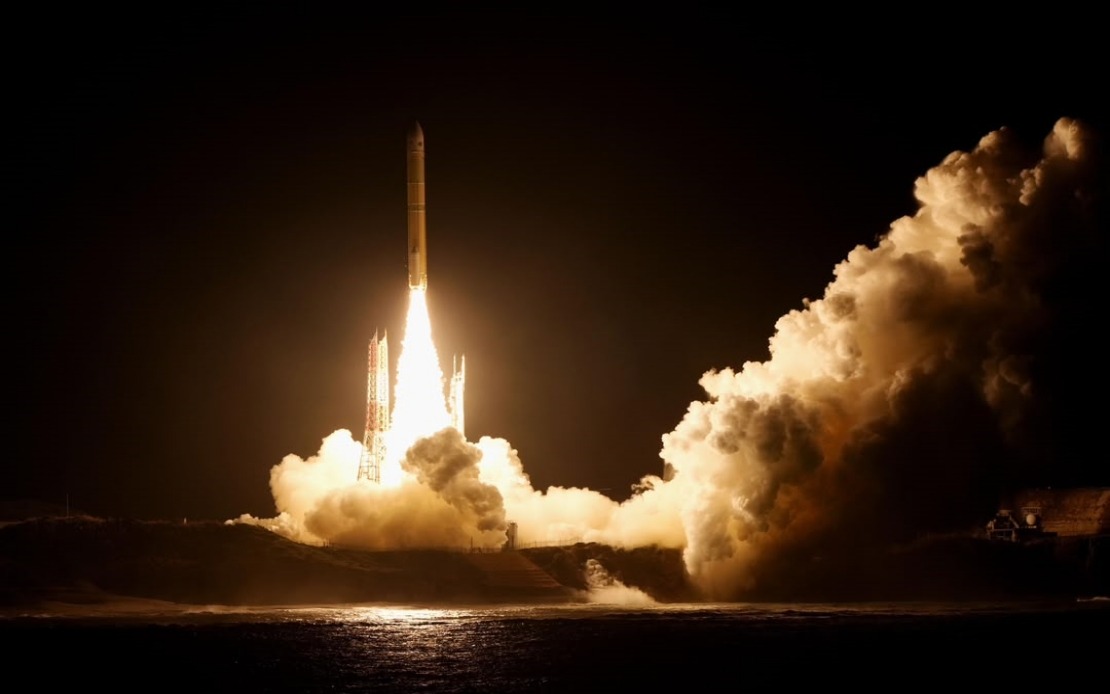
The Japan Aerospace Exploration Agency achieved a significant milestone on Tuesday by successfully launching its H3 rocket from the Tanegashima Space Centre, carrying the Michibiki No. 7 positioning satellite into orbit. The lift-off from the remote southwestern island marked the second consecutive successful flight of Japan's flagship rocket, demonstrating growing confidence in the vehicle after a disappointing December failure that had threatened the nation's space ambitions.
The Michibiki No. 7 satellite forms part of Japan's Quasi-Zenith Satellite System, a domestic positioning infrastructure designed to provide accurate location data for consumer and commercial applications including smartphone navigation and vehicle guidance systems. Unlike many nations that depend entirely on foreign satellite networks such as the American GPS or European Galileo systems, Japan has invested substantially in developing its own independent capability. The successful deployment brings the operational constellation closer to full strength, with five Michibiki satellites currently providing positioning services across the country.
The launch schedule encountered multiple delays before Tuesday's successful flight. The mission, initially planned for Friday, was postponed to Monday to avoid a passing typhoon, then pushed back a further day due to adverse weather conditions surrounding the launch facility on Tanegashima Island. Such weather-related postponements are routine in space operations and demonstrate the rigorous safety protocols maintained by JAXA to protect both the expensive spacecraft and ground infrastructure.
For Southeast Asian observers, Japan's progress in developing independent space infrastructure carries important implications for regional autonomy and technological advancement. Many nations in the region currently lack sophisticated positioning and communication satellite systems and depend on international solutions. Japan's experience in building redundancy and self-sufficiency offers a model for regional cooperation and technological development that could eventually benefit neighbouring countries seeking to reduce external dependencies.
The H3 rocket represents a generational transition for Japan's space capabilities. The vehicle succeeds the highly reliable H2A launcher, which served as Japan's primary orbital launch system for over two decades and established a reputation for dependability that made it attractive to international customers. The H2A's long operational history created a high bar for its successor, and the H3's early mixed performance raised questions about whether JAXA could maintain Japan's standing as a reliable space power.
The December setback involving H3 No. 8 had cast a shadow over the programme. That failed attempt to orbit the Michibiki No. 5 satellite forced postponement of the subsequent No. 7 mission originally scheduled for February, disrupting JAXA's launch cadence and projections for completing the full seven-satellite constellation. The failure triggered an intensive engineering review as JAXA identified and resolved the technical issue responsible for the loss.
The June launch of H3 No. 9 had provided encouraging evidence that JAXA's corrective measures had addressed the underlying problem. That mission successfully deployed multiple small satellites, giving engineers and managers greater confidence in the rocket's systems before attempting the Michibiki No. 7 launch. Tuesday's successful ascent and satellite deployment therefore represents vindication of JAXA's problem-solving approach and engineering competence.
Completion of the full seven-satellite Michibiki constellation remains a priority for the Japanese government and space agency. With five satellites currently operational and the No. 7 now en route to its assigned position, JAXA must successfully launch the remaining two satellites to achieve the comprehensive coverage necessary for the system to function independently without fallback reliance on foreign positioning networks. This strategic independence holds particular importance for Japan given its technological sophistication and critical dependence on accurate positioning data across military, civil, and commercial sectors.
The H3's trajectory from technical failure to demonstrated reliability illustrates the inherent challenges facing any nation developing new rocket systems. Space launch technology remains extraordinarily complex, with thousands of components and subsystems that must function flawlessly during the violent stresses of ascent. Even established space powers experience occasional failures, and recovering from such setbacks requires both technical expertise and institutional determination. JAXA's response to the December failure and subsequent successful launches demonstrate these capabilities.
Regionally, Japan's space achievements reflect broader Japanese technological leadership and manufacturing excellence that influences supply chains and technological standards throughout East and Southeast Asia. As Japan strengthens its space infrastructure, it inevitably expands opportunities for Japanese companies to provide components, systems, and services to other regional space programmes, creating commercial and strategic relationships that extend beyond traditional aerospace sectors.
The successful Michibiki No. 7 deployment also underscores Japan's commitment to long-term strategic planning in space technology. Unlike programmes driven primarily by short-term political considerations or budgetary constraints, Japan's positioning satellite constellation has been methodically developed and deployed across multiple administrations, reflecting a consistent national priority to maintain technological independence and strategic autonomy in critical infrastructure.

