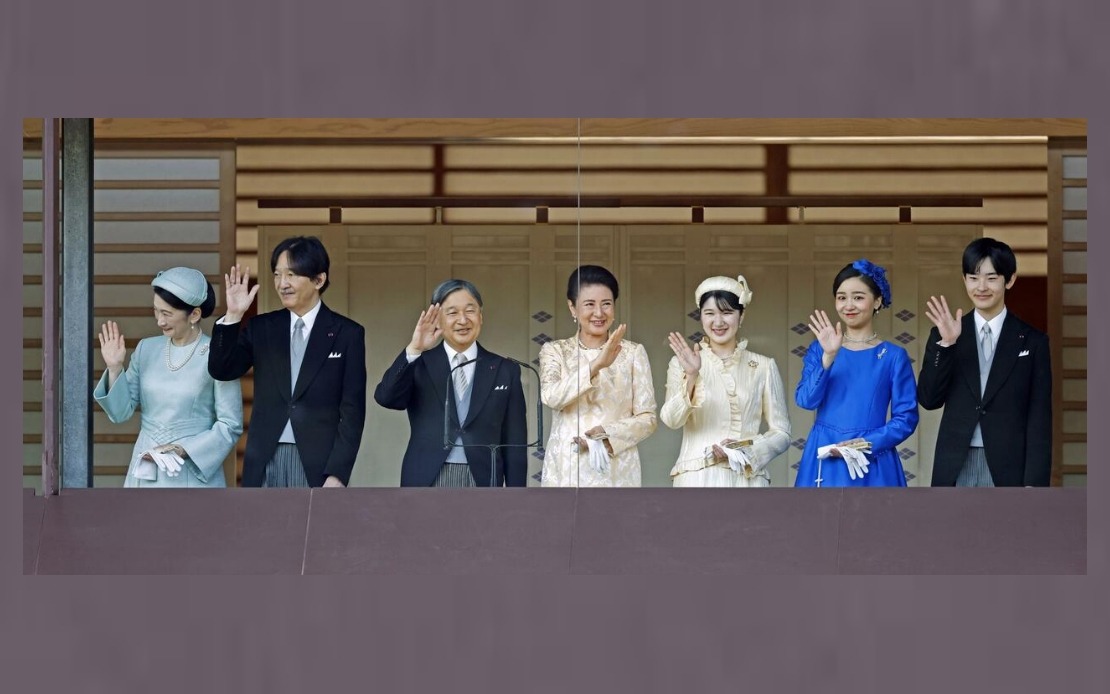
Japan has embarked on a significant constitutional overhaul of its imperial system with the parliamentary passage of sweeping amendments to the Imperial House Law on Friday, yet the changes have simultaneously triggered deep anxiety among those tasked with implementing them and fractured public consensus about the monarchy's future. The legislation, enacted as the first substantial revision since 1947, represents a deliberate attempt to grapple with a demographic crisis threatening the world's oldest hereditary monarchy—the number of imperial family members has dwindled to just 16 individuals. Despite recognizing certain progressive elements within the reforms, Palace insiders and Japanese citizens alike express profound uncertainty about navigating untested territory that the amendments will inevitably create.
At its core, the revised law introduces a mechanism to reverse the historical attrition of the imperial lineage by permitting males aged 15 and older from eleven former imperial branch families—which renounced their royal status in 1947—to be adopted back into the imperial fold. This provision represents the legislation's centrepiece, with policymakers, particularly Prime Minister Sanae Takaichi and her conservative allies, treating demographic stabilization as a paramount concern. The government has also crafted concessions intended to placate modernizers, including provisions that allow princesses to retain their royal status if they choose to remain unmarried and unwilling to leave the system. These accommodations appear designed to reduce pressure on female imperial members to abandon their heritage through matrimonial unions with commoners, a historical norm that has historically depleted the imperial roster.
However, the underlying architecture of the reform reveals a fundamentally conservative orientation that has provoked substantial criticism. The legislation explicitly maintains the male-only succession principle, effectively foreclosing any pathway for Princess Aiko, the Emperor's only daughter, to ascend to the throne despite opinion surveys consistently demonstrating robust public enthusiasm for female leadership in the imperial system. This divergence between governmental action and demonstrable popular preference has become the flashpoint for broader discontent about the reform's legitimacy and the decision-making processes that produced it. Critics contend that the government has unilaterally determined the monarchy's future without meaningful engagement with citizens who, in principle, bear democratic authority over such foundational institutions.
Within the Imperial Household Agency, officials acknowledge the statute's potential utility while simultaneously harboring reservations about implementation. One senior official observed that the revised framework finally offers "a path toward securing a stable number of imperial members," suggesting grudging acceptance of necessity. Yet the same institutional leadership expresses anxiety about whether adopted individuals will possess genuine commitment to the imperial institution's symbolic role and whether they can authentically embody the cultural and spiritual dimensions that contemporary Japanese monarchs are expected to discharge. The Emperor, constitutionally defined as "the symbol of the state," carries responsibilities extending beyond ceremonial performance—Emperor Naruhito and Empress Masako regularly undertake visits to disaster-stricken regions and foreign nations, embodying national solidarity and diplomatic presence. Palace aides question whether adoptees from civilian lineages, absent formative immersion in imperial protocols and expectations, can credibly assume such multifaceted obligations.
Actual interest from potential candidates for adoption has proven underwhelming, further complicating the government's expectations. Asahiro Kuni, an 81-year-old member of the Kuninomiya branch and third son of a former imperial line, expressed scepticism about the prospects of recruitment, remarking that few individuals would likely volunteer for adoption into a system carrying immense ceremonial burdens and constraints on personal autonomy. His candid assessment reflects a chasm between legislative intent and practical feasibility—the law creates theoretical opportunity without generating genuine enthusiasm among those with lineage claims to return to imperial ranks.
Perhaps more revealing than the adoption provisions are the implications for unmarried female imperial members, of whom five currently remain unattached, including Princess Aiko and Princess Kako, daughter of Crown Prince Fumihito. Under the revised law, these women may elect to preserve royal status without marrying, a seemingly progressive allowance that palace officials recognize as fundamentally burdensome. A senior agency official described this as "a rather harsh choice," acknowledging that contemporary social expectations and institutional realities make departure from the system profoundly difficult regardless of legal permission. The structural problem emerges sharply when considering that spouses and offspring of imperial women who marry commoners will themselves retain civilian status—creating the prospect of families internally fractured by hierarchical stratification. One aide serving a female imperial member articulated the profound awkwardness: having heterogeneous status within a single household appears fundamentally dysfunctional and potentially stigmatizing for children of such unions.
The provisions regarding female succession and matrilineal inheritance have prompted aides to suspect that the government deliberately architects these constraints to foreclose the possibility of female emperors or monarchs descended through female lines. This interpretive lens renders the reform not as modernization but as a sophisticated mechanism to entrench patrilineal traditions while appearing to offer concessions. The characterization resonates strongly with younger Japanese who observe the disconnect between legislative architecture and demonstrable public sentiment. Miyu Nakao, a 22-year-old resident of Hiroshima, articulated this perspective sharply, asserting that "the government has made a decision on the imperial system all by itself," criticizing leaders for insulating such consequential deliberations from genuine public discourse.
Public opinion itself presents a fractured landscape that defies easy characterization. Some respondents express openness toward adopted imperial members, with one 76-year-old Tokyo resident suggesting that acceptability depends upon whether adoptees can demonstrate the compassion and connection to citizens that characterize Emperor Naruhito's public engagement. This individual had personally witnessed the imperial family's visit to Fukushima Prefecture following the 2011 earthquake and tsunami, an experience that calibrated his expectations for imperial performance around tangible demonstration of national solidarity. Conversely, younger cohorts and citizens in urban centres express frustration that substantive decisions about the monarchy occurred through elite processes insulated from popular deliberation, particularly given that opinion polling reveals majorities supporting female succession—a reality the government has effectively ignored through its legislative structure.
The knowledge gap represents another dimension of public disengagement, with a 20-year-old Osaka college student candidly admitting unfamiliarity with the Imperial House Law itself and voicing conviction that the government has failed to undertake adequate public outreach or educational initiatives. This observation reveals a troubling circularity: the government enacts momentous constitutional changes while simultaneously neglecting to cultivate informed public understanding that would legitimate those changes through democratic means. The absence of transparent deliberation and pedagogical investment compounds the legitimacy deficit, particularly among generations who view democratic participation as a normative expectation rather than an optional luxury.
For Malaysia and Southeast Asian observers, these developments offer instructive lessons about the tensions inherent in modernizing hereditary institutions. Japan's experience demonstrates how conservative impulses to preserve traditional succession systems can create legally baroque solutions that solve technical problems while exacerbating legitimacy crises. The deliberate sidelining of female succession despite overwhelming public support illustrates how institutional leadership can become disconnected from evolving social values, particularly among younger citizens. Regional monarchies navigating comparable pressures—whether expanding female roles within succession frameworks or addressing demographic challenges to dynastic continuity—would be prudent to observe how Japan's top-down approach generates both institutional uncertainty and popular alienation. The Japanese experience suggests that procedural legitimacy and meaningful public engagement may ultimately prove as essential to monarchical stability as legislative innovation designed to solve technical succession challenges.

