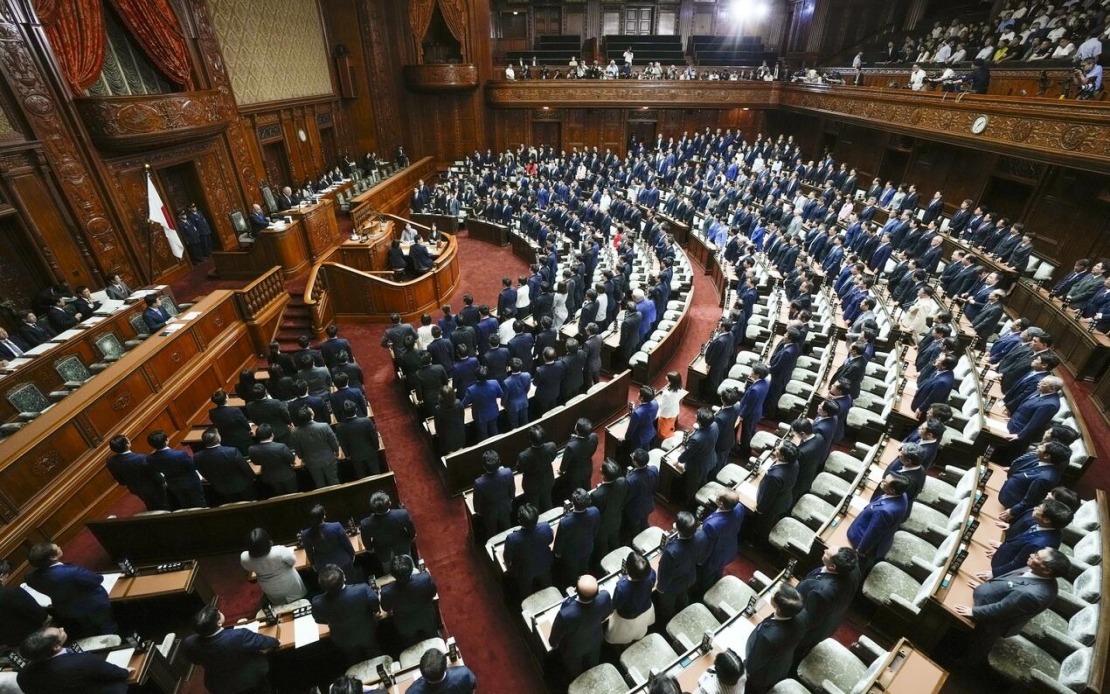
Japan's lower house has cleared a significant constitutional hurdle by approving sweeping amendments to the Imperial House Law on Friday, marking the first substantial revision to the legislation in over seven decades. The vote came after an expedited one-day parliamentary session, demonstrating the ruling coalition's determination to resolve a succession crisis that has preoccupied the nation for years. Prime Minister Sanae Takaichi's administration, which submitted the bill in late June, had faced considerable delays as parliamentary gridlock prevented substantive discussions from commencing until recently. The passage now sets the stage for upper house deliberations, with the ruling Liberal Democratic Party and its coalition partner, the Japan Innovation Party, targeting enactment before the current parliamentary session concludes on July 17.
The bill addresses a demographic reality that has grown increasingly acute within Japan's imperial institution. For generations, the pool of individuals eligible to inherit the Chrysanthemum Throne has contracted dramatically, creating concerns about the continuity of one of the world's oldest monarchies. Currently, succession follows an exclusively patrilineal system established under the postwar constitution, where only males descending from emperors through unbroken male lineage can ascend the throne. This restrictive framework has eliminated potential heirs and reduced the overall number of imperial family members available to fulfil ceremonial and constitutional duties. The legislation attempts to expand this dwindling reservoir by creating mechanisms that contemporary policymakers view as sustainable alternatives to more contentious proposals.
At its core, the reform permits the imperial institution to recruit male relatives from eleven former imperial branch families who possess unbroken paternal descent from historical emperors. These individuals, aged 15 and above, could be formally adopted into the main imperial household, thereby swelling the ranks of eligible successors. Significantly, while adopted members themselves remain ineligible for the throne under the bill's terms, their male descendants would gain succession rights, creating a pathway for future generations. This compromise reflects an attempt to balance institutional conservatism with practical necessity. The legislation simultaneously addresses the status of female imperial members, who under present law automatically forfeit their imperial standing upon marriage to commoners. The new framework would allow women to retain official recognition, though it notably stops short of granting them direct succession eligibility, a provision that has drawn criticism from observers citing contemporary norms around gender equality.
The deliberate exclusion of female and maternal-line succession options reveals the ideological constraints shaping this reform. Public opinion surveys in Japan have consistently demonstrated substantial support for allowing women to inherit the throne, particularly given the absence of male heirs in the direct line. Yet the ruling coalition chose not to incorporate this measure, effectively deferring what many analysts regard as an inevitable future debate. This conservative positioning reflects sensitivities within the Liberal Democratic Party's base, which includes traditionalist constituencies opposed to altering imperial succession principles. The decision to enable adoptee descendants while blocking female succession represents a calculated middle ground intended to satisfy immediate institutional needs without triggering the deeper cultural and constitutional questions that female succession would necessarily provoke.
The legislative journey to this point reveals the fractious state of Japan's parliament and the bargaining that underpins even significant constitutional matters. Political tensions had brought parliamentary business virtually to a standstill during late June, as opposition parties staged coordinated resistance against multiple government initiatives they characterized as high-handed and insufficiently debated. Beyond the imperial law revision, the ruling camp had sought to reduce lower house seats and establish a secondary capital as administrative backup to Tokyo—measures opposition factions denounced as inadequately scrutinized. These disputes reflected deeper grievances, particularly allegations that Prime Minister Takaichi's political organization had produced online content attacking opponents. Parliamentary dysfunction persisted until this week, when the ruling coalition made strategic concessions, abandoning plans to force the seat-reduction bill through during the current session and agreeing to conduct formal debate exchanges between the prime minister and opposition leaders.
The bill's legislative architecture incorporates elements that extend beyond recommendations compiled by bipartisan speakers and vice speakers, elements that have become flashpoints for renewed controversy. The allowance for male children of adoptees to access succession eligibility notably exceeded the scope of the inter-party proposal, provoking accusations that the government had unilaterally expanded the legislation's reach. Opposition parties questioned whether sufficient deliberative space had been allocated to examine implications of these provisions and whether the rush toward passage reflected democratic necessities or partisan convenience. These criticisms highlight broader concerns about legislative process and whether meaningful parliamentary scrutiny can occur when supermajorities proceed with relative autonomy, as the ruling coalition's overwhelming lower house majority technically permits.
The imperial succession question resonates across East Asia with particular intensity in South Korea and other regional democracies grappling with similar institutional continuities rooted in historical monarchy systems. Japan's approach to adapting ancient succession principles while resisting wholesale democratic reformation of those principles offers comparative lessons for neighbours managing analogous tensions between tradition and contemporary governance norms. Malaysia's own complex constitutional arrangements governing the Yang di-Pertuan Agong's rotation among hereditary rulers involve analogous questions about institutional legitimacy, succession, and the appropriate relationship between monarchical institutions and democratic processes. Japan's deliberations thus provide a case study in how advanced democracies navigate revision of fundamental institutions when cultural conservatism intersects with practical institutional requirements.
The coalition's path to Friday's vote depended fundamentally on its parliamentary arithmetic. Holding more than two-thirds of lower house seats, the ruling parties possessed the mathematical capacity to override upper house rejection should the chamber prove obstructive. This supermajority status significantly altered negotiating dynamics with opposition forces, since legislative defeat remained unlikely absent catastrophic party defections. Nevertheless, the government's willingness to compromise on timing and debate procedures suggests recognition that rushed passage without adequate political consensus carries reputational costs, particularly concerning changes to constitutional law. The decision to accommodate opposition requests for formal debate sessions and to sacrifice the seat-reduction bill for later consideration indicates calculation that gradual progress on multiple fronts serves long-term coalition interests better than aggressive temporal compression of multiple controversial measures.
Looking forward, the upper house deliberations will test whether the lower chamber momentum proves decisive or whether the second chamber's different composition generates meaningful amendments. The House of Councillors contains several independent and opposition members, and its electoral system differs sufficiently from the lower house to produce somewhat distinct party balance. However, the governing coalition's substantial presence even in the upper chamber suggests passage remains probable, albeit perhaps with minor modifications reflecting upper house preferences. Substantive enactment by mid-July would constitute a significant legislative achievement for the Takaichi government, delivering on a coalition agreement commitment while demonstrating ability to navigate a divided parliament toward meaningful constitutional outcomes. Whether the legislation ultimately resolves Japan's succession preoccupations or merely defers more fundamental questions about female succession will become apparent only through implementation and evolving demographic realities within the imperial family.

