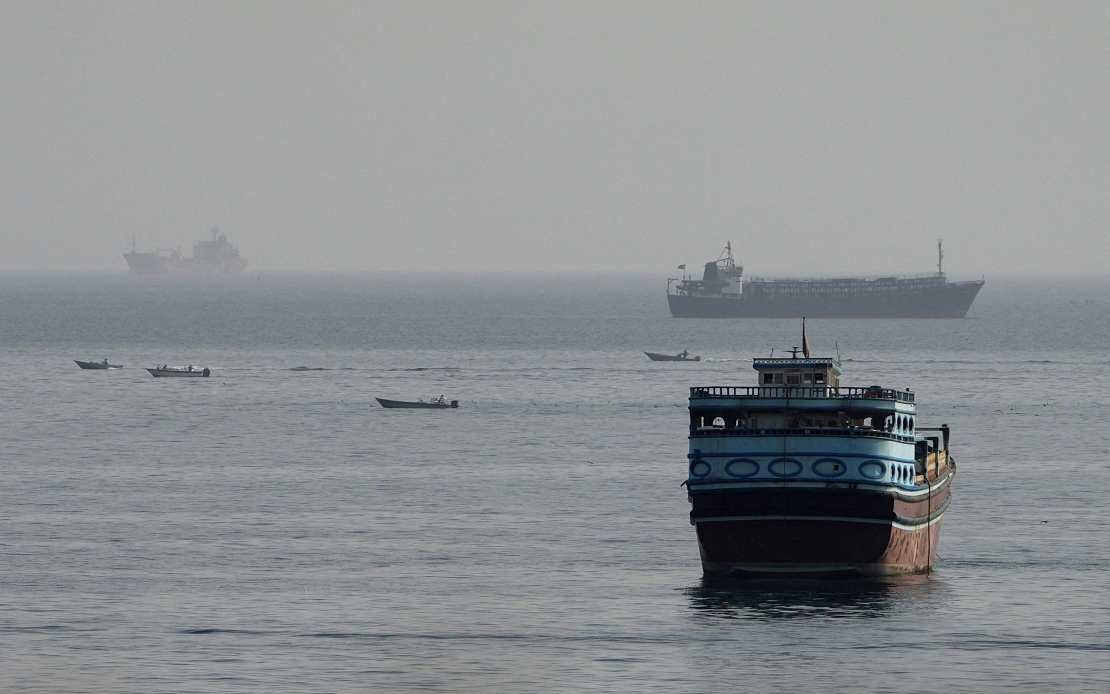
Japanese Prime Minister Sanae Takaichi has called on Iran to refrain from imposing additional fees on shipping passing through the Strait of Hormuz, underscoring Tokyo's concern over the strategic waterway's prolonged operational constraints. During a telephone conversation with Iranian President Masoud Pezeshkian on Wednesday, Takaichi emphasized that the vital trade corridor should remain accessible without supplementary charges, a position reflecting Japan's deep economic dependence on stable Gulf shipping routes.
The exchange between the two leaders marks their first discussion since June and represents the fourth conversation since the conflict between the United States and Israel against Iran erupted in late February. Despite Japan's historical alignment with Washington, the nation has consistently pursued independent diplomacy with Tehran, recognizing the necessity of maintaining functional relationships across the Middle East to safeguard its energy security and commercial interests.
Takaichi also expressed serious apprehension regarding developments in the Bab el-Mandeb Strait, situated on the opposing flank of the Arabian Peninsula. The Japanese premier called upon Pezeshkian to leverage Iran's influence with the Houthi movement, a Yemen-based militant faction aligned with Tehran, urging restraint and de-escalation in the strategically important waterway. This dual-front concern reflects the cascading disruptions to global maritime commerce stemming from instability across the Arabian Sea and Persian Gulf regions.
The Houthi rebels, who formally announced a "maritime blockade" in July targeting vessels associated with Saudi Arabia, escalated tensions by conducting a destructive assault on a cargo ship transiting the Bab el-Mandeb Strait during the week prior. The attack underscores the vulnerability of merchant vessels navigating alternative shipping corridors, as companies and maritime operators have increasingly rerouted shipments through this secondary passage following the effective closure of the primary Strait of Hormuz route.
For Malaysian and Southeast Asian readers, these disruptions carry substantial ramifications. The region's heavy reliance on stable Middle Eastern energy supplies means that any impediment to oil transport through these critical straits directly impacts regional fuel costs, industrial competitiveness, and inflation pressures. Malaysia, as both an energy consumer and a nation with significant shipping interests, faces elevated insurance premiums and extended transit times when major sea routes become contested or unstable.
The broader context involves a prolonged standoff between Washington and Tehran that has effectively constrained normal shipping operations through the Strait of Hormuz, one of the world's most critical chokepoints through which roughly one-third of globally traded petroleum passes annually. The absence of functional US-Iran negotiations perpetuates uncertainty and deters normal commercial activity, compelling traders and shippers to seek alternatives that are themselves becoming increasingly hazardous due to Houthi interventions.
Japan's diplomatic initiative reflects a careful balancing act characteristic of Tokyo's Middle East strategy. As a staunch American ally bound by security treaties, Japan must align with US strategic interests. Simultaneously, Japan recognizes that unresolved tensions and escalating maritime disruptions ultimately harm all trading nations, particularly those heavily dependent on energy imports. By engaging directly with Iran's leadership, Tokyo attempts to encourage pragmatic crisis management without appearing to contradict American policy.
The reference to Iran's capacity to influence Houthi behaviour represents an implicit acknowledgment of Tehran's role in regional proxy dynamics. While Iran publicly maintains distinctions between its government position and the activities of non-state actors, the international community widely recognizes Tehran's substantial influence over the Yemen-based movement. Japan's appeal essentially requests that Iran utilize this influence to stabilize shipping lanes, a request grounded in practical commercial necessity rather than political alignment.
The Bab el-Mandeb route, while functioning as an alternative to the blocked Hormuz Strait, remains significantly riskier and more expensive for merchant shipping. Additional transit time, heightened insurance costs, and the genuine threat of attack create economic friction throughout global supply chains. For maritime-dependent economies like Malaysia, which ranks among the world's busiest shipping nations and hosts major port facilities, such disruptions translate into operational challenges and competitive disadvantages.
Takaichi's emphasis on maintaining Hormuz as a fee-free passage carries particular weight given Japan's historical role as a leading proponent of open-ocean principles and freedom of navigation. Japan has consistently advocated for unimpeded maritime commerce as a foundation of international stability and prosperity. The premier's statement reflects this philosophical commitment while simultaneously addressing Japan's concrete national interests in affordable energy and reliable trade routes.
The diplomatic conversation also signals Japan's frustration with the prolonged impasse between the United States and Iran. Without substantive negotiations progressing, the underlying tensions that prompted Iranian actions and regional proxy activities show no indication of resolution. Japan, dependent on global stability for its economic model, has clear incentives to encourage both Washington and Tehran toward dialogue and de-escalation, even while maintaining its alliance commitments.
Moving forward, the effectiveness of Japan's diplomatic overture remains uncertain. Iran faces significant economic pressures from international sanctions and may view alternative revenue sources, including potential transit fees or leveraging regional allies, as necessary compensation for its constrained position. Conversely, Iran's interests in maintaining some level of international commercial normalcy, particularly as it concerns its own export prospects, may incline Tehran toward restraint despite geopolitical antagonism.
For Malaysia and the broader Southeast Asian region, developments in the Persian Gulf and Arabian Peninsula demand sustained attention. Economic resilience in an era of intensifying great-power competition and regionalized conflicts increasingly depends on navigating disrupted supply chains and volatile shipping conditions. Japan's diplomatic engagement with Iran represents one attempt among many to manage these cascading risks, underscoring the reality that maritime security and energy stability remain central preoccupations for trading nations throughout Asia.

