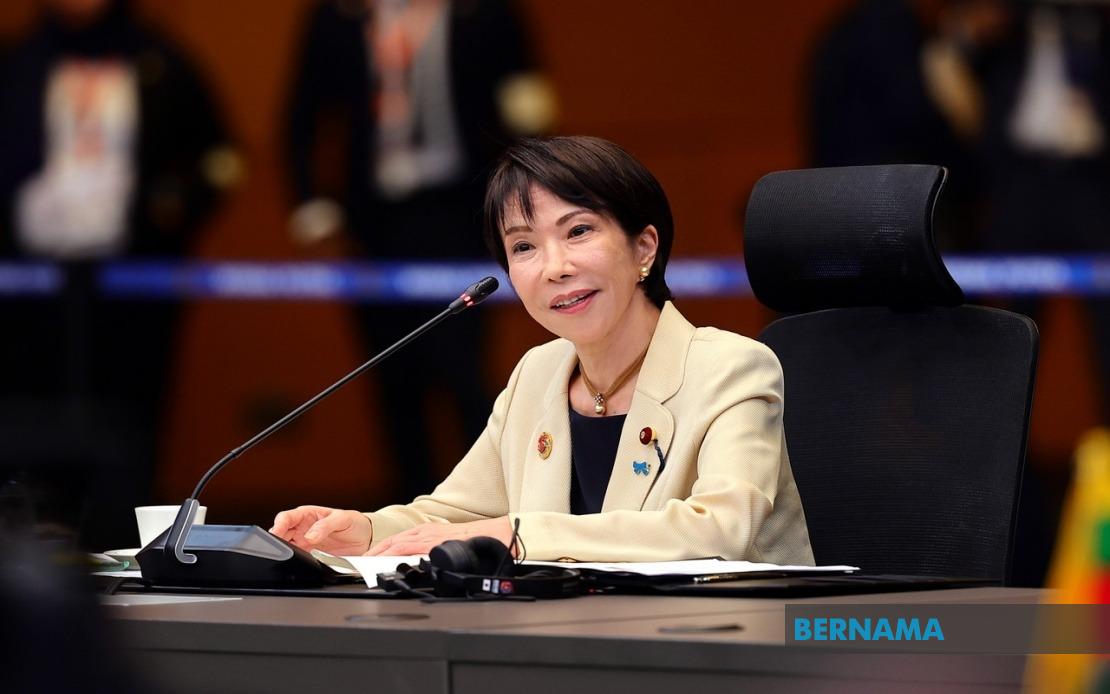
Japanese Prime Minister Sanae Takaichi has raised concerns about maritime security in one of the world's most strategically vital waterways, urging the restoration of unrestricted and secure passage through the Strait of Hormuz during a telephone conversation with Oman's Sultan Haitham bin Tariq al-Said. The call, which took place on Monday, reflects Tokyo's anxiety over the persistent tensions between the United States and Iran that continue to threaten the stability of this crucial shipping corridor, through which roughly one-third of global seaborne traded oil passes annually.
The Strait of Hormuz serves as a critical lifeline not only for Japan but for the entire Asia-Pacific region, including Malaysia and other Southeast Asian nations that depend heavily on stable energy supplies and predictable trade routes. Any disruption to maritime traffic through this narrow waterway risks cascading consequences across global supply chains, potentially driving up energy costs and creating economic headwinds for oil-importing economies throughout the region. Japan's direct engagement with Oman underscores the gravity with which Tokyo views the current impasse between Washington and Tehran, signalling that Tokyo is prepared to leverage its diplomatic channels to prevent further escalation.
Oman, a sultanate situated strategically at the mouth of the Persian Gulf, has positioned itself as a neutral broker capable of mediating between Iran and Western powers. According to reports from Kyodo News, the sultanate is actively engaged in discussions with Iran specifically regarding shipping operations through the strategic waterway. This mediation role reflects Oman's delicate balancing act—maintaining commercial and diplomatic ties with both Iran and the broader international community while protecting the interests of all nations dependent on the Strait's unimpeded use.
During their conversation, Takaichi outlined Japan's expectations for maritime freedom in the region, emphasizing that the current situation poses risks to global commerce and stability. The Japanese leader's intervention demonstrates that Tokyo is not content to remain passive while diplomatic negotiations between Washington and Tehran languish. Japan's historical reliance on Middle Eastern oil and its substantial shipping interests in the region make it a natural stakeholder in any resolution to the Iranian nuclear dispute and the broader security picture in the Gulf.
In response to Takaichi's concerns, Sultan Haitham indicated that Oman would adopt a consultative approach, pledging to take into account the perspectives and interests of all nations with significant commercial interests in the Strait. This commitment, as relayed by Takaichi to journalists at her Tokyo office, suggests that Oman is conscious of its responsibility as a steward of the region's maritime interests and its obligation to represent the concerns of the broader international community, not merely those of a single party in the ongoing dispute.
The decision by Japan to engage directly with Oman reflects a broader pattern of concern among Asian economies about the risks posed by the prolonged standoff between the United States and Iran. The collapse or indefinite suspension of nuclear negotiations has created an atmosphere of uncertainty that weighs on markets and complicates long-term planning for energy-dependent nations. Tokyo's diplomatic overture is an attempt to preserve what little momentum exists toward a negotiated settlement while ensuring that the interests of non-aligned nations with substantial economic stakes in regional stability are acknowledged and protected.
For Malaysia and other ASEAN member states, the situation carries particular significance. The region's emerging economies are heavily dependent on stable energy supplies and predictable trading conditions. Any escalation of tensions in the Strait of Hormuz would immediately translate into higher energy costs and disrupted supply chains, potentially undermining economic growth across Southeast Asia. Malaysia, as both an oil producer and consumer with significant shipping interests, has a direct stake in ensuring that the Strait remains open and secure.
The stalling of US-Iranian negotiations presents a puzzle for regional powers seeking stability. With neither side appearing willing to make significant concessions, the risk of continued brinkmanship tactics and military posturing in the Gulf remains elevated. Countries like Japan have limited direct leverage in these negotiations but can attempt to work through intermediaries like Oman to encourage dialogue and prevent accidents or miscalculations that might spark wider conflict.
Oman's willingness to consult with all stakeholder nations suggests that any solution to the current impasse will need to accommodate the legitimate interests of oil-importing countries and nations whose prosperity depends on free trade through the Strait. This broader consultation process, if pursued seriously, could provide a path toward reducing tensions by ensuring that international economic concerns are factored into any eventual agreement between Washington and Tehran.
The timing of Takaichi's call also matters, coming as it does during a period of particular global economic fragility. Supply chain disruptions, inflationary pressures, and energy market volatility make the prospect of additional shocks emanating from the Middle East especially concerning for regional economies. Japan's initiative to stress the importance of maintaining maritime security suggests that Tokyo believes diplomatic pressure, even from non-aligned nations, can help prevent the situation from deteriorating further.

