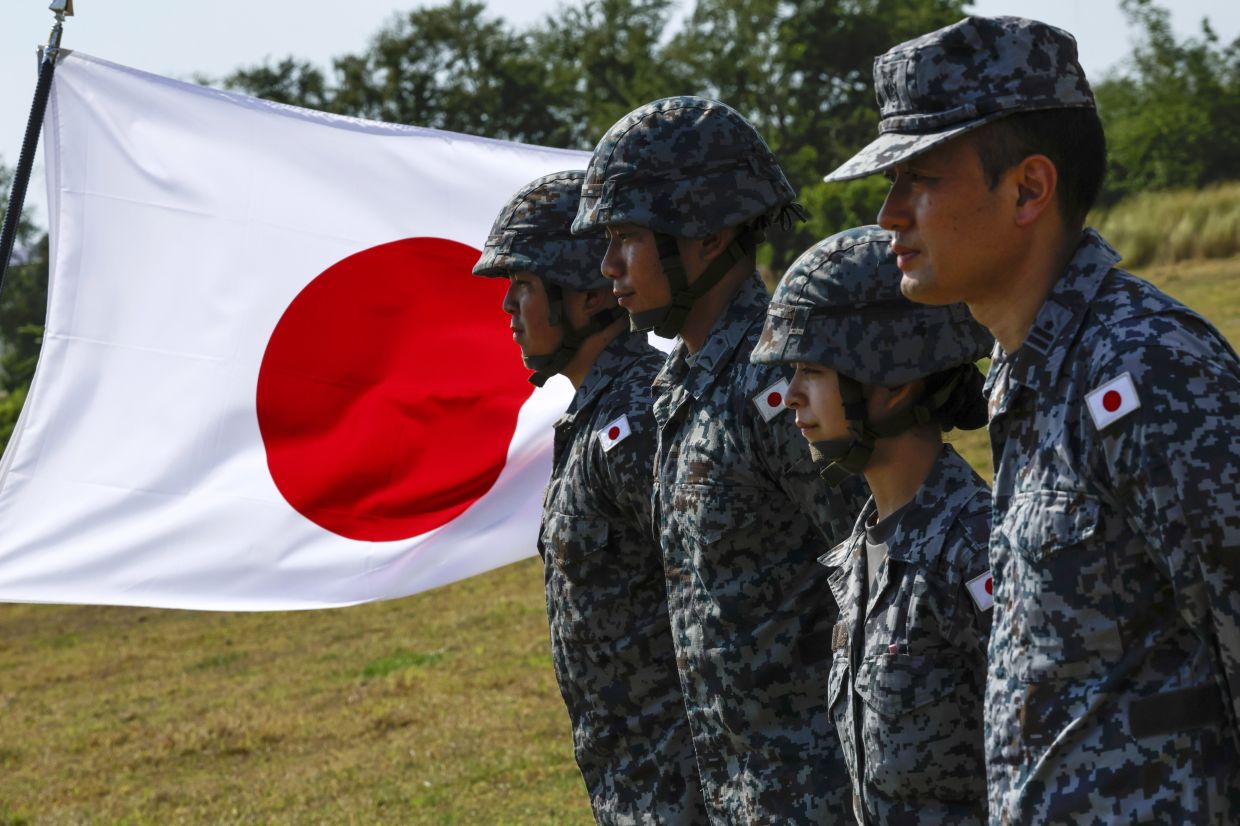
Japan's recent display of military diplomatic muscle at a major regional security forum in Singapore revealed both the country's determination to reshape the regional balance and the underlying anxieties driving its push for greater defence engagement across Asia. The prominence Japan commanded during the May gathering, underscored by its defence minister's high-profile meetings and strategic announcements, masks deeper uncertainties about America's commitment to the region and Beijing's expanding influence—concerns that are pushing Tokyo to construct a more self-reliant security architecture.
At the heart of Japan's regional strategy lies a fundamental shift in how it approaches partnerships beyond traditional bilateral ties with Washington. Rather than relying solely on the established US-Japan alliance, Tokyo is systematically weaving a network of security arrangements with multiple countries across the Indo-Pacific, each tailored to address specific regional vulnerabilities and development priorities. This multilayered approach reflects a calculated assessment that the region faces a potential vacuum as questions mount about sustained American engagement, particularly under the current Trump administration's transactional approach to alliance commitments.
The cancellation of a scheduled forum session that would have provided Beijing with a platform to discuss its regional security vision offers a telling illustration of how Japan is quietly reshaping the terms of regional conversation. Rather than engaging China directly, Tokyo is establishing alternative frameworks and partnerships that effectively marginalise Beijing's influence by offering competing visions of security and development to regional nations. This strategy avoids the overt anti-China rhetoric that would alienate partners still economically dependent on Chinese markets and investment, instead focusing on practical security and economic tools that appeal to nations' core development objectives.
Tokyo's recent pivot toward constructing nuclear-powered attack submarines—a proposal that challenges decades of Japan's self-imposed nuclear constraints—demonstrates how seriously the government takes emerging security challenges. This proposal signals a fundamental reassessment of what military capabilities Japan believes necessary for regional stability, reflecting anxieties about China's submarine modernisation and the need for Japan to maintain credible deterrence without becoming provocatively militarised in ways that might destabilise regional relationships or trigger unnecessary escalation.
Central to Japan's execution of this strategy is the Free and Open Indo-Pacific framework, which Prime Minister Sanae Takaichi substantially recalibrated in May to move beyond abstract principles toward concrete economic and security instruments. The updated framework prioritises tangible investments in undersea cable infrastructure, energy supply chain security, and maritime domain awareness capabilities—areas where Japan can provide meaningful support that addresses genuine development and security gaps without appearing to encircle China militarily. This pragmatic repositioning acknowledges that many Southeast Asian and Pacific island nations prioritise economic resilience and infrastructure development as much as traditional security concerns.
Japan's newly established Official Security Assistance programme represents an innovative mechanism for channelling direct defence support to strategic partners while circumventing previous restrictions on military aid. Tripling its reach from four partner countries in 2021 to twelve countries by 2024, with funding expanding from 2 billion yen to 18.1 billion yen, the OSA programme has provided advanced radar systems, drones, and other capabilities to nations lacking resources for conventional weapons purchases. This approach allows smaller regional partners to upgrade their defence capabilities without the political burden that would accompany direct military aid or weapons sales, particularly important for nations attempting to maintain balanced relationships with both Beijing and Washington.
The strategic appeal of infrastructure investment lies in its dual utility and political acceptability. Ports, airports, and connectivity projects developed through Japanese assistance can simultaneously serve civilian economic purposes and support maritime security operations, appealing to recipient nations that must justify partnerships to domestic audiences wary of being drawn into great power competition. This integration of development finance with security objectives offers what analysts describe as a more holistic engagement model, one that acknowledges how regional nations prioritise economic development alongside security concerns rather than viewing these as separate policy domains.
Japan's decision in April to lift its longstanding ban on lethal weapons exports has unlocked significant commercial and strategic possibilities, allowing Tokyo to supply defence equipment to seventeen countries including six ASEAN members: the Philippines, Malaysia, Indonesia, Vietnam, Thailand, and Singapore. The subsequent June agreement between Tokyo and Jakarta to discuss potential export of Asagiri-class destroyers to Indonesia exemplifies how Japan is translating policy reform into concrete defence partnerships. These transactions serve multiple purposes simultaneously—they strengthen bilateral relationships, provide Japanese defence firms access to international markets, and create operational interoperability between Japanese and partner militaries that enhances regional coordination during potential crises.
The industrial dimension of Japan's defence outreach deserves particular attention, as it provides Japanese manufacturers with crucial opportunities to showcase advanced maritime and surveillance equipment in operational contexts. By supplying defence systems to regional partners, Japan simultaneously develops an export-oriented defence industrial base while creating technological ecosystems where Japanese equipment becomes standard across partner networks. This approach generates long-term strategic lock-in, as countries investing in Japanese systems become invested in sustaining relationships with Tokyo and potentially expanding their Japanese defence capabilities over time.
Japan's April launch of the Power Asia initiative, a ten-billion-dollar programme focused on energy security, demonstrates how Tokyo is broadening its regional strategy beyond traditional military instruments. Recognising that energy security represents a fundamental development challenge for Indo-Pacific nations increasingly concerned about disruptions through strategic chokepoints like the Strait of Hormuz, Japan is positioning itself as a reliable partner for securing both emergency energy supplies and long-term energy transition support. This approach acknowledges that genuine regional stability depends on addressing the full spectrum of security challenges that nations face, not merely military balance-of-power considerations.
Yet Japan's ambitious regional strategy encounters significant constraints that limit how effectively Tokyo can counter Beijing's influence alone. The stark disparity in financial resources between Japan and China means Tokyo cannot match Beijing's vast infrastructure investment programmes or the sheer scale of Chinese economic engagement across Asia. This reality necessitates closer coordination among like-minded nations sharing Japan's vision of an open, rule-based regional order, even as such explicit alignment could trigger suspicions among fence-sitting nations about being pressured to choose sides in a new Cold War dynamic.
Experts emphasise that Japan's success in building a resilient regional architecture depends critically on avoiding explicit anti-China framing that would alienate potential partners and reinforce Beijing's narrative of containing China. Instead, Tokyo must emphasise positive benefits of its partnerships—connectivity improvements, development assistance, energy security, and maritime safety—that appeal across the ideological spectrum while gradually shifting regional alignment patterns. This demands considerable diplomatic finesse, as Japan simultaneously strengthens security ties with nations like Australia and India, coordinates with Washington on military strategy, and maintains economic relationships with Beijing that remain vital for Japanese prosperity.
The broader significance of Japan's defence recalibration extends beyond bilateral partnerships to fundamental questions about how regional security will be structured as great power competition intensifies. By developing alternative frameworks that do not require nations to explicitly choose between China and the United States, Japan offers a potential path toward managing regional tensions without the binary Cold War logic that dominated late twentieth-century geopolitics. Whether Tokyo can sustain this nuanced balancing act while building genuinely durable security partnerships remains the central question defining Japan's role in the Indo-Pacific for the coming decade.

