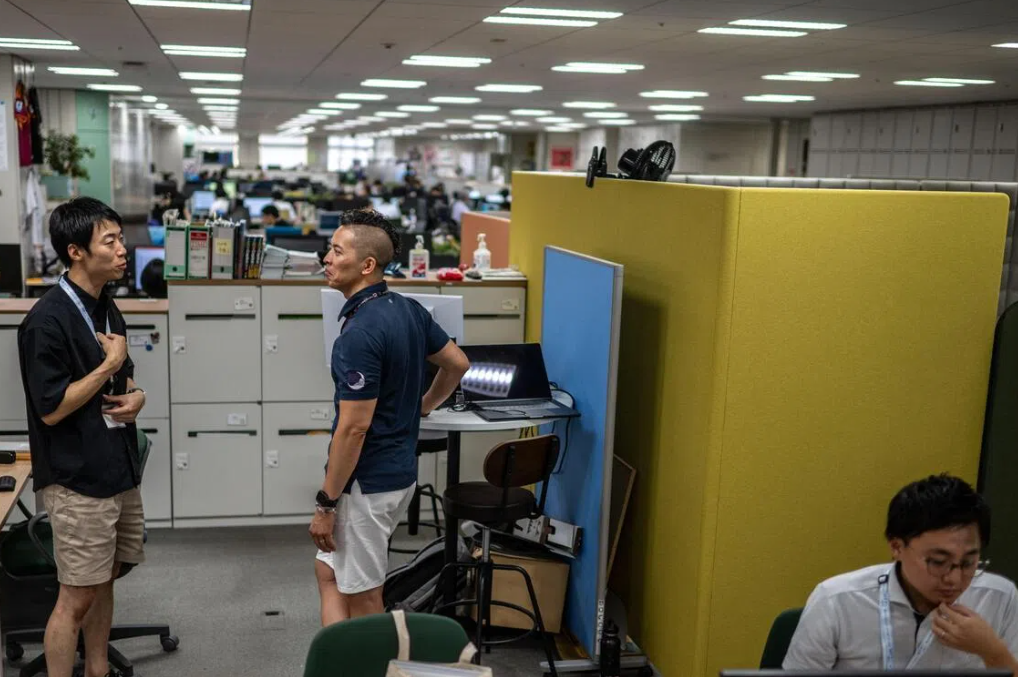
Tokyo authorities have discovered that solving one workplace comfort problem can inadvertently create another. The metropolitan government's decision in April to expand its Cool Biz initiative—a long-standing effort to reduce energy consumption during Japan's sweltering summers—by explicitly encouraging office workers to wear shorts and casual attire has unexpectedly stirred controversy centred on an unlikely issue: the visibility of male employees' leg hair.
The initiative represents an escalation of workplace casualisation that began two decades ago. When Tokyo Governor Yuriko Koike, then serving as environment minister, first introduced Cool Biz in 2005, the campaign focused on abandoning ties and jackets in favour of short-sleeved shirts, a shift that was dramatically legitimised when then Prime Minister Junichiro Koizumi appeared in public without formal neckwear. That early campaign aimed primarily at reducing air-conditioning consumption and associated energy costs. Following the devastating 2011 earthquake and tsunami, which severely depleted Japan's power supply, the government responded with Super Cool Biz, which further relaxed workplace dress standards. The latest iteration, however, has ventured into territory that organisers perhaps did not fully anticipate.
Tokyo environmental official Noboru Watanabe defended the expanded guidelines by emphasising their intent to provide flexibility rather than impose restrictions. "We want to give people more options in the severe heat, not tell them what to wear," he explained to the BBC, adding that "there should be no issue as long as the work attire is not offensive to anyone." Yet this measured stance has collided with an emerging social concern that has gained sufficient traction to acquire its own Japanese term: "sunehara," or "leg hair harassment," which describes the discomfort some workers—predominantly women—report when exposed to visible shin hair on male colleagues.
A June survey conducted by Gorilla Clinic, a men's cosmetic treatment chain, revealed the depth of division on the matter. The poll found that 53.5 per cent of respondents opposed the idea of wearing shorts to work, while 46.5 per cent supported it. Rather than representing a straightforward gender divide, the opposition emerged from multiple concerns, with body shape anxiety and body hair visibility ranking prominently among the stated reasons. Notably, women substantially outnumbered men among survey respondents who expressed reservations, suggesting that female office workers may be less enthusiastic about observing their male counterparts' leg hair in professional settings. This demographic pattern points to a deeper cultural discomfort with body exposure in Japan's traditionally formal workplace environment.
The controversy has created unexpected business opportunities and social pressure simultaneously. Akifumi Funatsu, a director at Gorilla Clinic, reported a marked increase in male clients seeking laser hair removal services. Significantly, these men are not approaching the procedure purely for aesthetic purposes; many frame it as a matter of "social etiquette when wearing shorts." This framing reveals how rapidly workplace norms can reshape personal grooming expectations. What might be considered a purely individual grooming choice in other contexts has become, in the minds of some Japanese workers, a professional obligation tied to maintaining collegial comfort.
The timing of the expanded Cool Biz campaign reflects genuine public health concerns. Japan has been grappling with increasingly severe summer heat and humidity levels that compromise the body's natural cooling mechanisms. During the period of July 6 to July 12 alone, the Fire and Disaster Management Agency recorded seven deaths attributed to heatstroke and hospitalised 4,580 individuals. These figures underscore the legitimate rationale behind official efforts to modify workplace clothing standards. Government health authorities have simultaneously urged residents to remain adequately hydrated, utilise air-conditioning systems, and gradually acclimate themselves to elevated temperatures.
Consumers across Japan have responded to the heat challenge by embracing innovative cooling solutions beyond traditional air-conditioning. Clothing incorporating built-in cooling fans, specialised cooling wipes, umbrellas designed to block heat, and portable fan devices have all gained popularity as individuals seek personal strategies to manage the extreme conditions. Against this backdrop, the debate over shorts at work represents merely one facet of Japan's broader cultural negotiation with climate stress.
The casualisation of Japanese workplaces has progressed furthest within technology companies and startups, which have historically maintained less formal dress codes. The Tokyo government's official endorsement of shorts represents a significant cultural signal that traditional formality is gradually yielding to practical considerations. Yet the leg hair controversy illustrates how workplace dress codes involve more than simply functional choices; they intersect with deeply rooted cultural attitudes toward bodies, propriety, and what constitutes appropriate professional presentation.
The underlying tension reveals differing attitudes toward workplace modernisation within Japanese society. Proponents of relaxed dress codes emphasise the pragmatic benefits during extreme heat and align the policy with broader global trends toward casual workplace attire. Opponents, however, reflect enduring preferences for maintaining professional boundaries and conventional standards of personal presentation. The emergence of leg hair as a contentious workplace issue—seemingly trivial to outsiders yet culturally significant within Japan's context—demonstrates how seemingly simple policy adjustments can trigger complex social negotiations.

