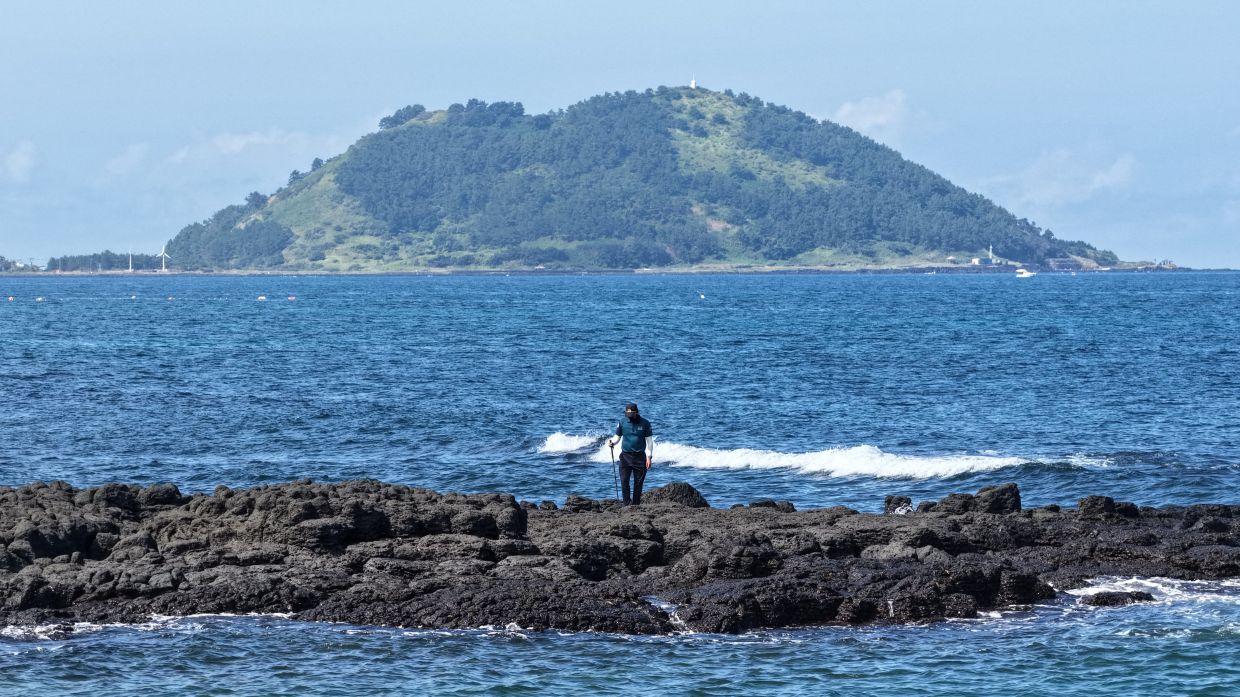
Jeju Island, long marketed as South Korea's romantic getaway and honeymoon capital, is grappling with a severe credibility crisis that extends far beyond the island's scenic beaches and volcanic landscapes. The damage stems from a damning police scandal involving mishandled missing-person cases, compounded by the discovery of four bodies within just seventy-two hours—a convergence of events that has shattered the island's carefully cultivated image of safety and tranquility. The revelations have triggered a cascade of cancellations, online anxiety, and growing concern among tourism operators about the island's economic viability as visitor numbers already show signs of decline.
The scandal centres on the case of Jang Mi-ran, a 37-year-old woman who vanished sometime between late May 12 and early May 13 from her residence in Hallim-eup, Jeju City. What initially appeared to be another tragic disappearance took on darker dimensions when police revealed that a designated officer had falsely closed the case in May, claiming he had contacted Jang—a demonstrable falsehood that should have triggered immediate alarm. Nearly three months elapsed before her remains were discovered on August 24 among palm trees barely ten minutes' walk from her last known location, raising haunting questions about what might have been discovered had the case been properly investigated from the outset.
The officer responsible for closing Jang's case falsely also closed at least one other missing-person investigation involving a man in his sixties, whose body was found on August 23 in Gujwa-eup after a belated search operation. This pattern of deliberate case closure without proper investigation suggested systemic negligence or worse, prompting authorities to launch a comprehensive review of the island's police handling of disappearances. The discovery of additional bodies on August 24 and August 25—a person found dead near a valley in Aewol-eup and a fisherman's discovery of a man in his seventies in waters off Sinheung-ri in Jocheon-eup—created an appearance of crisis that amplified public anxiety far beyond what the actual facts might warrant.
The police failures have reverberated through Jeju's social media ecosystem, where residents and visitors have voiced mounting concerns about safety. A doctor specializing in preventive medicine who has lived on the island for seven years posted candid observations about deserted village roads and the vulnerability of those venturing away from main thoroughfares, even during daylight hours. The sentiment resonated deeply, with residents reporting that visitors and long-term tenants were canceling accommodation bookings and reconsidering travel plans. One prospective couple canceled their wedding photography session in Gujwa-eup specifically citing the recent incidents, while others openly called for boycotts until authorities took full responsibility for the mishandled investigations and clarified what had actually transpired.
Tourism operators, already navigating a difficult period, now face compounding headwinds from fear-driven cancellations. A female-only guesthouse operator in Jocheon-eup, who has maintained her business for eight years in part by catering to women travelers seeking secure accommodation, reported receiving constant calls from prospective guests anxious about safety. Though only one group of three guests had definitively canceled in the immediate aftermath, the operator noted that what was once a distinctive marketing advantage—catering exclusively to women—now amplified nervousness among potential visitors. She emphasized that her neighbourhood features adequate street lighting and security infrastructure, yet the psychological damage from the scandal transcends the actual physical safety measures in place.
The timing of this scandal could hardly be worse for Jeju's tourism sector, which has been contracting even before the police mishandlings came to light. According to the Jeju Tourism Organization, domestic visitor numbers in July totalled 963,401—a year-on-year decline of 12.4 percent, representing a loss of 136,620 visitors compared to July 2023. This marked the first time since the COVID-19 pandemic began in 2020 that monthly domestic visitor arrivals dipped below the one-million threshold, a significant psychological and economic barrier. The downward momentum continued into August, with daily domestic visitor averages of 35,295 from August 1–23, approximately 300 fewer than the corresponding period in 2023, suggesting the negative trend is consolidating rather than reversing.
Critically, the statistics underpinning Jeju's crime reputation require careful parsing. According to the Korean National Police Agency, the island recorded South Korea's highest crime rate in 2024, at 4,539.6 crimes per 100,000 people. This figure, however, deserves contexual interpretation: the calculation uses Jeju's resident population of approximately 663,000 as its denominator, while the island welcomes millions of visitors annually. This methodological quirk means that crimes committed by or against tourists—a substantial portion of criminal activity on any island destination—are counted against a smaller residential base, artificially inflating the per-capita crime rate relative to inland urban centres. Nevertheless, the headline statistic has become ammunition for those questioning whether Jeju remains a genuinely safe destination.
The psychological damage extends beyond statistics. Jeju residents and business owners recognize that rumour and perception now matter more than verifiable facts in shaping tourism decisions. One short-term rental operator noted hearing reports of lease cancellations from tenants spooked by the recent incidents, reflecting how the scandal creates self-reinforcing cycles of fear and economic contraction. As social media amplifies worst-case scenarios and tourism operators compete for diminishing visitor pools, the island faces a credibility crisis that will require sustained, transparent action from police and local authorities to repair.
The path forward for Jeju depends critically on how thoroughly and transparently authorities address the police officer's misconduct and investigate whether systemic failures contributed to the bungled cases. Tourism recovery will require not merely reassurance about existing safety measures—guesthouses already feature security lighting and other infrastructure—but genuine accountability and reforms that restore public confidence in law enforcement. Until residents and visitors believe that missing-person cases will be investigated properly and police will be held accountable for deliberate case closures, Jeju's romance-destination brand will remain damaged. The island's tourism economy, already softening before this scandal emerged, now faces a test of whether it can overcome fear-driven cancellations and restore its image as a secure, welcoming destination worthy of the millions of visitors who once flocked there annually.

