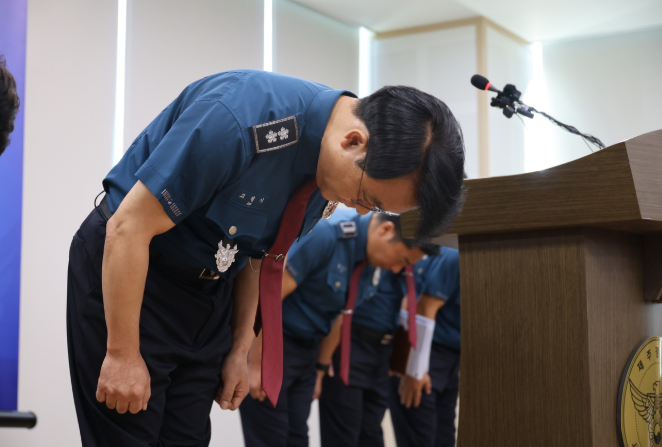
The Jeju Provincial Police Agency faced serious public scrutiny this week when its commissioner, Ko Pyeong-gi, acknowledged a significant failure in handling missing person investigations. During a statement delivered on Thursday, August 27, Ko expressed remorse over how two separate cases were managed by a subordinate officer, with tragic consequences that have shaken public confidence in the regional force.
At the heart of the scandal lies allegations against a police officer surnamed Bu, who stands accused of fabricating progress in missing person investigations to close cases prematurely. The most recent case involved Jang Mi-ran, a 37-year-old woman reported missing in May. According to authorities, Bu falsely documented that he had made direct contact with Jang to confirm her safety, thereby justifying the closure of her file. This claim proved entirely baseless when Jang's body was discovered on Monday, August 24, prompting immediate internal review and disciplinary action.
The same officer employed an identical deceptive method in a second case involving an unidentified man in his 60s. By similarly misrepresenting contact with the individual, Bu closed that investigation as well. That case too ended tragically when the man's remains were found on Saturday. The parallel nature of these incidents suggests a pattern of deliberate misconduct rather than isolated administrative error, raising concerns about oversight mechanisms within the department.
In his public statement, Ko expressed deep contrition not only toward the deceased individuals but also toward their surviving family members. His remarks acknowledged the profound emotional damage inflicted on grieving relatives who had been misled by police assurances that their loved ones had been located and were safe. The commissioner emphasised the fundamental breach of trust involved, noting that families had believed their missing relatives were alive based on false police reports.
Ko's apology extended beyond the immediate victims to encompass the broader Jeju community. His acknowledgement of institutional failure carried implications for public safety perception across the island, where residents depend on police competence in matters as critical as locating missing individuals. The commissioner recognised that public trust, once compromised, requires sustained and deliberate effort to restore.
The incident prompted Ko to commit to comprehensive institutional reforms. Among the announced measures is a systematic review of all missing person cases previously handled within Jeju's jurisdiction. This broader audit aims to identify whether similar misconduct or procedural failures exist in other closed cases, suggesting that the two discovered instances may represent only the visible portion of deeper problems within case management protocols.
For Southeast Asian observers, the Jeju case underscores vulnerabilities in law enforcement systems where individual officers can manipulate administrative processes with minimal immediate detection. Missing person investigations remain inherently challenging across the region, complicated by resource constraints, jurisdictional complexities, and the pressure officers face to clear backlogs. The case demonstrates how simple falsification of contact logs can evade notice for extended periods, particularly if supervisory review relies predominantly on officer testimony rather than corroborative verification.
The broader context of South Korean policing suggests systemic pressures that may have contributed to Bu's actions. Police agencies throughout East Asia frequently operate under targets and expectations to resolve cases efficiently. When officers face competing demands and limited resources, the temptation to administratively close cases through documented contact claims—rather than undertaking laborious physical searches or investigations—can become appealing. Bu's conduct, while indefensible, likely reflects institutional pressures rather than simple individual corruption.
The investigation that Ko has pledged to conduct will need to examine not only whether other officers engaged in similar practices but also whether supervisory structures should have detected these fabrications earlier. Modern case management systems typically include documentation requirements and review checkpoints; the fact that Bu's false entries remained undetected for months suggests either inadequate monitoring or insufficient verification protocols when officers report contact with missing individuals.
For Malaysian law enforcement agencies and those throughout Southeast Asia, the Jeju case offers instructive lessons about governance in missing person investigations. The region handles numerous cross-border cases involving migrant workers, irregular movement, and transnational families, creating complex investigation landscapes where false closures could have serious consequences. Implementing robust verification systems—requiring independent confirmation of officer reports, establishing secondary review protocols, and creating whistleblower mechanisms—could help prevent similar incidents.
Ko's commitment to transparent investigation and systematic case review represents a measured institutional response to serious misconduct. However, the effectiveness of these measures will depend on whether they address underlying incentive structures that may have motivated Bu's behaviour. If police performance evaluations emphasise case closure rates without adequate scrutiny of closure quality, similar problems may recur despite individual discipline.
The incident also raises questions about victim notification procedures. That Jang Mi-ran's family apparently accepted police assurances of her safety without additional verification suggests communication gaps between investigators and bereaved relatives. More rigorous protocols requiring families to independently confirm contact with missing persons—or at minimum, providing families with investigator contact details for verification—could serve as informal oversight mechanisms.
As Jeju police move forward with their internal review and the criminal investigation against officer Bu proceeds, the case serves as a cautionary example for regional law enforcement. The families affected have endured not only the tragedy of losing their loved ones but the compounded pain of having been systematically deceived by officials entrusted with protecting public safety. Whether institutional reforms prove sufficient to prevent recurrence remains to be seen.

