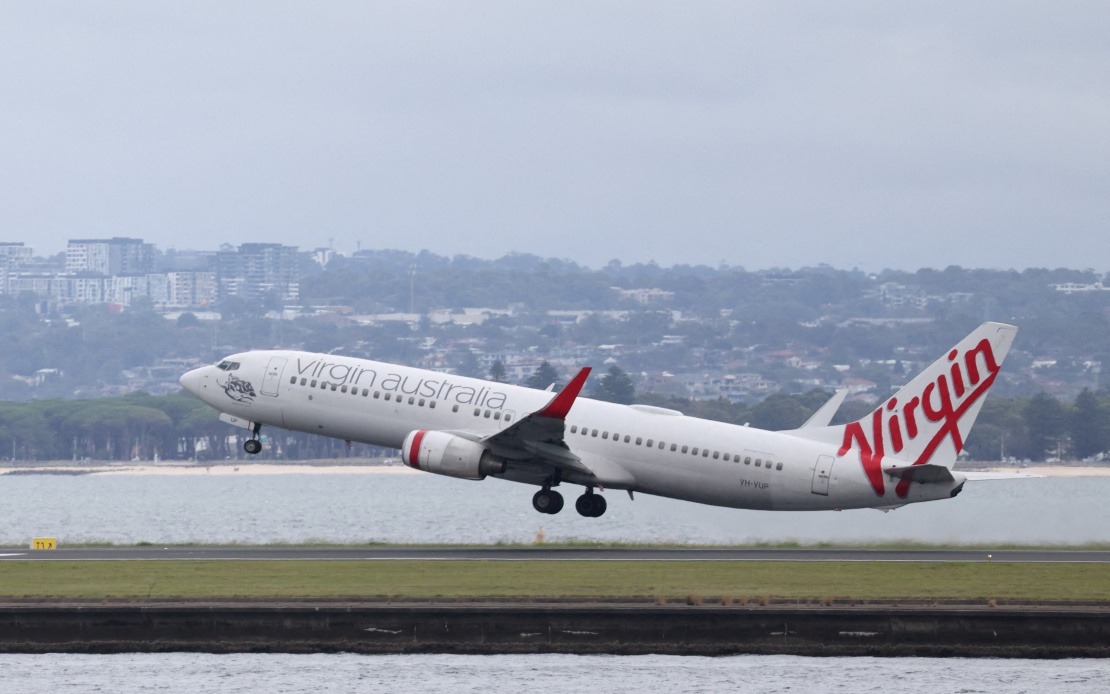
A crew member sustained injuries during a tense moment at Sydney Airport on Sunday morning when a Jetstar Airways aircraft was forced to execute an emergency braking manoeuvre to avert a collision with an empty Qatar Airways Boeing 777 that was being towed along the runway. The incident, which unfolded around 7 am local time as Jetstar flight JQ402 prepared for departure to the Gold Coast, highlights mounting operational pressures at one of the Asia-Pacific region's most critical aviation hubs.
The Jetstar aircraft was in the early stages of its takeoff sequence, moving along the runway under instructions from air traffic control, when pilots suddenly encountered the unmanned Qatar Airways plane being hauled by ground equipment. Unable to continue their intended path, the pilots applied heavy braking, a sudden deceleration that resulted in injury to at least one cabin crew member on board. Emergency medical personnel from ambulance services responded promptly to treat the affected worker, though fortunately no passengers on the Jetstar flight sustained injuries in the incident.
Jetstar, which operates as a wholly-owned budget subsidiary of Australia's flagship carrier Qantas, moved swiftly to initiate an internal safety investigation following the runway encounter. In a statement to media, the airline acknowledged that its aircraft had been operating under air traffic control directives at the time of the near-miss. The statement emphasised that pilots "were forced to brake firmly after another aircraft came in close proximity," framing the incident as a situation where flight crews responded appropriately to unexpected circumstances.
The timing of this incident carries particular significance given recent operational challenges plaguing Sydney Airport and Australia's broader aviation infrastructure. Just days before the runway near-miss, the airport experienced severe disruptions across Friday and Saturday when more than 250 flights faced delays stemming from staff shortages at Airservices Australia, the government body responsible for managing air traffic control operations across the country's major airport facilities including Sydney.
These cascading service interruptions underscore systemic vulnerabilities within Australia's air traffic management framework. When staffing levels dip below operational thresholds, the ripple effects extend far beyond simple scheduling inconvenience—they create the precise conditions under which procedural errors become more likely and safety margins narrow dangerously. The proximity of the near-collision to the earlier staff shortage crisis raises uncomfortable questions about whether overworked personnel or stretched protocols may have contributed to Sunday's runway incident.
For Malaysian readers and Southeast Asian aviation professionals, this incident carries important lessons regarding airport safety standards and resource management. Sydney Airport handles approximately 40 million passengers annually and serves as a crucial regional hub connecting Australia to Asia-Pacific markets. Any disruption or safety concern at this facility reverberates through regional airline operations and passenger networks. Malaysia's own aviation sector, including carriers like Malaysia Airlines and AirAsia, regularly interface with Australian airports and depend upon reliable, consistently-staffed air traffic control services.
The underlying issue of adequate staffing within air traffic control operations resonates across the region. Many Southeast Asian nations face similar pressures to manage rapidly growing air traffic with sometimes constrained human resources. The Sydney Airport experience demonstrates how cost-cutting or understaffing in critical safety functions can rapidly escalate from service delays into genuine safety hazards where near-collisions occur on active runways.
Investigations into such incidents typically examine multiple contributing factors: the adequacy of runway procedures, communication protocols between air traffic control and pilots, the coordination systems for towing operations, and situational awareness protocols. Australian aviation authorities and Jetstar will likely examine whether existing safeguards functioned as intended or whether procedural gaps enabled the situation to develop in the first place.
The Qatar Airways Boeing 777 involved in the incident was unpiloted at the time, being repositioned via ground towing—a routine operation at major airports but one requiring meticulous coordination with active runway traffic. The fact that a towed aircraft could enter sufficiently close proximity to an actively taxiing passenger flight to necessitate emergency braking suggests potential issues in either communication, positioning sequencing, or situational awareness systems.
From a regional perspective, this incident underscores why aviation safety remains fundamentally dependent on human resources and infrastructure investment. As air traffic across Southeast Asia continues its projected growth trajectory, maintaining adequate staffing, training, and safety protocols at major regional hubs becomes increasingly critical. Sydney Airport's recent experience offers a cautionary tale about the false economy of understaffing essential aviation safety functions.
The recovery and investigation process now underway will provide valuable insights into what precisely occurred and what preventive measures can strengthen protocols. For Australian aviation authorities and industry operators, the incident reinforces that maintaining robust staffing levels and safety infrastructure is not merely a service quality issue but a fundamental safety imperative. For regional carriers and aviation professionals throughout Asia-Pacific, the incident serves as a reminder that systematic attention to safety culture and resource adequacy remains paramount in an increasingly busy and complex aviation environment.

