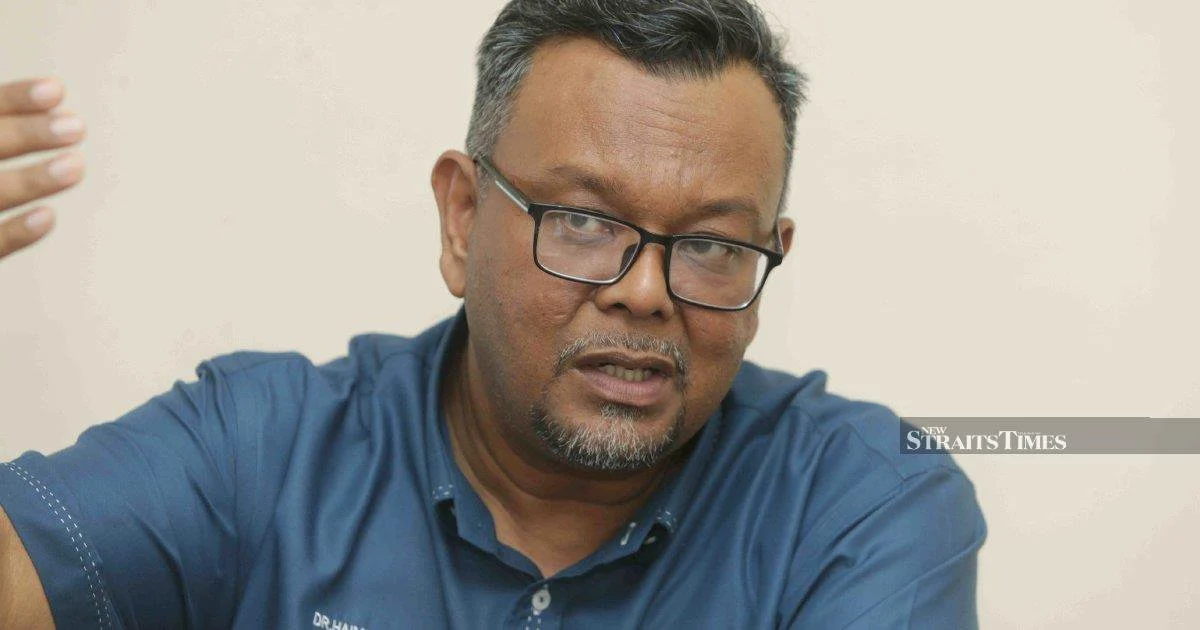
Dr Haim Hilman Abdullah, the assemblyman representing the Jitra constituency in Kedah, will make a court appearance tomorrow at the Seremban magistrate's court to answer charges connected to allegations concerning statements he previously made about access to higher education. The development marks a significant moment in what appears to be an ongoing investigation into public claims made by the elected representative.
The charges relate specifically to assertions Dr Haim Hilman had made regarding university admission procedures and student access to tertiary education programmes. While the exact nature of the allegations remains under investigation, the decision to proceed with formal charges suggests authorities have gathered sufficient evidence to move the matter from investigation phase into the judicial process. The appearance at Seremban magistrate's court indicates this is being treated as a matter within the magistrate's jurisdiction rather than a higher court offence.
This legal action comes at a time when Malaysia continues to grapple with broader conversations around education access, meritocracy, and the transparency of admission processes in public universities. The case touches on an area of considerable public interest, particularly among parents, students, and academic institutions themselves who seek clarity on how selection criteria are applied and whether processes operate fairly and uniformly across all applicant groups.
For the Jitra constituency and Kedah state politics more broadly, the situation presents a notable development in the state assembly's composition and the conduct expected of elected officials. Kedah has witnessed various political shifts in recent years, and this matter adds another dimension to ongoing discussions about political accountability and the responsibilities of elected representatives to ensure accuracy in public statements, particularly those touching on sensitive policy matters like education.
University admission in Malaysia remains a topic of considerable debate. The country's public institutions operate under specific policy frameworks, and questions about how these are communicated to the public, particularly by elected officials, carry weight beyond individual cases. When politicians make claims about access, eligibility, or procedures affecting thousands of prospective students, the accuracy and substantiation of such claims become matters of public concern. Authorities' decision to investigate and charge accordingly reflects this importance.
The proceedings at Seremban magistrate's court will likely draw attention from education advocates, political observers, and the broader public seeking to understand both the specific allegations and what they reveal about oversight of political communications regarding education policy. The case may also influence how elected officials approach public statements on education matters going forward, particularly those made without prior coordination with relevant ministry departments or institutional authorities.
Dr Haim Hilman's appearance represents a potential watershed moment for standards of accountability regarding statements about higher education access. The outcome will carry implications not just for the assemblyman but potentially for the broader understanding of how elected officials should verify and validate claims before making them publicly, especially when such claims could affect public perception of educational institutions or create expectations among constituents.
As Malaysia continues modernizing its governance frameworks and public administration, cases that test the boundaries of political accountability in communication about public services become increasingly relevant. The magistrate's court proceedings will provide clarity on what standards apply and whether existing legal frameworks adequately address concerns about accuracy in policy-related public statements made by elected representatives.
The Jitra assemblyman's court appearance follows an investigation process that presumably involved multiple parties, potentially including university authorities, the education ministry, and law enforcement agencies working to determine the veracity of claims made. Such investigations typically require substantial preliminary work before charges are formally filed, suggesting this matter has been under scrutiny for a considerable period.
Beyond the immediate legal ramifications for Dr Haim Hilman, the case underscores the tension between elected officials' right to advocate for their constituents and their responsibility to ensure statements do not mislead or misrepresent institutional policies and procedures. This balance remains challenging in Malaysian politics, where constituent service often involves intervening or offering guidance on matters like university admissions, yet must be balanced against the autonomy of independent institutions and accurate communication of their actual processes.
The court proceeding tomorrow will mark the formal entry of this matter into Malaysia's judicial system, transitioning it from investigation to adjudication. Stakeholders across education, politics, and civil society will likely monitor the case as it progresses, offering insights into how the system addresses political accountability in relation to public statements on education access and institutional procedures.