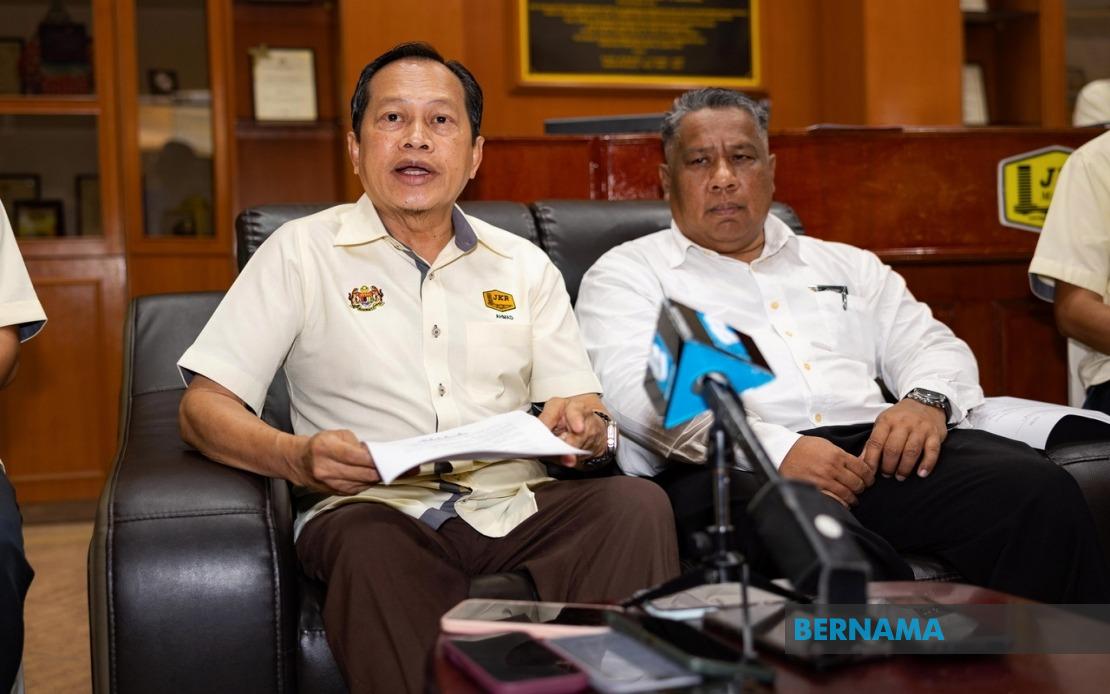
The Public Works Department has clarified its role in managing vegetation along federal roads, emphasizing that while local authorities bear primary responsibility, the government remains committed to enhancing road safety through coordinated efforts. Deputy Works Minister Datuk Seri Dr Ahmad Maslan made these remarks during a working visit to the Manjung District Engineer's Office in Lumut, addressing concerns raised following a tragic incident in which four family members were killed by a falling tree on the FT68 Bentong-Kuala Lumpur Old Road.
Maslan pointed to Section 101(b) of the Local Government Act 1976 (Act 171) as the legal foundation for local authority responsibilities. This provision explicitly grants local governments the power to plant, prune, and remove trees within their administrative jurisdictions, a mandate that extends to vegetation located on federal road reserves that fall under their territorial purview. The distinction clarifies a often-misunderstood aspect of infrastructure governance in Malaysia, where overlapping jurisdictions between federal and local bodies have sometimes created confusion about accountability.
The deputy minister was careful to distinguish between JKR's core responsibilities and tree management obligations. He emphasized that the Public Works Department's purview along roadsides is limited to road furniture and signage infrastructure, not vegetation. This clarification addresses a persistent gap in public understanding about the boundaries of departmental authority, particularly following the tragic Bentong incident that prompted Bentong MP Young Syefura Othman to call for stronger cooperation between JKR, maintenance concession companies, and certified experts in conducting periodic technical assessments of mature trees and slopes.
Under existing concession agreements with private maintenance contractors, there is no contractual provision for proactive tree removal operations. According to the deputy minister, these contracts only permit contractors to clear trees that have already fallen, restricting intervention to reactive rather than preventative measures. This constraint represents a significant limitation in road safety management, as it means fallen or unstable trees cannot be addressed until they pose an immediate hazard. The distinction between permitted and prohibited activities under concession agreements reveals an important structural issue in how Malaysia manages environmental risks on its road network.
Maslan's comments came in response to growing public concern about falling trees on major thoroughfares, an issue that gained prominence following the Bentong tragedy. While acknowledging the tragedy and the need for improved safety measures, the deputy minister avoided suggesting that JKR would assume tree management responsibilities traditionally held by local authorities. Instead, he proposed a collaborative framework wherein JKR and contractors would work alongside local government bodies to strengthen oversight and implementation of existing protocols.
The emphasis on collaboration between the Ministry of Works, state-level JKR offices, and district-level engineers indicates a recognition that solving safety issues requires coordination across multiple administrative layers. Maslan stressed during his Manjung visit the importance of continuous monitoring and close cooperation to ensure that infrastructure projects and maintenance activities meet required specifications, schedules, and budget allocations. This focus on inter-departmental coordination suggests that the ministry views fragmented administrative structures as a challenge requiring systematic management.
For Malaysian readers, this clarification has significant implications for road safety and accountability. The assignment of tree management responsibility to local authorities means that residents should direct safety concerns about vegetation to their city halls or municipal offices rather than federal authorities. However, the willingness of JKR and its concession partners to collaborate offers a potential avenue for coordinated action when local governments lack the technical expertise or resources to conduct the specialized assessments that Young Syefura Othman advocated for.
The tragedy in Bentong underscores the inadequacy of reactive approaches to environmental hazards on roads. While concession agreements prevent contractors from removing trees that pose potential dangers until they actually fall, forward-thinking local authorities could employ certified arborists to identify hazardous mature trees and manage them before they become threats. The gap between what contractual agreements permit and what public safety requires represents a policy area ripe for reform, particularly as Malaysia experiences more extreme weather events that increase the likelihood of tree failures.
Maslan's visit to Manjung also served to reinforce the ministry's broader commitment to strengthening infrastructure delivery at the district level. By meeting with local engineers and reviewing ongoing projects, the deputy minister signaled that the Ministry of Works intends to maintain active oversight of how federal and local coordination functions in practice. This hands-on approach acknowledges that administrative clarity at the top level must translate into effective cooperation among field-level staff for meaningful improvements in road safety.
Moving forward, the responsibility for preventing tree-related accidents will likely depend on how effectively local authorities embrace their legal obligations under the Local Government Act. While JKR's readiness to assist is commendable, the absence of binding requirements for local governments to conduct periodic tree assessments means outcomes will vary significantly across Malaysia's diverse local authority jurisdictions. Larger, better-resourced municipalities may implement rigorous programs, while smaller councils might struggle to prioritize arboriculture management given competing budget pressures.
The Bentong incident serves as a sobering reminder that infrastructure safety extends beyond roads themselves to encompass the natural environment that surrounds them. As Malaysia continues to develop and urbanize, integrating responsible tree management into broader road safety frameworks will become increasingly important. The clarity offered by Deputy Works Minister Ahmad Maslan about institutional responsibilities is a necessary first step, but translating legal authority into effective protective action remains the challenge ahead for local authorities across the country.

