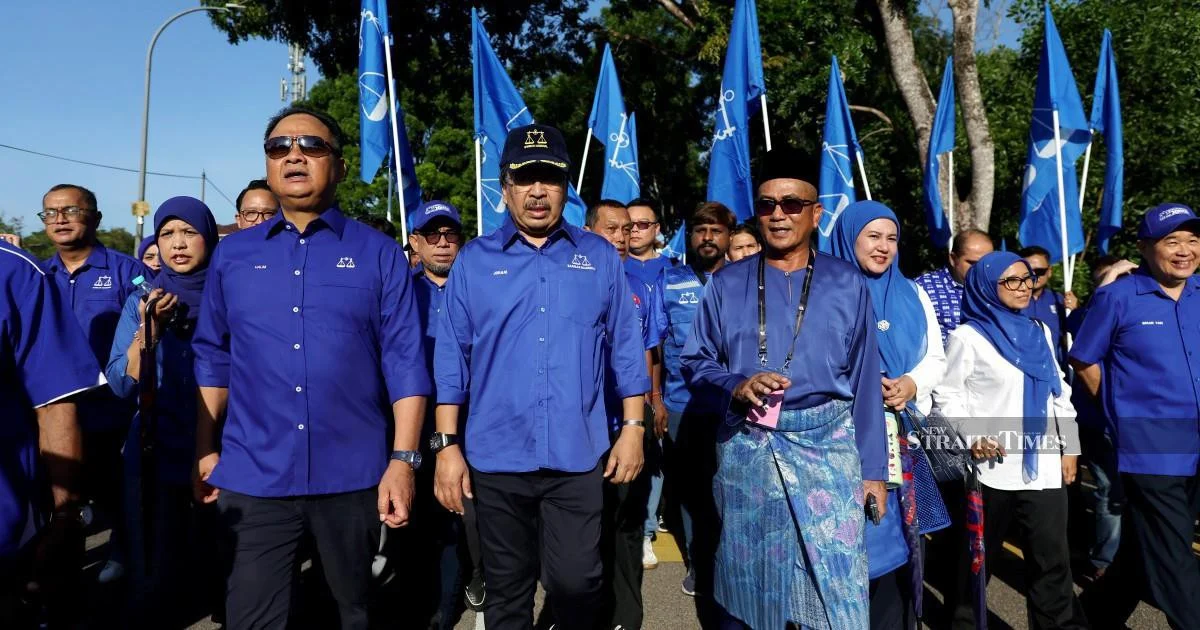
Umno vice-president Datuk Seri Johari Abdul Ghani has stepped up the Barisan Nasional campaign machine in Johor, arriving at Taman Pelangi Indah community hall to bolster the coalition's candidate in the Tiram state constituency. The high-profile visit signals the establishment's determination to shore up support in a key battleground that will likely prove decisive in shaping the political landscape of Malaysia's southern economic powerhouse.
Tiram has long served as a bellwether for Johor's electoral mood, with its demographics reflecting the broader mix of urban and semi-rural voters that dominate the state. The constituency encompasses a diverse population of Malay, Chinese, and Indian communities, making it representative of the swing-voter patterns that can determine which coalition commands the state assembly. By dispatching one of Umno's senior figures to the area, BN is signalling that it views the seat as competitive enough to warrant intensive leadership engagement rather than routine campaign appearances.
Johari's intervention comes at a pivotal moment for the Barisan Nasional as it recalibrates its political strategy across Johor. The coalition suffered setbacks in the 2018 general election and subsequent state polls, losing ground to Pakatan Harapan in several constituencies. Johor's political dynamics have undergone significant shifts over the past five years, with younger voters, urban professionals, and working-class families increasingly receptive to alternative political messaging. The BN must therefore counter the opposition's narrative by demonstrating that it remains energetic, adaptive, and capable of delivering tangible benefits to constituents.
As Umno vice-president, Johari carries considerable institutional authority and patronage networks within the party apparatus. His presence at grassroots engagements serves multiple purposes: it reinforces internal party discipline and enthusiasm among BN machinery operatives, signals to voters that their concerns are being heard at the highest levels, and demonstrates the coalition's willingness to deploy heavyweight figures in seats that might otherwise be taken for granted. In Malaysian electoral culture, such visits carry symbolic weight, conveying confidence and priority-setting within the political establishment.
The Taman Pelangi Indah location is strategically significant as well. Positioned within one of Johor Baru's established residential areas, the community hall serves as a natural gathering point for neighbourhood associations, resident groups, and informal political networks that influence household voting patterns. Campaigns at such venues allow BN operatives to engage directly with voters on bread-and-butter issues—infrastructure maintenance, security, business opportunities, and social services—rather than abstract national political themes. This localized approach remains fundamentally important in Malaysian politics, where constituency-level representation and personal relationships between elected representatives and constituents significantly influence electoral outcomes.
The Tiram campaign effort reflects BN's broader revival strategy in Johor following years of electoral uncertainty. The coalition has repositioned itself as a defender of stability and continuity, contrasting this with opposition promises of rapid reform and structural change. For many traditional BN voters in constituencies like Tiram—particularly older voters, civil servants, and business owners with established connections to the ruling apparatus—this messaging resonates strongly. However, BN must also convince fence-sitters and younger demographic cohorts that it understands contemporary concerns around cost of living, employment prospects, and economic opportunity.
The visit also underscores Umno's commitment to reasserting dominance in Johor after periods of declining support. Historically, Johor has been a Umno-BN stronghold, and the party views the state as essential territory for any aspiration to reclaim the federal government. Losing ground in Johor would have cascading effects on Umno's national positioning and internal party dynamics. Senior leaders like Johari therefore regard frequent campaign appearances as an investment in long-term party viability and electoral competitiveness. Such engagements build relationships with local party machinery, test political messaging, and gather real-time intelligence about voter sentiment and emerging community concerns.
For Malaysian and Southeast Asian observers watching Johor's politics, BN's strategy in Tiram illustrates broader patterns in how Malaysian political coalitions operate. The deployment of senior national figures to support constituency-level candidates demonstrates the degree to which Malaysian electoral politics remain hierarchical and centrally coordinated, even as local activism and community engagement matter enormously. BN's investment in seats like Tiram suggests confidence that traditional machinery and leadership interventions can still influence outcomes, though whether such confidence remains justified in an increasingly fluid political environment remains an open question.
The Barisan Nasional's focus on Johor's marginal constituencies reflects awareness that the state will likely determine the outcome of upcoming state elections. Tiram epitomizes the kind of seat where margins are narrow, voter preferences volatile, and constituency-specific issues dominate election day calculus. By ensuring that Umno's senior hierarchy visibly supports BN's candidate, the coalition aims to consolidate support among its core base while signalling to uncommitted voters that it retains sufficient organizational capacity and political confidence to govern effectively. Whether such high-profile campaign support translates into electoral success will ultimately depend on how effectively BN's message resonates with Tiram's diverse electorate and whether the coalition can convincingly address the issues that matter most to local communities.

