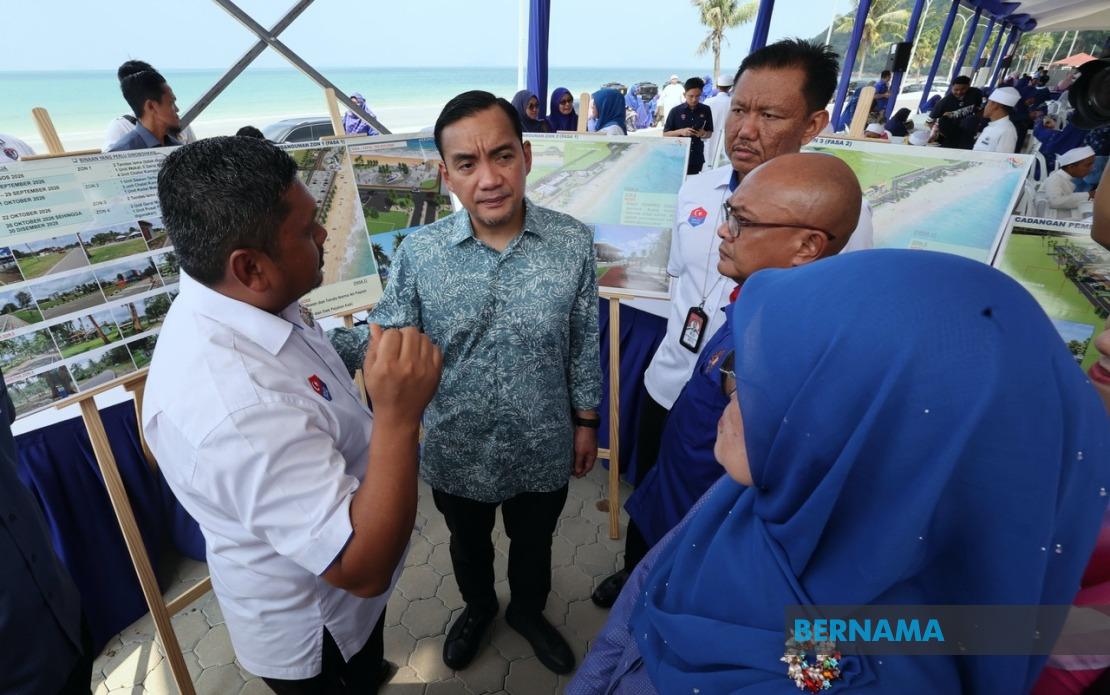
Johor's leadership has committed RM1.5 million to accelerate development across Mersing district, signalling an effort to extend economic gains beyond the state capital to peripheral communities. Menteri Besar Datuk Onn Hafiz Ghazi unveiled the allocation at a gathering in Mersing, framing the investment as part of a broader strategy to ensure that growth benefits reach residents in every corner of Johor, not just urbanised centres.
The financial commitment represents a deliberate attempt to replicate development models that have proven successful in Johor Bahru, adapting those strategies to suit the particular needs and demographics of more remote districts. This approach reflects growing recognition among state policymakers that sustainable prosperity requires investment in underserved areas, where infrastructure gaps and limited economic diversification can hinder opportunity creation. Mersing, with roughly 80,000 residents, has historically been overshadowed by development priorities focused on the state's more economically productive zones.
Central to this initiative is the Johor Economic Transformation Plan, a comprehensive framework outlining objectives across multiple timeframes to strengthen state finances whilst improving living standards. Onn Hafiz positioned the JETP as more than an economic blueprint, emphasising its role in generating employment pathways for young people in districts like Mersing. He highlighted a fundamental tension in development planning: tourism assets and infrastructure lose relevance if local populations cannot access the economic opportunities they generate. This perspective suggests a recalibration of how state authorities evaluate development success, moving beyond headline growth figures toward tangible livelihood improvements.
The allocation demonstrates substantive investment in healthcare infrastructure, with RM500,000 designated for upgrading facilities at Mersing Hospital's Haemodialysis Unit. This represents the single largest component of the package and reflects healthcare accessibility as a priority concern. The upgrade addresses capacity constraints in renal care for the district, potentially reducing the need for patients to travel to larger medical centres for treatment. Such improvements carry particular significance in a district where geographic isolation can complicate healthcare access for rural and indigenous populations.
Recreational and community infrastructure receives considerable attention within the funding package. RM200,000 each will support construction of a futsal court at Taman Sri Mersing and repairs to an existing court in Felda Nitar, addressing the lack of modern sporting facilities in the district. An additional RM80,000 funds a sepak takraw court at Felda Tenggaroh 6, preserving investment in traditional Malaysian sports alongside contemporary facilities. These projects serve dual purposes: improving quality of life for residents whilst creating potential sports tourism and community engagement opportunities.
Religious and cultural infrastructure also features prominently. RM200,000 has been earmarked to replace carpets at Kampung Sri Lalang Mosque, a project reflecting the centrality of religious institutions within community life. The allocation suggests state recognition of the importance these spaces hold for local populations and the symbolic value of maintaining them to proper standards. Religious facilities often serve as cultural anchors and gathering points beyond their primary spiritual functions, making their upkeep relevant to broader community cohesion.
The Orang Asli communities receive specific attention through the allocation of RM100,000 each for solar-powered streetlights in Kampung Peta and Kampung Tanjung Tuan. This targeted investment addresses both infrastructure deficits and environmental sustainability, providing improved lighting for villages whilst reducing long-term operational costs through renewable energy. The project acknowledges indigenous communities' distinct needs and their historical marginalisation in development planning, positioning green technology as a pathway to upgrade living standards.
Federal Land Development Authority settlements also benefit from the investment package. RM100,000 supports upgrading the Kami Anak Felda Malaysia building in Felda Tenggaroh Timur, serving a demographic that has faced particular economic pressures amid plantation sector transitions. These settlements represent distinct communities with specific infrastructure needs, and targeted allocation suggests policymakers recognise their economic vulnerability and social importance.
Beyond immediate capital projects, Onn Hafiz announced several longer-term strategic initiatives that could reshape Mersing's development trajectory. Plans to establish a Religious Affairs Office and a Technical and Vocational Education and Training campus indicate commitment to institutional capacity-building. The TVET campus carries particular significance for Malaysian policymakers seeking to diversify economic opportunities beyond traditional sectors, potentially positioning Mersing residents for employment in growing technical fields. Additionally, coordinated efforts to develop a Special Forces Group petrol station at Camp Iskandar represent private-sector engagement within broader development frameworks, suggesting multi-stakeholder approaches to infrastructure expansion.
These initiatives collectively signal a shift toward distributional development politics in Johor, where leadership demonstrates responsiveness to peripheral district concerns. The Mersing allocation reflects broader Southeast Asian patterns wherein regional governments increasingly emphasise inclusive growth rhetoric, recognising political and social costs of uneven development. For Malaysian observers, the announcement matters because it tests whether state-level commitments translate into sustained implementation and whether similar resource allocation patterns extend across other underserved districts.
The success of this development package will depend substantially on execution quality and ongoing resource commitment beyond the initial allocation. Mersing's economic transformation requires not merely infrastructure investment but complementary policies supporting local economic diversification, youth employment, and integration with broader state and regional supply chains. The RM1.5 million represents a meaningful commitment, yet sustained development demands continued political attention and resource flows.

