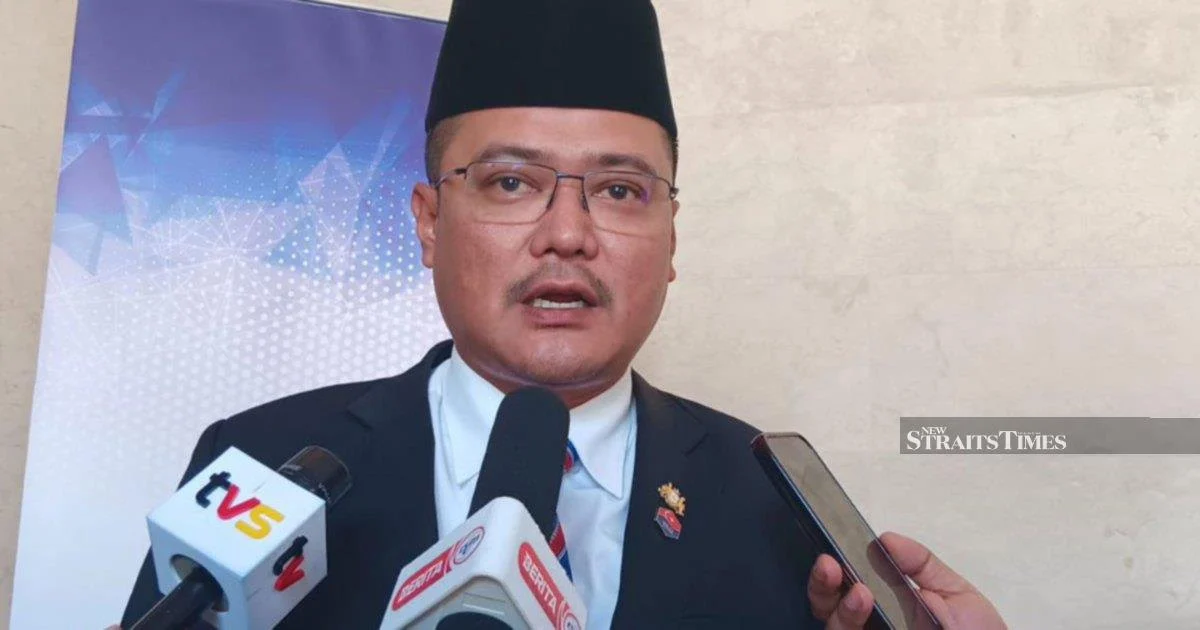
The Johor chapter of Barisan Nasional has launched a forceful rebuttal against recent allegations made by Datuk Dr Mohd Puad Zarkashi, the former speaker of the Johor state legislative assembly, accusing him of making baseless and irresponsible claims that improperly link the palace to political decision-making. The coalition has moved swiftly to distance itself from Puad's accusations, signalling that such assertions are viewed as deeply problematic within the party hierarchy.
Datuk Dr Mohd Puad Zarkashi's remarks have evidently struck a nerve with Johor's political establishment. As the former speaker, Puad held one of the most senior positions within the state legislature, giving his statements considerable weight among observers and media outlets tracking state politics. His decision to make public allegations about palace involvement in governance matters represents a significant departure from typical political discourse and has prompted an unusually forceful collective response from Barisan Nasional's Johor contingent.
The nature of Puad's claims—linking the Johor palace to political decisions—touches on one of Malaysia's most sensitive constitutional arrangements. The relationship between the hereditary monarchy and elected government bodies remains a delicate subject, with clear boundaries established between ceremonial royal functions and administrative governance by elected representatives. Barisan Nasional's dismissal of Puad's allegations as serious and irresponsible appears designed to reassert these constitutional boundaries and prevent any suggestion that such arrangements have been violated.
Umno Youth, the youth wing of the United Malays National Organisation—the dominant party within Barisan Nasional—has amplified the party's position by claiming that hundreds of supporters have already filed police reports in connection with Puad's statements. This mobilisation of grassroots reporting suggests a coordinated response aimed at escalating the political pressure on Puad and demonstrating organisational strength. The involvement of Umno Youth indicates that party leadership views this matter as significant enough to warrant activating its youth membership.
The decision to channel complaints through the police rather than relying solely on public statements or media responses represents a tactical choice with potential legal implications. By characterising Puad's remarks as serious enough to warrant police investigation, Barisan Nasional has signalled that it may be prepared to pursue formal legal action. This escalation transforms what might otherwise remain a political dispute into a matter potentially involving Malaysia's criminal justice system, with corresponding implications for Puad's standing and future political activities.
For Malaysian and Southeast Asian observers, this episode illustrates the intense factional dynamics within Peninsular Malaysia's political landscape, where senior figures from the same political coalition can find themselves in direct public conflict. Puad's position as a former speaker elevates the dispute beyond routine party disagreements, suggesting deeper divisions or personal grievances within Johor's political establishment that have now spilled into public view. Such splits can have broader ramifications for coalition stability and electoral prospects.
The timing and scale of Barisan Nasional's response also merit consideration. The willingness to deploy party machinery, activate youth wings, and encourage police reports indicates that party leaders view Puad's statements as constituting a significant challenge to institutional integrity or party discipline. Whether Puad's allegations contain substance or represent a personal political campaign, the response demonstrates that Barisan Nasional takes questions about palace involvement in governance seriously enough to respond with institutional force.
Underlying this dispute may lie questions about resource allocation, political appointments, or policy decisions within Johor state administration. Former speakers often possess deep knowledge of internal machinations and factional arrangements. If Puad's allegations emerged following a political setback or loss of influence, his public statements might represent an attempt to reframe his position or challenge decisions he views as unjust. Conversely, if his claims carry substance, Barisan Nasional's rapid and forceful denial may indicate concern about reputational damage.
The involvement of police reports adds complexity to the political dimension. In Malaysia's legal framework, allegations that improperly politicise the monarchy or suggest unconstitutional involvement in governance could potentially trigger investigations under various statutes. The shift from political discourse to legal territory changes the arena in which this dispute will unfold and may ultimately determine its resolution through courts rather than negotiation.
For Johor's political future, this confrontation signals friction within Barisan Nasional that could influence forthcoming elections or internal party elections. Coalition partners monitor such disputes carefully to assess whether factional tensions might weaken Barisan Nasional's electoral prospects. Any perception of institutional dysfunction or unresolved grievances within the coalition provides opportunities for opposition parties to exploit during campaign periods.
The controversy also raises questions about accountability and communication within Barisan Nasional's Johor structure. That a former speaker felt compelled to make such serious allegations publicly suggests either that internal mechanisms for addressing grievances proved inadequate or that Puad calculated that public pressure would prove more effective than internal channels. Either scenario points to governance challenges within the party apparatus.
Moving forward, the matter appears poised to develop along multiple tracks—political, legal, and institutional—as Barisan Nasional pursues its stated response while Puad must decide whether to substantiate his allegations or modify his position. The outcome will carry implications not just for Johor politics but for broader questions about how Malaysia's political parties manage internal dissent and interact with constitutional institutions.

