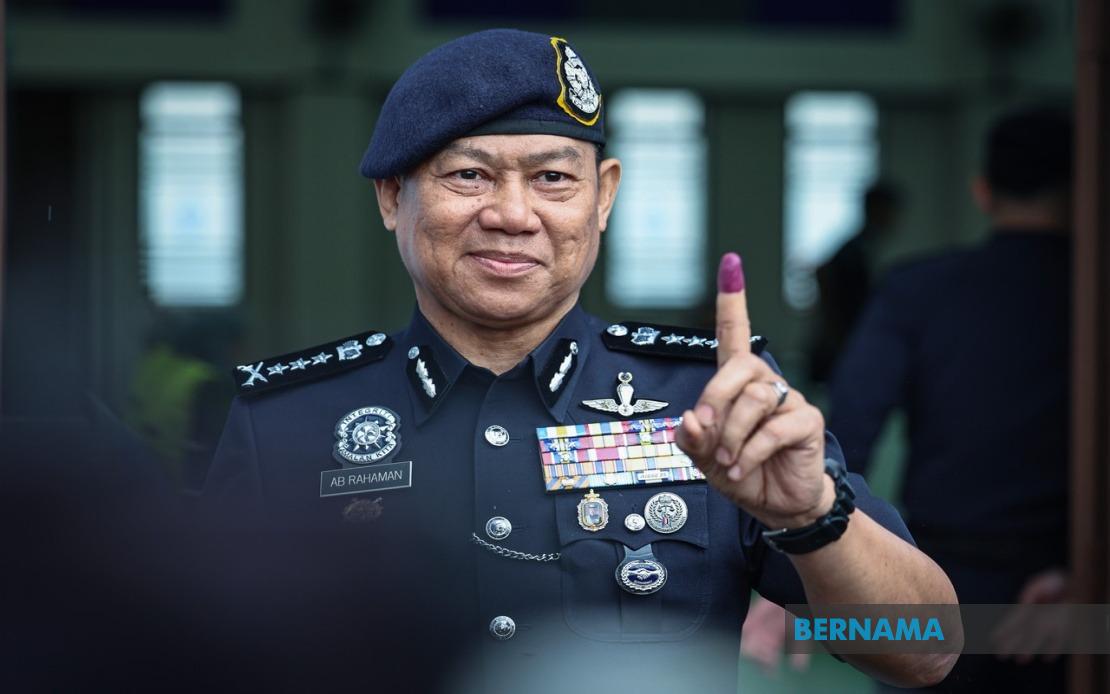
Security personnel and military staff in Johor began casting their votes on July 7 in advance of the state election, with police achieving a notably robust participation rate in the early voting process. By 10:30 am, 4,257 police officers—representing 36.3 per cent of the eligible personnel pool—had already submitted their ballots across the 53 early voting locations established throughout the state, indicating strong enthusiasm among law enforcement to exercise their democratic rights ahead of the main polling day.
The early voting exercise, which commenced at 8 am that morning, provided 20,607 registered personnel from both police and military backgrounds with the opportunity to vote before Saturday's general ballot. Johor Police Contingent chief Datuk Ab Rahaman Arsad reported that the process had unfolded without complications or security concerns, with all 64 designated centres operating according to schedule. Speaking after casting his own vote at the Johor Police Contingent Headquarters in Johor Bahru, he underscored the absence of any incidents that might have compromised the voting environment or raised questions about procedural integrity.
The staggered closure of polling centres—scheduled between noon and 6 pm depending on individual location requirements—was designed to accommodate the dispersed nature of security deployments across the state. Ab Rahaman acknowledged that definitive overall turnout figures among security personnel would only emerge once all centres had ceased operations, though the mid-morning performance suggested sustained participation throughout the day. This early voting mechanism is particularly significant for police and armed forces personnel, who face deployment unpredictability and duty commitments that might otherwise prevent participation in Saturday's mass polling event.
Beyond the voting process itself, the Johor police chief noted that the campaign period preceding the election had generated considerable administrative activity. The most prevalent issues requiring police attention involved deliberate destruction of campaign materials, with officers documenting numerous incidents of vandalism targeting party flags, political billboards, and other promotional signage across constituencies. These relatively minor infractions reflected the competitive nature of the contest but did not suggest any breakdown in campaign conduct or voter intimidation.
A more significant controversy emerged surrounding former Johor State Assembly Speaker Datuk Dr Mohd Puad Zarkashi, whose recent statements had prompted widespread police investigation. His claim that the Johor Palace had intervened in the decision to dissolve the state legislative assembly generated 153 formal complaints lodged across Malaysia, with inquiries continuing into the validity and implications of his allegations. While Ab Rahaman declined to elaborate on specifics, confirming only that investigation papers remained active and under review, the matter underscored the complex constitutional terrain navigating this electoral cycle and relationships between traditional institutions and elected government.
The 16th Johor state election represented a significant democratic exercise for the peninsula's southernmost major state, with 172 candidates competing across 56 state assembly seats. The substantial candidate-to-seat ratio—slightly more than three contenders per position—suggested vigorous multi-party contestation and reflected the state's evolving political landscape. With Saturday's polling set to involve more than 2.7 million registered voters, the turnout and outcome could meaningfully influence state governance for the ensuing term and potentially affect broader peninsular political calculations.
For Malaysian observers and regional analysts, the Johor election carries significance beyond state boundaries. The state remains one of Malaysia's most economically dynamic regions and a traditional political bellwether, with outcomes often foreshadowing national trends. The participation patterns among police and military personnel, while operationally important, also offer indirect insights into institutional morale and perspectives during a period of evolving political dynamics. The robust early turnout among security forces suggested effective coordination of logistics and genuine engagement with the electoral process.
The absence of security incidents during early voting, explicitly confirmed by police leadership, represented a positive indicator for Saturday's main poll. Given Malaysia's periodic concerns about election-day complications and the imperative to maintain public confidence in democratic processes, the smooth administration of the advance voting phase demonstrated institutional preparedness. The deployment of 53 separate centres suggested that authorities had invested in accessibility and decentralization to reduce queuing and administrative bottlenecks.
As the state election entered its final phase before Saturday's decisive vote, the performance of early voting procedures provided reassurance about procedural competence and adherence to electoral standards. The specific focus on security personnel voting reflected recognition that these groups require operational accommodation while remaining committed to democratic participation. The campaign period's primary complications—vandalism of promotional materials and constitutional questions about the Palace's role—appeared manageable within existing oversight frameworks and did not presage significant disruption to the electoral process itself.

