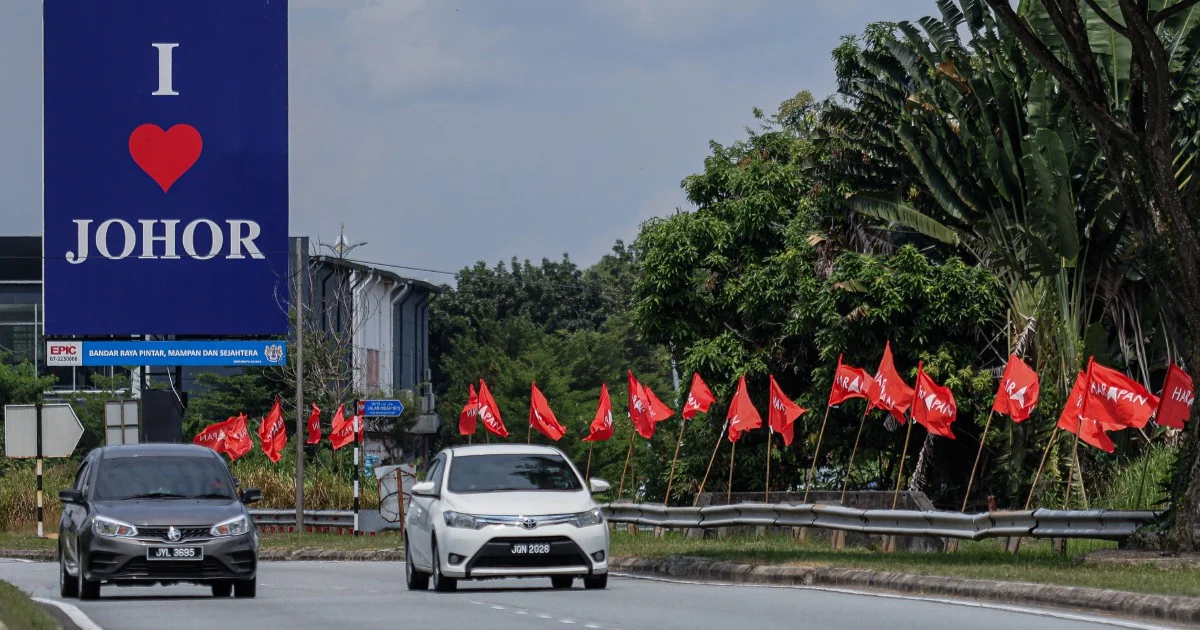
The forthcoming Johor state election represents far more than a personality-driven campaign to determine who occupies the menteri besar's office, according to youth wing leaders within PKR, marking a conscious attempt to steer public discourse away from candidate-centric narratives toward substantive policy discussions.
PKR youth leadership has articulated a broader perspective on the electoral contest, emphasizing that voters should evaluate the complete governance package each political coalition brings to the table. This strategic reframing seeks to position the election as a comprehensive assessment of administrative capability, economic vision, and social policy frameworks rather than allowing media narratives and public attention to fixate on individual personality matchups. The party is evidently concerned that an over-emphasis on the menteri besar candidacy could obscure the larger governance implications of the electoral outcome.
By redirecting focus toward coalition-wide competence and developmental plans, PKR appears to be banking on broader organizational strength and policy coherence as distinguishing factors. This approach recognizes that electoral contests at the state level should ultimately hinge on which political alliance possesses the strategic acumen and comprehensive blueprint to meaningfully advance Johor's economic trajectory and improve residents' quality of life. The emphasis on "team" rather than individuals signals internal confidence in the coalition's broader roster of talent and organizational depth.
Johor's economic significance within the Malaysian federation makes this framing particularly consequential. As a state that generates substantial federal revenues through trade, manufacturing, and tourism, the development policies pursued by whichever coalition takes power will have ripple effects across Southeast Asia's regional economy. An election reduced to a two-person contest risks sidelining crucial questions about industrial diversification, infrastructure investment, labor productivity, and the state's positioning within broader regional trade networks.
The social dimension equally warrants serious deliberation beyond candidate appeal. Housing affordability, educational infrastructure, healthcare provision, and livelihood opportunities for the economically marginalized all depend more on coalition-level policy coherence than on individual menteri besar charisma. PKR's repositioning suggests party strategists believe their coalition's comprehensive social platform may offer tangible advantages when examined in detail, advantages that might be overshadowed by excessive focus on personal candidacy.
This rhetorical strategy also addresses a structural vulnerability in Malaysian electoral politics, where media coverage and campaign narratives frequently collapse into personality contests between prominent figures. While such coverage drives engagement metrics, it often leaves voters with inadequate information about the concrete policy differences between contending coalitions. By explicitly stating that the election "should not" be reduced to the MB question, PKR youth leaders are attempting to model a more substantive engagement with electoral choices.
The timing of such messaging is significant, as it precedes the formal nomination of menteri besar candidates and allows PKR to establish argumentative terrain before opposition narratives solidify. By establishing early that the coalition's competitive advantage lies in its collective strength and policy architecture rather than individual personality appeal, the party positions itself to benefit if public discourse does shift toward examining detailed governance proposals.
However, this approach also carries inherent tensions. Malaysian electoral politics have historically demonstrated that voters do indeed care about leadership personality, perceived integrity, and personal connection with candidates. Completely divorcing campaign narratives from the menteri besar candidacy may prove strategically counterproductive if the chosen candidate subsequently fails to inspire voter confidence or if opposition candidates successfully project stronger personal appeal. The PKR youth position essentially gambles that substance will ultimately prevail over personality in determining electoral outcomes.
The coalition dynamics within Malaysian electoral politics also complicate this framing. Johor elections involve multiple parties cooperating within broader coalitions, and the relative strength of individual coalition partners often reflects significantly on the credibility and stability of the partnership itself. The identity and perceived competence of the menteri besar candidate frequently serves as an external indicator of coalition stability and internal power balances. Downplaying the candidacy question could inadvertently obscure important questions about coalition durability and resource allocation among partners.
Looking ahead, successful implementation of this messaging strategy will require PKR and coalition partners to consistently articulate detailed, differentiated positions on the specific economic and social challenges Johor residents face. Generic appeals to good governance and development will prove insufficient if opposition campaigns effectively highlight particular policy contrasts. The coalition must translate its emphasis on "team" and "plans" into concrete commitments with clear implementation timelines and measurable targets that distinguish it meaningfully from opposing coalitions.
For Malaysian voters and political observers, the PKR youth leadership's intervention serves as a useful reminder that state elections deserve examination across multiple dimensions beyond individual candidacy. While personality undoubtedly influences electoral outcomes, the policy frameworks, fiscal management approaches, and developmental priorities pursued by whichever coalition assumes power will shape Johor's trajectory for years beyond the election campaign cycle. The challenge for all political actors lies in maintaining substantive policy discussion without entirely abandoning the personal dimensions of electoral contests that voters demonstrably value.

