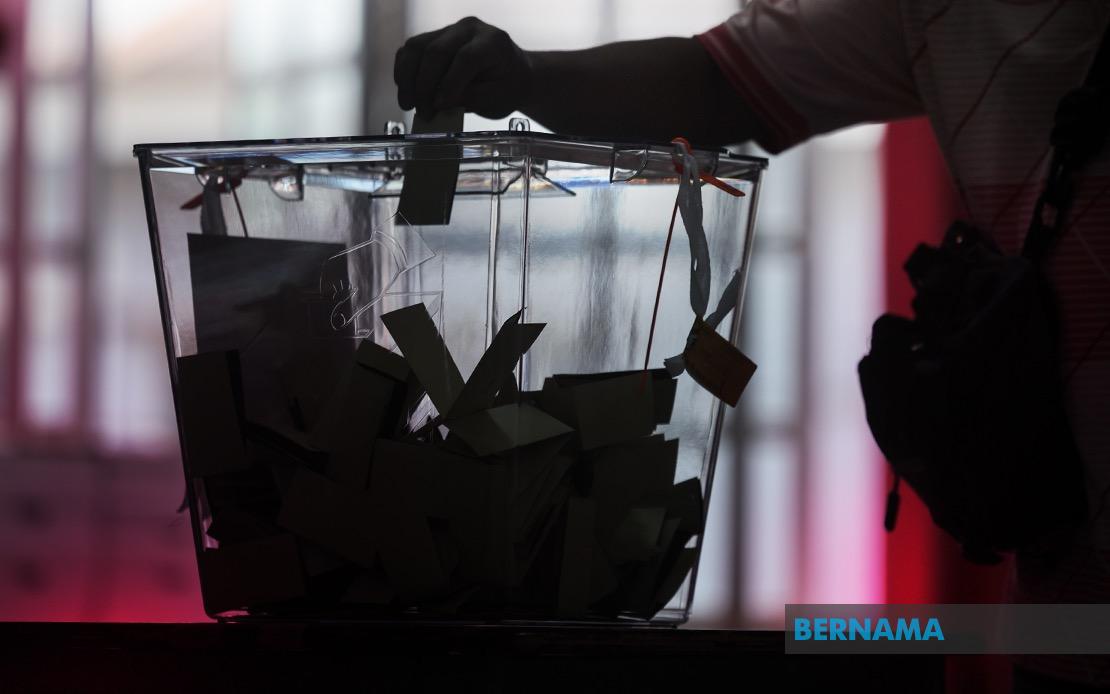
The magnitude of voter turnout in Saturday's 16th Johor state election could prove decisive for Pakatan Harapan's electoral fortunes, particularly in urban and semi-urban constituencies where mobile voters—including those working outside the state, younger demographics, and undecided electors—hold significant sway. Political analysts increasingly view strong participation as a potential advantage for the coalition, provided its supporters follow through on their intention to cast ballots.
According to Associate Professor Dr Mazlan Ali from Universiti Teknologi Malaysia's Faculty of Social Sciences and Humanities, multiple factors are conspiring to encourage higher electoral engagement. The stability achieved at federal level since PH's government took office, combined with measurable improvements in economic conditions and targeted public assistance programmes—particularly fuel subsidies—have created conditions that motivate supporters to protect the coalition's continued governance. These advantages exist now and supporters fear their loss should rival administrations take power.
Dr Mazlan points to a critical shift in voter behaviour patterns between two recent contests. In the 2022 Johor state election held amid pandemic disruptions, turnout languished at slightly above 50 percent. This depressed participation disproportionately benefited Barisan Nasional, which commanded a deeply entrenched local support base capable of mobilising core voters even during restricted movement periods. The result saw BN capture 40 state assembly seats through this structural advantage.
However, that same year's later General Election revealed an entirely different electoral landscape. When the 15th General Election proceeded with approximately 75 percent voter turnout, Pakatan Harapan demonstrated commanding strength, winning 14 parliamentary seats from Johor. Most strikingly, the coalition's popular vote explosion—surging from roughly 350,000 votes in the state election to 830,000 votes just months later—provided unambiguous evidence that returning outstation voters represented a decisive demographic. PH's vote tally more than doubled, showcasing the electoral impact of participation rates among geographically dispersed supporters.
Transposing these dynamics onto the current state election presents compelling logic for PH strategists. If the coalition manages comparable turnout figures approaching the 75 percent mark achieved during the general election, the mathematical translation into state assembly seats suggests substantially improved performance compared to 2022. The absence of pandemic-related movement restrictions this time creates far fewer logistical barriers for dispersed voters returning to their home constituencies, yet psychological and practical obstacles remain formidable.
The composition of PH's electoral coalition exhibits pronounced geographic concentration. The coalition's core support derives disproportionately from outstation voters who have relocated for employment or education, younger age cohorts with higher educational attainment, voters demonstrating genuine indecision rather than firm commitment, and urban professionals maintaining active digital engagement. These demographics respond powerfully to narratives emphasising social justice, equitable governance, and evidence-based economic policymaking rather than appeals rooted in communal or religious identity sentiment.
Urban and semi-urban constituencies throughout Johor are emerging as critical battlegrounds precisely because these areas concentrate the demographic groups most responsive to PH messaging. Voters in these constituencies display heightened sensitivity to governance quality, macroeconomic management, and the equity dimensions of government policy. The coalition's messaging architecture deliberately targets these concerns, constructing a compelling case for continuity of PH stewardship that resonates particularly with mobile, digitally-active younger voters.
Dr Mazlan identifies a crucial asymmetry between PH and opposition constituencies regarding voter responsiveness to participation appeals. While opposition support bases—particularly Barisan Nasional—maintain advantages in mobilising voters already physically present in constituencies through established community networks and cultural affinity, PH supporters require affirmative motivation to overcome the friction costs of travelling home to vote. Federal government policy successes, economic improvement, and demonstrated administrative competence serve as that motivational mechanism.
The 2022 election experience provided an inadvertent demonstration of this dynamic's potency. When pandemic conditions suppressed outstation voter participation, BN's structural advantage from embedded local voter bases became overwhelming. The 40 seats BN achieved represented the inflated returns from a demobilised opposition base rather than necessarily superior underlying support. The general election's subsequent retesting with higher participation painted a radically different picture of underlying voter sentiment in Johor.
PH's principal tactical challenge in the campaign's final phase centres on converting latent support intention into actual ballot-box participation. The coalition must overcome inertia among its geographically dispersed supporters—those living and working beyond Johor's borders yet retaining voter registration in their home constituencies. These voters face genuine opportunity costs and practical inconvenience in returning to vote. Without sustained messaging emphasising the stakes involved and clear logistical information facilitating participation, some proportion will inevitably abstain.
The differing electoral responsiveness patterns between PH and BN voters carry profound implications for Malaysia's broader political evolution. Should higher turnout indeed materialise and deliver results favourable to Pakatan Harapan, the finding would underscore that contemporary Malaysian electoral behaviour reflects increasingly sophisticated policy evaluation rather than reflexive communal allegiances. Conversely, should opposition mobilisation overcome participation disadvantages, it would suggest traditional voter behaviour patterns retain formidable resilience even as demographic composition shifts.
For regional observers, the Johor election provides a revealing case study in how economic performance and administrative effectiveness translate into electoral behaviour. Southeast Asian democracies increasingly feature electorates evaluating incumbent performance on substantive governance metrics rather than solely on historical party identification or identity politics. Johor's outcome could illuminate whether Malaysia follows regional trends toward issue-based electoral competition or maintains distinctive patterns shaped by its particular institutional and demographic configurations.

