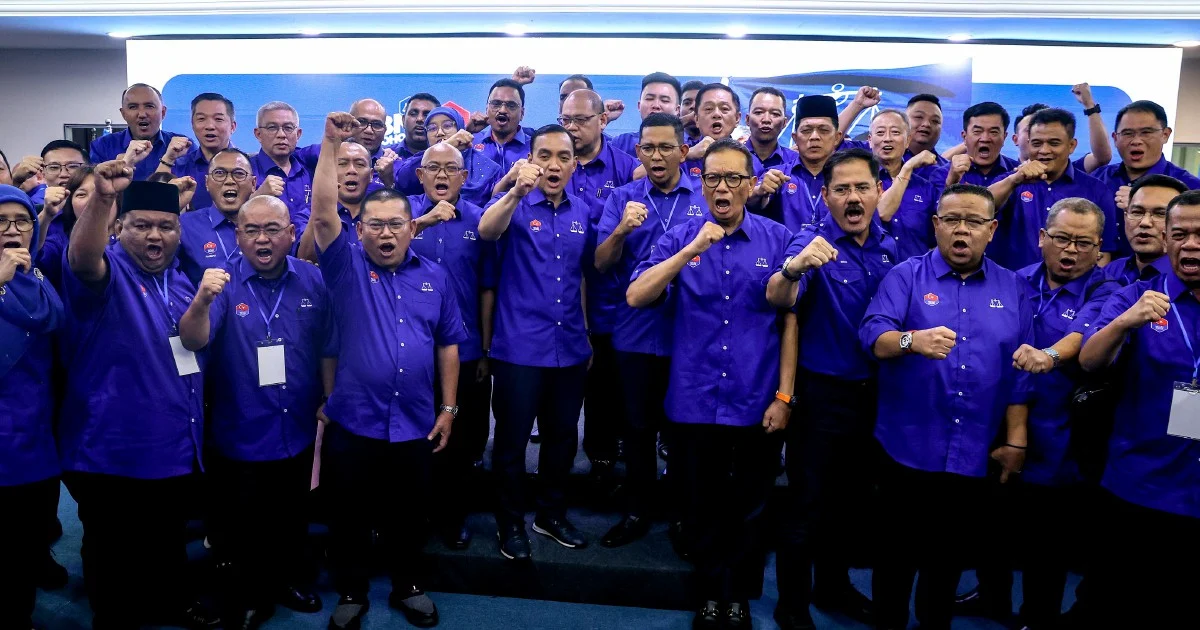
Johor's political landscape crystallised on Tuesday when Barisan Nasional released its complete roster of candidates for the state election, effectively terminating weeks of public conjecture about a potential alliance with Parti Wawasan Negara and PAS. The absence of any Wawasan figures from BN's line-up delivered the clearest possible signal that the coalition would proceed with its traditional formula rather than accommodate the newer political entity, despite earlier speculation suggesting otherwise.
The non-appearance of Wawasan-affiliated candidates marked a decisive moment in Johor's pre-election manoeuvring. Political observers in the state had monitored rumours of cross-coalition cooperation with considerable interest, particularly given the fractured opposition landscape and BN's strategic calculations ahead of the polls. The announcement came as Johor's political establishment awaited signs of how the major players would configure themselves ahead of voting day, and BN's decision to exclude Wawasan clarified its strategic preferences.
Part Wawasan Negara, which had emerged as an electoral force in recent months, found itself sidelined from BN's formal partnership structures. This development suggested that despite any preliminary discussions or diplomatic overtures, the dominant coalition ultimately determined that accommodating the newer party would either complicate candidate distribution or prove strategically unnecessary. For Wawasan, the exclusion represented a setback in its efforts to establish itself as a meaningful player in Johor politics and demonstrated the persistence of established power structures within BN.
The relationship between BN, PAS, and potential third parties has long represented a delicate balancing act in Malaysian politics. While BN occasionally courts partners to strengthen electoral positioning, such arrangements typically require careful negotiation around seat allocation and ministerial portfolios. The Johor situation illustrated how these calculations shift depending on local conditions, previous performance data, and internal coalition preferences. BN's decision implicitly suggested confidence in its standalone capacity to command the election.
For Malaysian observers, the Johor announcement carried broader implications about coalition-building strategies ahead of what many expect to be a significant electoral cycle. The state election serves as a bellwether for national politics, and how different political forces align themselves provides crucial intelligence about shifting alliances and internal calculations across the political spectrum. BN's consolidation around its core structure rather than broadening its base through formal cooperation indicated strategic confidence, though it simultaneously raised questions about how effectively it could mobilise voters against a fragmented opposition.
PAS's position in relation to the BN-Wawasan dynamic remained another dimension requiring attention. As an established Islamist party with significant grassroots infrastructure, PAS's relationship with BN had historically alternated between cooperation and confrontation. The evolving situation in Johor suggested that PAS would need to determine its own electoral positioning independently, potentially exposing it to strategic choices about whether to contest separately or seek alignment with other non-BN forces.
The timing of BN's candidate announcement held particular significance given the intensity of speculation preceding it. Political commentary across news outlets and social media platforms had generated considerable anticipation about whether the coalition would adopt an expansive or consolidationist approach. By presenting a unified slate without new partners, BN communicated decisiveness to its internal constituencies while demonstrating to voters that the coalition had reached settled conclusions about its electoral strategy.
For Wawasan, the exclusion forced a recalibration of its political ambitions and tactical options. The party would need to reassess whether it possessed sufficient independent capacity to contest meaningfully, or whether it might pursue alternative alliances with opposition coalitions, or alternatively adopt a more limited candidacy targeting specific constituencies where it possessed demonstrable support. The path forward represented a critical juncture for an emerging political force attempting to carve out electoral space in Malaysia's competitive political arena.
The broader Malaysian political context rendered the Johor developments worthy of sustained analysis. Coalition politics in Malaysia operates according to complex calculations involving communal representation, regional power bases, and negotiated understandings about resource distribution. BN's decision-making around Wawasan reflected these deeper structural considerations alongside immediate electoral mathematics specific to Johor's voter composition and recent political history.
Observers monitoring Johor's election dynamics can expect the coming campaign period to reveal whether BN's consolidationist strategy proves sufficient to command voter support without broadening its base, and whether excluded parties like Wawasan can nevertheless mount credible challenges through alternative arrangements. The candidate announcement thus represented not merely a tactical decision but a significant statement about how Johor's political forces intended to contest for electoral legitimacy and governmental authority in the state.