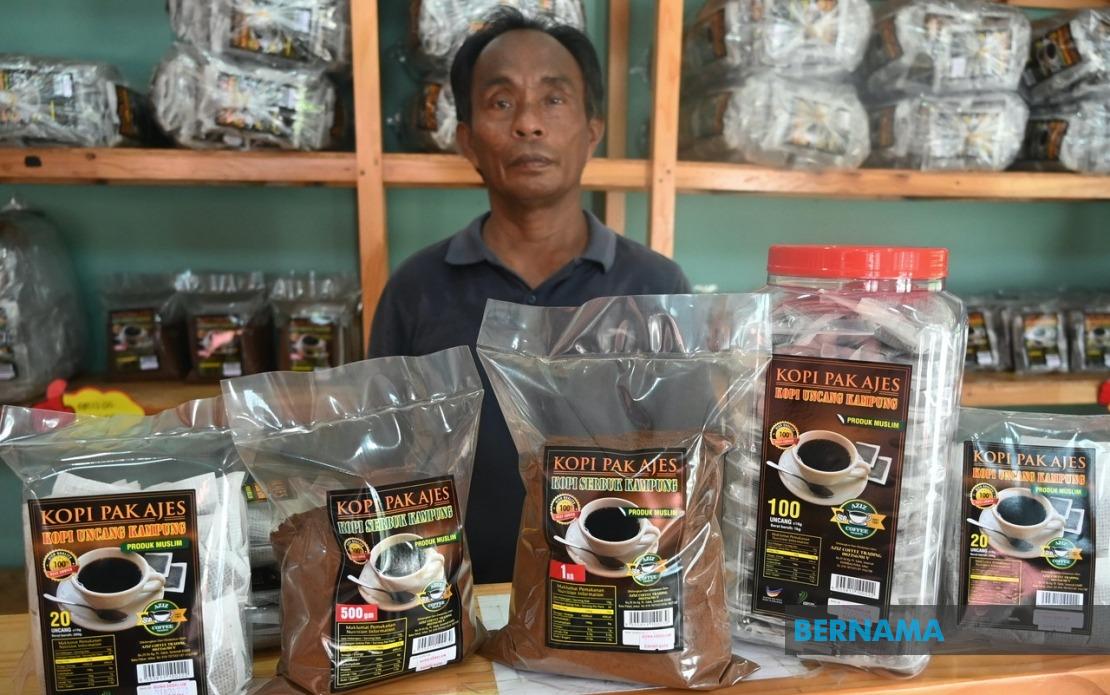
The frenetic pace of campaign activity during Johor's 16th state election has created an unexpected commercial opportunity for Aziz Mohd, a 65-year-old coffee processor who operates from the rural locality of Kampung Parit Sidek in Semerah. Better known throughout the region as Pak Ajes, the veteran entrepreneur finds himself struggling to keep pace with unprecedented orders flooding in from election machinery operatives and campaign teams working across several state constituencies including Semerah, Sungai Balang and Bukit Naning. The surge in demand has forced him to fundamentally restructure his production capacity, with Pak Ajes and his son now labouring to double their normal output just to fulfil commitments.
For someone who has invested more than three decades building Aziz Coffee Trading from nothing, this election season represents a rare and profitable anomaly. Pak Ajes acknowledges the windfall with gratitude, recognising that such concentrated bursts of demand materialise infrequently in the calendar year. Recognising the opportunity well in advance, campaign coordinators from various parties and candidates' teams approached him with bulk orders, prompting father and son to undertake comprehensive preparations. The scale of the undertaking necessitated sourcing coffee beans from distant suppliers including Rengit and Kluang, far beyond their customary local procurement networks, yet Pak Ajes reports that operational logistics have remained manageable throughout the campaign period.
The trajectory of Pak Ajes's enterprise illustrates a distinctly Malaysian entrepreneurial pathway, one rooted in rural observation and incremental expansion. His initial entry into coffee processing during 1991 emerged from a practical observation: a neighbouring village possessed surplus coffee beans that lacked immediate commercial channels. He began processing these beans initially for personal consumption and to supply acquaintances operating beverage stalls across the locality. Prior to establishing his coffee operation, Pak Ajes had pursued parallel agricultural ventures including quail farming for egg production and mushroom cultivation, both generating modest revenues through sales to local suppliers and periodic market attendance. These earlier endeavours accumulated sufficient capital, approximately RM200 derived from quail egg and mushroom sales, to fund his transition into coffee powder production commencing with modest 100-gram packet quantities.
The business's expansion trajectory has been methodical and organic. Contemporary operations process over five tonnes of coffee powder monthly, with regular supply arrangements established across multiple coffee establishments throughout the Muar and Batu Pahat regions. The production methodology demands considerable technical precision and patience at every operational stage. Processing begins with mechanical separation of beans from their stems and protective husks, followed by sun-drying protocols spanning approximately fifteen days. Subsequent roasting, grinding and packaging stages each demand meticulous attention to prevent quality degradation. Pak Ajes emphasises that packaging represents a particularly critical juncture, as coffee powder exhibits susceptibility to spillage during handling and deteriorates when exposed to atmospheric moisture for extended intervals, developing hardness and clumping that compromises consumer satisfaction.
Recognising the potential for retail expansion beyond wholesale operations, Pak Ajes and his son Muhammad Fitri, aged 22, established Kupi Nang Ajes Cafe in 2022 positioned directly in front of their family residence. The café operation extends the product range to include contemporary beverage preparations including Americano and latte varieties, all maintained at prices designed to encourage local patronage. This retail initiative represents a strategic vertical integration move, capturing margin across the supply chain whilst simultaneously building direct consumer relationships and brand recognition within their immediate market catchment. Pak Ajes harbours expansion ambitions that extend beyond their present location, explicitly targeting the establishment of a second café outlet within high-traffic areas such as Batu Pahat town centre or Muar, with aspirations ultimately encompassing a multi-state franchise network.
Government support mechanisms have materially assisted Pak Ajes's business development trajectory. The Department of Agriculture has provided substantive assistance through equipment contributions including industrial coffee grinders and automated bagging machinery, complemented by structured training programmes covering packaging standards and product labelling requirements. This institutional support exemplifies how smallholder enterprises benefit from targeted government intervention, particularly when producers operate within the agricultural value-addition space. Such assistance proves especially valuable for rural entrepreneurs who lack formal business training or access to commercial financing channels, enabling them to upgrade operational efficiency and meet regulatory compliance standards without incurring prohibitive capital expenditure.
The convergence of electoral activity and small business opportunity illuminates broader economic patterns within Malaysia's regional constituencies. Campaign operations generate concentrated, temporary demand spikes across consumables, transportation, accommodation and catering services. For suppliers positioned to respond quickly, as Pak Ajes demonstrated through his advance preparations, such periods present genuine profit opportunities. However, the election-driven demand surge remains inherently cyclical and time-limited, raising strategic questions about capacity management. Producers expanding infrastructure to accommodate temporary peak demand risk substantial underutilisation during interelection periods, potentially eroding profitability if fixed costs escalate excessively.
The 16th Johor state election features 172 candidates contesting 56 state assembly positions, with polling scheduled for Saturday of that week. The election infrastructure involving campaign teams, machinery, and associated personnel creates transient but substantial economic activity throughout affected constituencies, benefiting service providers and goods suppliers positioned to capitalise on heightened commercial activity. Election cycles thus function as an unplanned economic stimulus mechanism for rural areas, generating employment and commercial opportunities through campaign spending that flows into local economies.
Pak Ajes's experience reflects the entrepreneurial resilience characteristic of Malaysian small business operators. Beginning with minimal capital and agricultural knowledge, he constructed a viable enterprise addressing genuine market demand, progressively upgrading operations through organic growth and strategic innovation. The election windfall, whilst fortuitous and temporary, provides capital accumulation opportunity that enables investment in retail infrastructure and brand development. For Southeast Asian readers, his trajectory demonstrates the continuing viability of agricultural value-addition businesses, particularly those leveraging local resources and fulfilling latent market demand. The model also underscores the significance of government support programmes and the receptiveness of rural communities to quality product offerings at accessible price points.

