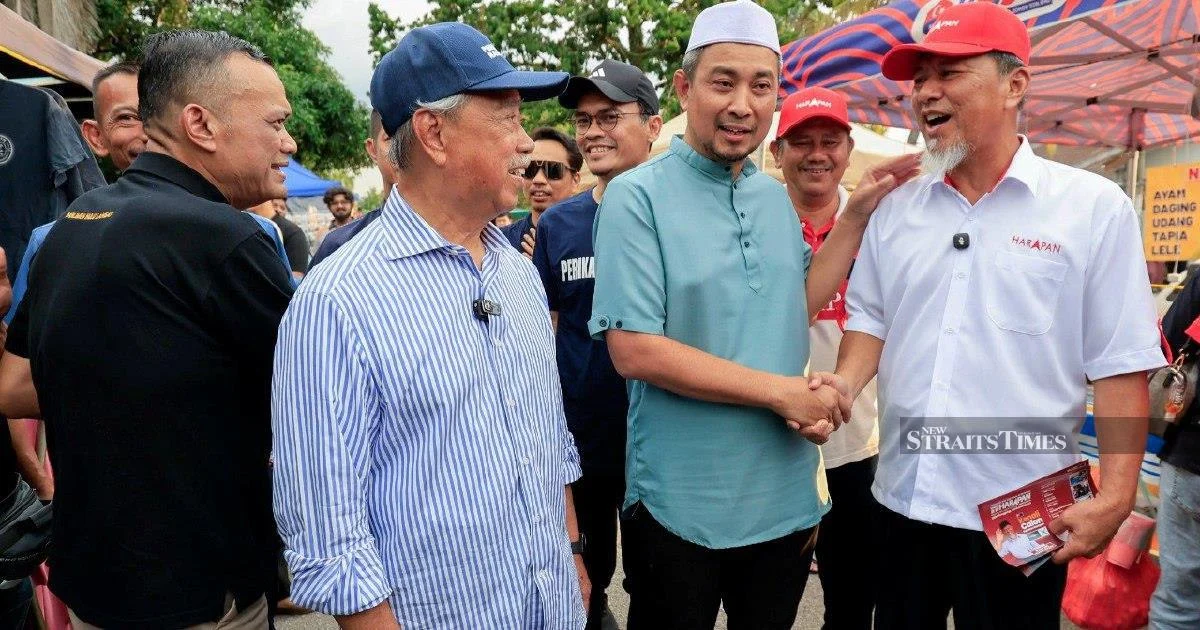
The Johor state election campaign entered a more intense phase on its third day when voters at Taman Sri Pagoh night market witnessed an unexpected moment of direct confrontation between rival candidates from opposing political coalitions. The unscripted encounter between a Pakatan Harapan nominee and a Perikatan Nasional contender highlighted the increasingly competitive nature of campaigning in the state, as both alliances vie aggressively for ground support in constituencies critical to their electoral prospects.
Night markets remain strategically important campaign venues across Malaysia, particularly in Johor where such gatherings draw substantial foot traffic and provide direct access to diverse voter groups. These informal settings allow candidates to engage voters in less controlled environments compared to formal rallies, enabling more genuine conversations with residents about local concerns and party platforms. The crossing of paths between competing candidates at Taman Sri Pagoh underscores how fiercely both coalitions are pursuing every available opportunity to present their cases to the electorate in this consequential state election.
The Johor state election represents a significant political test for both Pakatan Harapan and Perikatan Nasional, following shifts in Malaysia's political landscape over recent years. The state has traditionally been a battleground where electoral fortunes can shift based on performance in key constituencies, and both coalitions have mobilised substantial resources to capture or retain seats. Campaigning during this period involves candidates saturating neighbourhoods and commercial areas where ordinary voters congregate, transforming everyday spaces into political arenas where electoral narratives compete for attention.
The presence of both candidates at the same night market simultaneously reflects the intensive nature of modern electoral campaigns in Malaysia, where multiple candidates often target identical voter pools within tight timeframes. Rather than avoiding potential confrontations, campaign strategies frequently involve overlapping schedules that maximise candidate visibility and demonstrate commitment to grassroots engagement. Such encounters can generate unscripted political moments that capture media attention and reflect the genuine competition between rival organisations seeking to win voter mandates.
Night markets occupy a unique position in Malaysian community life, functioning as social and commercial hubs where residents from diverse backgrounds converge. These venues have long served as informal political spaces where candidates connect with voters beyond the formality of structured events. The Taman Sri Pagoh night market, like similar markets throughout Johor, attracts regular patrons who appreciate the opportunity to engage directly with political candidates about issues affecting their daily lives. The market environment facilitates organic interactions that can prove more memorable and persuasive than scripted campaign appearances.
Campaigning in Johor carries particular weight given the state's size, population, and historical significance within Malaysian politics. The state election results frequently foreshadow broader national political trends, making Johor contests closely watched by political analysts and observers throughout the country. Both Pakatan Harapan and Perikatan Nasional recognise that strong performances in Johor constituencies can provide momentum and legitimacy for their respective platforms. The intensity visible in day-three campaign activities at venues like Taman Sri Pagoh night market reflects this elevated political significance.
The crossing of candidates at the night market also demonstrates how campaign logistics have evolved to cover maximum ground in minimum time. Modern election campaigns involve sophisticated scheduling that ensures candidates traverse multiple locations across constituencies during single days, targeting different voter demographics and neighbourhoods strategically. When rival candidates find themselves in the same venue simultaneously, it often reflects optimised campaign planning rather than coincidence, with both coalitions aiming to demonstrate that their nominees are visible and accessible to constituents.
For ordinary voters at Taman Sri Pagoh night market, such encounters provide unexpected opportunities to compare candidates directly without formal mediation. The informal marketplace setting strips away some of the artifice surrounding structured campaign events, allowing voters to assess candidates based on how they conduct themselves in real-world interactions. These unscripted moments can prove influential in shaping voter perceptions, particularly when candidates demonstrate genuine engagement with community members or handle unexpected confrontations with grace and substantive responses.
The broader campaign environment in Johor reflects broader patterns evident across Malaysian elections, where coalition politics creates clear ideological and organisational distinctions between competing forces. Pakatan Harapan and Perikatan Nasional represent markedly different political philosophies and alliance structures, with each coalition bringing distinct policy platforms and governance records to voters' consideration. The competition between their nominees at Taman Sri Pagoh night market encapsulates larger contests about which coalition best serves Johor residents' interests across economic, social, and governance dimensions.
As the Johor election campaign progressed through its early days, encounters like that witnessed at Taman Sri Pagoh night market would likely become increasingly frequent, with candidates and campaign teams saturating key voter areas. The intensity of such activities reflects the high stakes involved, as both Pakatan Harapan and Perikatan Nasional seek to secure or expand their respective positions within Johor's political landscape. The night market encounter provided voters with visible evidence that both coalitions remained committed to aggressive ground campaigns aimed at capturing their support before polling day.

