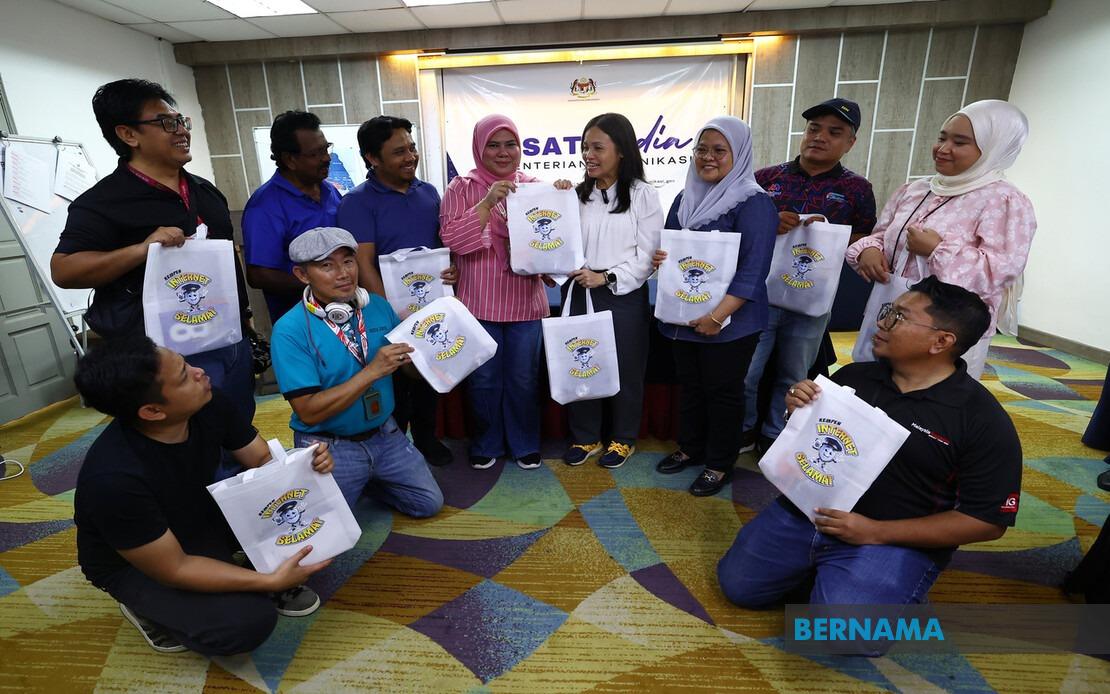
The Malaysian Communications Ministry has rolled out a comprehensive infrastructure programme to facilitate media operations during the 16th Johor state election, deploying two flagship media centres and a network of 100 information dissemination facilities across the state. Deputy Communications Minister Teo Nie Ching announced the initiative in Johor Bahru on June 28, underscoring the government's commitment to enabling robust and unfettered news coverage of the electoral process scheduled for July 11.
The two main media centres—one based at Hotel Seri Malaysia in Johor Bahru and another at NADI Kampung Sawah Awok in Muar—represent the ministry's primary infrastructure investment. Operating from June 26 through polling day on July 11, these facilities maintain extended hours from 9 am to 9 pm, providing journalists with a dedicated workspace throughout the campaign period. The positioning of these centres at strategic locations reflects an understanding of Johor's geography, with Johor Bahru serving as the state capital and commercial hub, while the Muar facility extends coverage to the southern and central regions.
A critical component of the infrastructure programme is guaranteed high-speed internet connectivity. Teo assured that minimum data speeds of 100 Mbps would be maintained across all facilities, a specification designed to eliminate technical obstacles when transmitting multimedia content. For journalists covering breaking developments or conducting live broadcasts, such bandwidth availability proves essential—enabling seamless video uploads and high-resolution photography transfers without the delays that historically plagued remote election coverage in Malaysia.
Beyond connectivity, both centres offer a full suite of digital and traditional equipment. Workstations equipped with laptops and desktop computers, alongside photocopiers and printers, address the varied workflow demands of modern newsrooms. This mixed technological environment acknowledges that despite digital dominance, print journalism remains significant in Malaysia's media landscape, particularly for regional publications and vernacular outlets.
The broader network of 100 NADI facilities distributes information infrastructure throughout Johor's constituencies and municipalities. These secondary centres extend media access beyond the two flagship locations, ensuring that reporters stationed in outlying areas face fewer logistical constraints. The density of this network suggests recognition that Johor's electoral coverage cannot rely solely on centralised hubs in major cities; a decentralised approach allows for more granular, on-ground reporting across diverse communities.
Telecommunications monitoring during the campaign represents another dimension of the ministry's role. The Malaysian Communications and Multimedia Commission (MCMC) has been tasked with supervising telecommunications providers to maintain internet service quality throughout the election period. This oversight mechanism addresses concerns about network congestion or degradation that might emerge as usage intensifies during high-activity campaign phases. By positioning the MCMC as an active regulator rather than a passive observer, the ministry signals commitment to preventing infrastructure failures that could disrupt election reporting.
Public participation in network monitoring is encouraged through the MCMC Nexus application, which crowdsources real-time signal strength data from users across Johor. This technological democratisation allows citizens to contribute technical intelligence on internet and telecommunications quality at their specific locations. Critically, Teo emphasised that individual privacy remains protected; only aggregated technical metrics regarding signal coverage and speed are shared with service providers. This privacy-conscious approach addresses longstanding Malaysian sensitivities about government surveillance and data collection.
Election coverage represents a particular context where clean communication infrastructure matters intensely. Beyond logistical efficiency, reliable information flows serve democratic functions—enabling voters to access candidate platforms, policy positions, and campaign developments through diverse media outlets. Poor connectivity or communication bottlenecks can inadvertently create information vacuums that misinformation exploits. By investing in infrastructure, the ministry acknowledges this relationship between technical capacity and information integrity.
The government has simultaneously encouraged responsible campaign conduct, with Teo reminding political parties and supporters to maintain ethical standards. Specifically, campaigns should avoid raising sensitive matters involving race, religion, and royalty—the conventional 3R framework that guides Malaysian political discourse. The MCMC will work with police to identify and remove social media content exhibiting extreme provocative elements, creating a coordinated approach to both infrastructure provision and content moderation.
Fact-checking has received particular emphasis in this context. The Malaysian Media Council's establishment of a dedicated fact-checking platform represents recognition that electoral periods generate information abundance, not all accurate. By encouraging public adoption of verification habits before sharing content, authorities seek to cultivate digital literacy as a counterweight to misinformation propagation. This educational approach complements the more regulatory dimensions of MCMC monitoring.
For Malaysia's broader media ecology, these arrangements reflect evolving election administration practices. Previous electoral cycles identified connectivity gaps that hindered coverage in certain regions; this programme represents a systematic response to documented infrastructure deficiencies. The scale of investment—two primary centres plus 100 secondary facilities—demonstrates serious resource commitment, though implementation quality and actual usage patterns will ultimately determine effectiveness.
The practical implications extend beyond Johor itself. State-level elections serve as testing grounds for administrative practices that may inform federal electoral operations. The infrastructure model, telecommunications monitoring protocols, and fact-checking coordination mechanisms developed for this campaign could establish templates for future electoral cycles elsewhere in Malaysia. As the country continues refining its democratic infrastructure, incremental improvements in media support systems contribute to the overall integrity of electoral processes.
With early voting scheduled for July 7 and the main poll on July 11, media operations will soon intensify. The preparedness demonstrated through this communications infrastructure programme suggests that technical factors, at least, should not impede comprehensive coverage of Johor's 16th state election.

