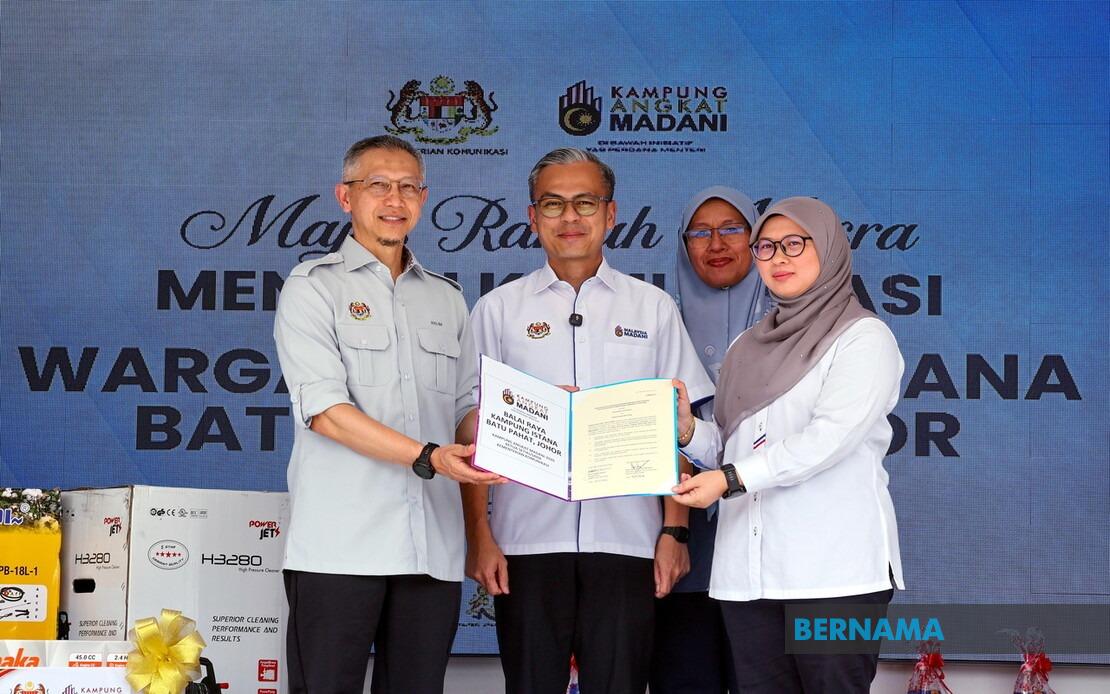
The upcoming 16th Johor State Election represents a pivotal moment for voters to exercise meaningful choice in determining their state's trajectory, according to Pakatan Harapan Communications Director Datuk Fahmi Fadzil. Rather than being framed around individual personalities or their political fortunes, Fahmi contends the election should centre squarely on substantive governance and the state's long-term development. He made these remarks during a community engagement in Batu Pahat, where he met with residents and attended a campaign event alongside PH's candidate for the Penggaram state seat, Felicia Poh Rui Ling, and Communications Ministry Secretary-General Datuk Abdul Halim Hamzah.
Fahmi's intervention addresses recent political commentary linking a potential Barisan Nasional victory to support for former Prime Minister Datuk Seri Najib Razak, particularly following statements by Datuk Nazifuddin Mohd Najib claiming that a BN win would constitute public endorsement for his father to receive a pardon. The PH Communications Minister expressed alarm at such narratives, viewing them as misplaced political discourse that risks obscuring genuine issues affecting Johor residents. His reaction underscores deepening divisions within Malaysia's political landscape regarding how electoral mandates should be interpreted and which matters deserve prominence in campaign messaging.
The distinction Fahmi draws between personal political rehabilitation and collective state welfare reflects broader strategic positioning by Pakatan Harapan as the election approaches. By reframing the contest around governance capacity and economic development, PH seeks to redirect voter attention away from personalities and toward policy platforms and institutional competence. This framing strategy carries particular significance in Johor, historically regarded as Barisan Nasional territory, where shifting voter sentiment could signal broader transformation in Malaysian electoral behaviour.
Fahmi's caution against treating voter support as a permanent entitlement addresses what political scientists term the "fixed deposit" phenomenon, wherein certain communities are assumed to provide automatic or overwhelming support to particular coalitions regardless of electoral circumstances. While he acknowledged previous discourse around non-Malay voters allegedly constituting DAP's unshakeable electoral base, Fahmi contended that no political movement should presume guaranteed support. Instead, he framed political engagement as a continuous process requiring genuine accountability, transparent policymaking, and tangible delivery of public goods and services. This perspective suggests PH recognises that voter loyalty must be constantly renewed through demonstrated performance rather than assumed through demographic patterns.
The Communications Director highlighted recent public endorsements from figures traditionally associated with opposition coalitions as evidence of PH's expanding appeal beyond traditional support networks. He specifically referenced backing from former Rengit assemblyman Datuk Dr Mohd Puad Zarkashi, whose public support for PH candidates contradicted longstanding assumptions about his alignment with UMNO and Barisan Nasional. Such crossover endorsements, Fahmi suggested, indicate shifting political calculations among experienced officials who assess current governance trajectories and future state prospects. The timing and visibility of these declarations carry strategic weight in a competitive election environment where momentum and perceived viability substantially influence voter decision-making.
Additional signals of PH momentum include support mobilised from members of Bersatu for the coalition's candidate in Sri Medan, Hishamuddin @ Misrin Ishak, and Rengit seat backing. These endorsements from individuals embedded within rival political organisations suggest internal reassessment of where effective governance and leadership capability currently reside. For Malaysian observers, such defections or public backing from opposition-aligned figures historically signify either shifting perceptions of party competence or emerging internal tensions within ruling coalitions regarding strategic direction and internal power distribution. Whether these incidents represent early indicators of broader electoral realignment remains uncertain, though Fahmi's public emphasis on them suggests PH intends to leverage such messaging in final campaign weeks.
Fahmi connected these political developments to broader economic considerations, arguing that PH's leadership under Prime Minister Anwar Ibrahim is strengthening Malaysia's economic recovery trajectory in ways that benefit Johor specifically. This linkage between political choice and material prosperity represents conventional campaign messaging, yet carries weight in a state highly integrated into broader national and regional supply chains and capital flows. Johor's strategic location, port infrastructure, and manufacturing base mean that national macroeconomic performance and state-level economic competitiveness interrelate substantially. Voters sensitive to employment prospects, investment climate, and infrastructure quality may indeed perceive connections between state-level governance and national economic momentum that Fahmi's commentary attempts to foreground.
The electoral mathematics reveal a competitive configuration across 56 state seats, with 172 candidates standing for election. This ratio suggests contested races in multiple constituencies rather than foregone conclusions or uncontested dominance by any single coalition. The schedule, with early voting on July 7 and general polling on July 11, creates a compressed campaign period where messaging clarity and voter mobilisation intensity become critical competitive variables. Both Barisan Nasional and Pakatan Harapan must consolidate their respective bases while simultaneously pursuing swing voters susceptible to persuasion through campaign communications and ground organisation.
For Malaysian political observers and Southeast Asian analysts monitoring regional democratic practices, the Johor election carries significance beyond state-level implications. It tests whether Pakatan Harapan can sustain and expand electoral coalitions established during the 2022 general election, or whether voter enthusiasm has moderated following two years of governing responsibility and attendant policy implementation challenges and trade-offs. Conversely, Barisan Nasional's performance will indicate whether the coalition maintains residual dominance in traditionally strong areas or confronts erosion requiring strategic recalibration. The result will likely influence calculations regarding timing and configuration of future national-level contests and broader coalition sustainability in Malaysian politics.
Fahmi's intervention also reflects recognition that control of campaign narrative shapes electoral outcomes substantially. By insisting the election concerns state governance rather than individual political rehabilitation, he attempts to anchor debate within terrain where PH calculations suggest comparative advantage. Whether this framing resonates with voters preoccupied by local concerns—infrastructure, employment, public services, community development—or whether alternative narratives centring on personalities and partisan loyalties prove more persuasive remains to be determined when Johor voters cast their ballots in coming days.

