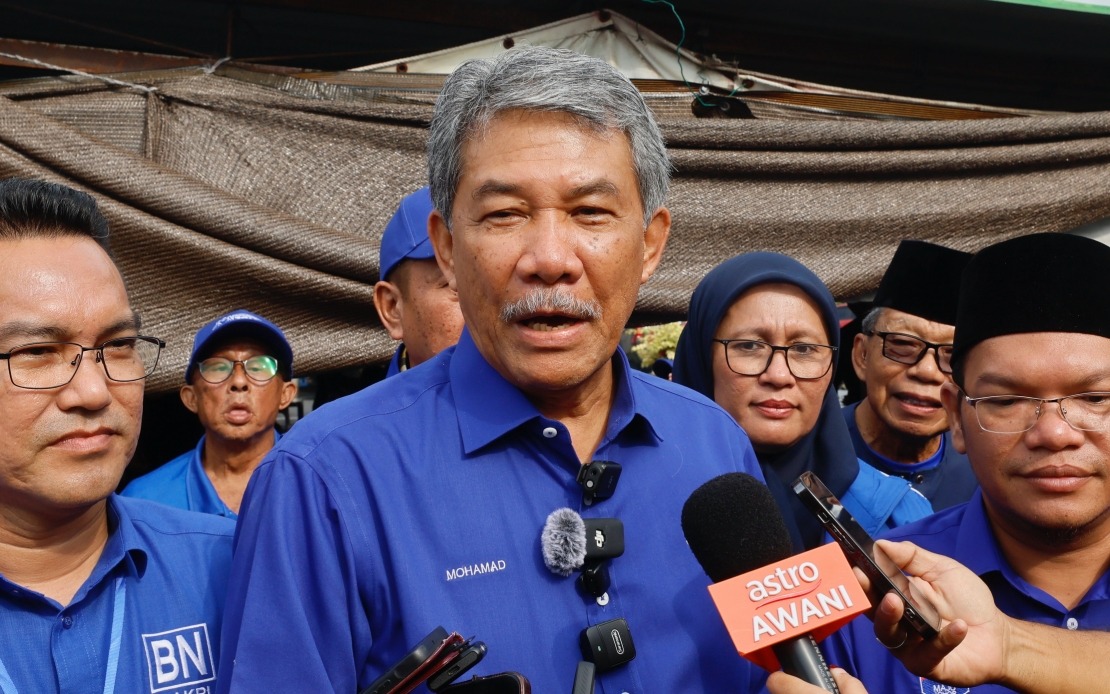
Datuk Seri Mohamad Hasan, UMNO deputy president and Foreign Minister, has called for a mature and measured approach to campaigning in the Johor state election, emphasising the need to preserve national stability as the polls draw near. Speaking during an engagement with constituents from the Tiram state constituency, Mohamad stressed that while political parties have the freedom to present their policy platforms and electoral offerings to voters, such campaigns must not jeopardise the delicate balance of cooperation that underpins the federal government's Unity Government coalition.
The distinction between competitive state-level campaigns and cooperative federal governance represents a key concern for UMNO leadership as Johor prepares for polling on July 11. Mohamad's remarks reflect broader anxieties within the ruling coalition about maintaining cohesion across multiple power-sharing arrangements that span both federal and state levels. The challenge of managing these overlapping political relationships—where parties both cooperate nationally and compete regionally—has become increasingly complex in Malaysian politics, particularly as state elections offer opportunities for parties to test electoral strength without risking overall federal stability.
Mohamad drew an explicit line between substantive policy debate and personal antagonism, indicating that UMNO welcomes rigorous discussion about policy approaches and governing records. However, he cautioned against campaigns that resort to character assassination or unnecessarily inflammatory rhetoric targeting individual opponents. This framing allows parties to campaign vigorously while theoretically preserving professional relationships needed for federal-level cooperation. His comment that "teasing" between political figures is acceptable but personal attacks are not attempts to establish an informal code of conduct for the campaign period, though the practical boundaries between these categories often remain contested during actual elections.
A significant portion of Mohamad's remarks addressed persistent allegations linking the state election to efforts to secure the release or pardon of former Prime Minister Datuk Seri Najib Tun Razak. Such speculation has circulated in political commentary and social media discussions, reflecting the intersection of state politics with high-profile legal proceedings affecting a major UMNO figure. Mohamad categorically rejected these claims as baseless, positioning the Johor state election as a straightforward exercise in forming a state government rather than a vehicle for achieving outcomes in federal legal or constitutional matters.
He elaborated that a Menteri Besar, regardless of party affiliation or political influence, possesses no institutional capacity to influence matters of criminal conviction or pardon. The power to grant clemency rests exclusively with the Yang di-Pertuan Agong, whose prerogative in this domain remains constitutionally protected and politically inviolable. This distinction between state-level executive authority and the Agong's constitutional powers forms a cornerstone of Malaysia's constitutional architecture, and Mohamad's emphasis on respecting this separation reflects broader UMNO positioning that the party operates within established legal and constitutional frameworks. By framing respect for the Agong's authority as paramount, he sought to deflect suggestions that electoral outcomes might be motivated by intentions to circumvent constitutional processes.
The Foreign Minister also reiterated UMNO's foundational commitment to the supremacy of law as an organising principle for the party and the nation. This rhetorical emphasis serves multiple functions: it reassures international partners about Malaysia's institutional stability, reinforces UMNO's positioning as a responsible custodian of constitutional governance, and implicitly contrasts such principles with any suggestion that the party might subordinate legal processes to electoral or factional interests. For Malaysian readers and observers in Southeast Asia, this framing carries significance in the context of broader discussions about democratic governance, judicial independence, and the role of major political parties in upholding institutional norms.
The Johor state election represents the first major electoral test following the formation of the current Unity Government at the federal level. The administration brings together parties historically positioned as rivals, creating a governing coalition that requires coordination across multiple tiers and jurisdictions. Against this backdrop, campaign conduct in Johor takes on wider implications for how such novel coalitions manage internal competition. The election also provides voters with an opportunity to assess state governance independent of federal political dynamics, potentially allowing the Menteri Besar's performance in office to factor significantly in electoral calculations.
On the mechanics of the election itself, July 11 polling will determine the composition of the 56-seat Johor State Legislative Assembly. Early voting is scheduled to proceed before the main polling day, allowing voters unable to cast ballots during regular hours an alternative opportunity to participate. The contest involves 172 candidates competing across the 56 constituencies, indicating that most seats will feature multi-candidate races rather than straight two-way fights. The number of candidates and competitive distribution across constituencies suggests that electoral outcomes may hinge on factors beyond simple two-party competition, potentially including local representation, incumbent performance, and constituency-specific issues.
For regional observers and analysts tracking Malaysian politics, the Johor election offers insights into voting behaviour in one of the federation's most electorally significant states. Johor's geographic size, population, and economic importance mean that electoral outcomes there reverberate across national political calculations. The state's geographical proximity to Singapore and role as a major commercial and logistics hub also means that political stability and governance quality in Johor carry implications for cross-border economic cooperation and ASEAN-level regional engagement.
Mohamad Hasan's intervention as a senior party figure carries the weight of leadership intent to shape campaign tone, suggesting that UMNO is conscious of reputational risks associated with divisive or personalised campaigning. Whether such exhortations prove effective in practice remains to be seen, as campaign dynamics often develop momentum independent of leadership guidance, particularly when grassroots activists and younger party members become involved. The distinction he articulates between legitimate political competition and destabilising personal attacks nonetheless establishes a framework through which UMNO leadership can later assess whether campaign conduct met appropriate standards.
The broader context of the Unity Government—with its complex coalition dynamics spanning federal, state, and local governance levels—creates novel pressures on Malaysian political parties. Managing competition at one level while maintaining cooperation at another requires sustained discipline from party organisations and their members. Mohamad's remarks essentially constitute an argument that such discipline serves everyone's interests, as unconstrained political warfare might undermine the cooperative arrangements that allowed his party to return to federal government after a period in opposition.
As voters in Johor prepare to cast ballots, the election unfolds against this backdrop of coalition management, constitutional principle, and the ongoing evolution of Malaysian democracy. The state's electoral outcome will likely influence calculations about Unity Government stability and may affect how political parties approach subsequent state elections. For Malaysia's broader political trajectory, how parties implement—or fail to implement—the measured campaign conduct advocated by senior figures like Mohamad Hasan will offer important signals about the maturity of its democratic institutions and the willingness of political elites to prioritise institutional stability over short-term electoral advantage.

