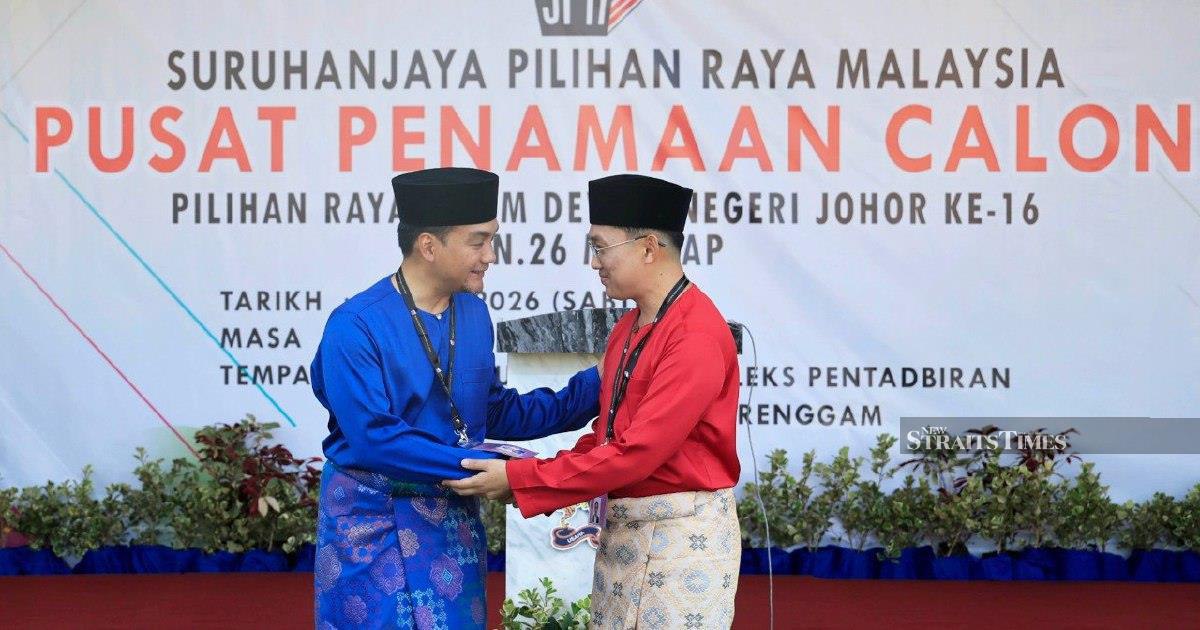
Johor's caretaker Menteri Besar Datuk Onn Hafiz Ghazi has adopted a notably cautious tone regarding his reelection prospects, signalling that the July 11 state election could produce surprising outcomes. Speaking at Simpang Renggam, the incumbent leader acknowledged mounting electoral uncertainties, suggesting that conventional predictions may prove unreliable in what is shaping up to be a keenly contested campaign across multiple constituencies.
Onn Hafiz's measured approach reflects the volatile political landscape that has characterised Malaysian state politics since the 2022 general election. Rather than projecting confidence in an automatic second term, the Menteri Besar's acknowledgement that anything can happen underscores the genuine competitiveness that voters expect from electoral contests. This stance is particularly significant given that incumbent administrations often struggle to retain power during state elections, particularly when economic pressures and local grievances accumulate over a single term.
The Machap state seat, which Onn Hafiz himself contests, appears to be drawing particular scrutiny. His decision to highlight this race in discussions of electoral unpredictability suggests that even stronghold constituencies cannot be taken for granted in this election cycle. Machap has historically been a relatively secure seat for the Menteri Besar's faction, making any suggested vulnerability noteworthy in broader discussions about Johor's political trajectory.
Malaysian state elections have demonstrated remarkable fluidity over recent years, with voters increasingly willing to punish governments perceived as underperforming on bread-and-butter issues. Johor, the wealthiest state economically and traditionally a political powerhouse within the Federation, has not been insulated from these broader democratic currents. The state's position as an economic engine means that development priorities, job creation, and infrastructure investment feature prominently in voters' calculations.
Onn Hafiz's tenure as Menteri Besar began following the 2022 political restructuring that reshaped Malaysia's federal and state administrations. His government has had to navigate the challenging economic environment of the past two years while managing expectations from a diverse electorate spanning urban, semi-urban, and rural constituencies. The decision to call elections now reflects confidence in the timing, yet the leadership's own caution suggests calculations remain finely balanced in numerous contests.
The phenomenon of electoral unpredictability has also been amplified by voter fatigue with traditional political messaging and increased demand for performance-based accountability. Johor voters, particularly younger demographics, have shown willingness to evaluate candidates on concrete delivery rather than party affiliation alone. This shift has made previously safe seats genuinely competitive and transformed the electoral environment in ways that previous administrations could not anticipate.
Regional observers note that Johor's election serves as a bellwether for broader political sentiment within the southern economic corridor. The state's industrial base, port facilities, and manufacturing sector mean that business confidence—itself influenced by political stability and regulatory predictability—carries weight in electoral outcomes. Candidates and parties are therefore scrutinised not merely for political rhetoric but for their demonstrated competence in economic stewardship.
Onn Hafiz's willingness to publicly acknowledge electoral uncertainty may also represent strategic positioning that downsets expectations, potentially rendering any margin of victory—regardless of size—appear meaningful to supporters. Conversely, such statements could energise opposition candidates and activists who may interpret caution as evidence of genuine vulnerability. The psychological dimensions of political communication therefore extend beyond simple message delivery to encompass the broader narrative surrounding electoral momentum.
The July 11 election will determine not only Johor's direction but also shape perceptions about which political coalitions and leadership models resonate with Malaysian voters heading toward the next general election. Johor's historical significance as a political foundation for multiple federal administrations means that outcomes here reverberate across the national political system. The state's result will be interpreted as commentary on the Federal government's performance and the viability of competing political narratives about Malaysia's future.
For Onn Hafiz personally, the election represents both opportunity for validation through reelection and risk of losing momentum should the electorate signal desire for alternative direction. His circumspect approach to the campaign thus reflects the genuine stakes involved in state-level politics, where Malaysian voters have repeatedly demonstrated their capacity to deliver surprising mandates when motivated by specific grievances or attracted to particular candidates.

