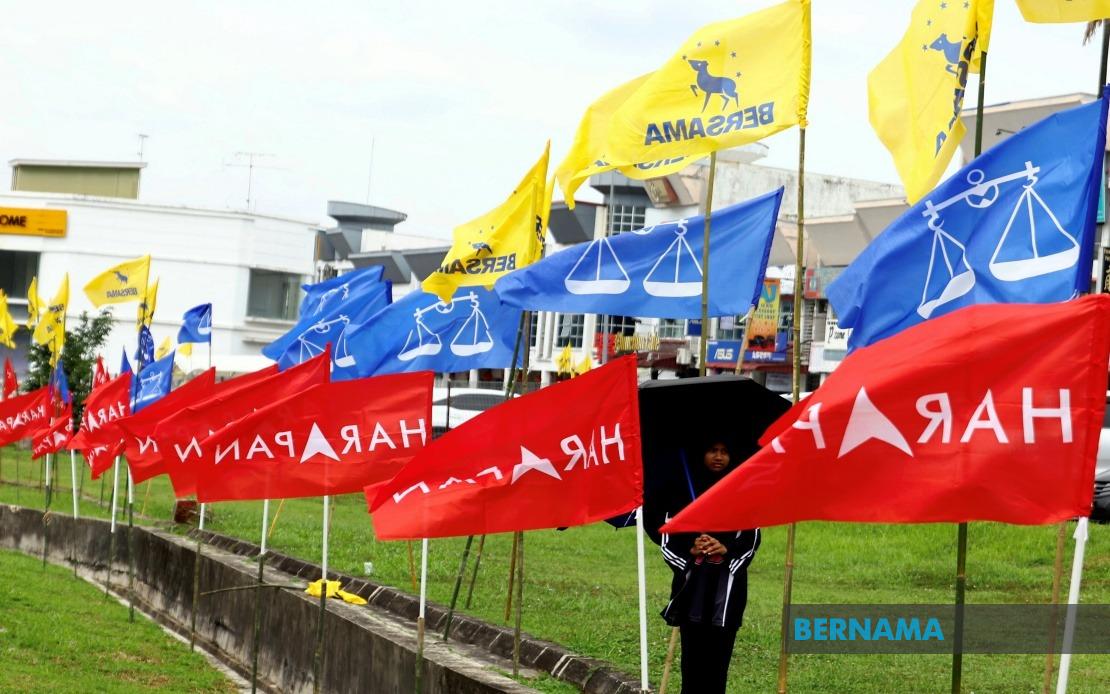
Johor's much-anticipated state election concludes its final campaign hours tonight at 11.59 pm, after a fortnight of intensive politicking by contending parties seeking to secure voter support. Tomorrow's contest represents a critical juncture for the country's most economically significant state outside the Federal Territories, as 2.7 million eligible voters across 1,076 polling centres will cast their ballots to determine which parties steer Johor's governance for the next five years. The scale of this electoral exercise, whilst substantial, involves fewer candidates than its predecessor—172 individuals contesting the 56 state assembly seats, compared to 239 in the previous poll held in 2022.
Campaigning formally commenced on June 27, providing the Election Commission (EC) and political parties a two-week window to mobilise supporters and articulate their visions for the state. From 8 am tomorrow onwards, voting will proceed at designated polling centres statewide, with the EC anticipating full results could be announced as early as 10 pm. The compressed candidate field this time around suggests either stricter party discipline or reduced splinter activism, though the contest remains competitive given the plurality of coalition options on the ballot. The final campaign push on the eve of polling witnessed simultaneous appearances by major federal figures, with Prime Minister Datuk Seri Anwar Ibrahim representing Pakatan Harapan (PH) and Deputy Prime Minister Datuk Seri Dr Ahmad Zahid Hamidi championing Barisan Nasional (BN), underscoring the national significance both coalitions attach to Johor.
An early voting process was successfully concluded last Tuesday, encompassing 20,607 members of the Malaysian Armed Forces (ATM), Royal Malaysia Police (PDRM), General Operations Force (PGA) and their spouses. This mechanism ensures security personnel and their families can participate despite operational commitments, a practice now routine in Malaysian electoral administration. The early voting results, though small in proportion to the overall electorate, provide preliminary signals about mobilisation effectiveness and institutional support patterns that analysts customarily monitor.
Themed largely around bread-and-butter concerns, the two-week campaign centred on cost-of-living pressures, economic reinvigoration, employment creation and welfare provision—issues resonating acutely in Johor given its status as Malaysia's industrial and commercial heartland. These themes transcended coalition boundaries, reflecting genuine public anxiety about household finances and job security amid volatile economic conditions. Political parties invested considerable resources translating these messages into ground-level engagement and digital outreach, attempting to convert abstract policy commitments into voter conviction.
According to Dr Nazreena Mohammed Yasin, a political analyst at Universiti Tun Hussein Onn Malaysia (UTHM), voter turnout emerges as the paramount indicator of whether campaign sentiment solidifies into electoral outcomes. She cautioned against treating turnout as a monolithic phenomenon applicable across all constituencies, noting that its impact varies significantly according to locational and demographic factors. In certain marginal seats, elevated turnout could prove determinative, yet elsewhere it may exert negligible influence on results. Rather than serving as a definitive victory predictor for any single party, turnout functions more as a variable shaping electoral dynamics particularly in narrowly-divided constituencies. The 2022 Johor election witnessed overall turnout of 54.92 per cent, establishing a benchmark against which tomorrow's participation rates will be measured.
Dr Nazreena further emphasised that party machinery effectiveness—specifically each organisation's capacity to mobilise supporters and execute competent polling-day operations—becomes crucial in tightly contested seats. The undecided voter bloc represents another wild card; fence-sitters contemplating their choices until the last moment possess disproportionate power in constituencies featuring tight victory margins. Comparative analysis of shifting victory margins between this and the previous election will illuminate whether particular parties have consolidated or eroded their support bases. She suggested election results should ultimately be interpreted through multiple lenses: public assessment of government performance, candidate credibility, perceived political stability and each party's demonstrated capability addressing economic challenges and inflation—essentially a retrospective judgment on incumbent competence.
Associate Professor Dr Mazlan Ali of Universiti Teknologi Malaysia (UTM) identified political stability as the dominant campaign narrative propagated by both major coalitions. He noted that BN and PH, leveraging their respective performances at federal and state levels alongside their roles within the Unity Government arrangement, have predominantly framed stability as their core message. Whilst various parties unveiled manifestos and policy pledges throughout the campaign, Dr Mazlan observed that voters increasingly calibrate decisions against tangible track records and demonstrated delivery on previous commitments rather than aspirational promises. This voter sophistication reflects accumulated electoral experience and public wariness of unfulfilled pledges from successive election cycles.
Dr Mazlan anticipated heightened public interest surrounding this election would translate into elevated voter participation, thereby magnifying the significance of each individual ballot. Johor's economic importance and its role as a bellwether for broader political trends intensify national media attention and voter engagement. The contest involves an unusually wide range of political options: BN fielding 56 candidates, PH likewise contesting all 56 seats, Perikatan Nasional standing 33 hopefuls, Parti Bersama Malaysia presenting 15, MUDA nominating four, plus single representatives from Parti Orang Asli Malaysia and Parti Sosialis Malaysia, alongside six independent candidates. This diversity reflects Malaysian electoral pluralism, though the practical contest revolves primarily around BN-PH competition.
Prior to the Johor State Legislative Assembly's dissolution on June 1, the chamber's composition reflected BN dominance with 40 seats, PH occupying 12 seats, Perikatan Nasional holding three and MUDA commanding one seat. Tomorrow's election will substantially reshape this distribution, with consequences extending beyond Johor's boundaries into federal coalition mathematics and national political stability. A decisive BN or PH victory would reinforce respective coalitions' mandates, whilst a closer result might necessitate post-election negotiations affecting both state and potentially national governance arrangements. Johor voters thus shoulder responsibility not merely for their state's immediate future but for signalling broader patterns of political preference applicable across Malaysia's complex constitutional landscape.

