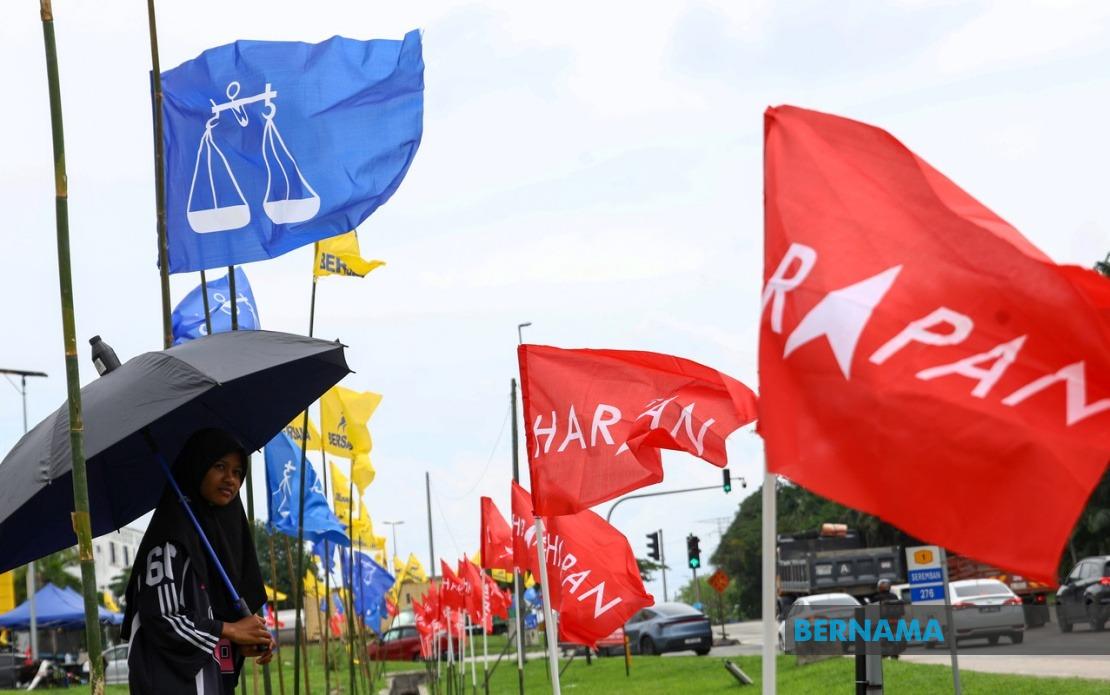
Pakatan Harapan's performance in the Johor state election carries implications far beyond regional politics, according to DAP secretary-general Anthony Loke, who framed the contest as a referendum on democratic governance and institutional oversight. Speaking at a DAP gathering in Kluang on July 3, Loke articulated a core argument underpinning the opposition coalition's campaign: that competitive electoral outcomes strengthen rather than destabilize state administration by preserving mechanisms of parliamentary scrutiny and policy contestation.
The argument reflects a strategic pivot in how Malaysian opposition parties position themselves ahead of major electoral tests. Rather than appealing solely to discontent with the incumbent administration, PH is advancing a governance narrative centred on systemic resilience. Loke contended that concentrated political power within a single bloc eliminates the institutional friction necessary for accountable administration, from parliamentary questioning to budgetary oversight. This framing resonates particularly in Johor, where the ruling Barisan Nasional coalition has exercised substantial control over the state apparatus for decades, creating what opposition figures characterise as unchecked executive authority.
The stakes appear particularly acute given Johor's size and economic significance within Malaysia's federal structure. As the nation's second-largest state by population and a major contributor to the national economy, Johor's governance trajectory influences broader patterns of democratic competition and administrative practice. An opposition breakthrough here would establish a precedent for multi-party administration in one of Malaysia's most politically consequential territories, potentially reshaping expectations about power-sharing and institutional checks across the peninsula.
PH's decision to field candidates across all 56 state assembly constituencies demonstrates organizational commitment to a comprehensive challenge to BN's dominance rather than a tactical contest for specific seats. This blanket candidacy strategy signals confidence in the coalition's campaign machinery and suggests a deliberate choice to contest the ideological and institutional question directly: whether Johor voters prefer consolidated single-party governance or distributed political power. The move also mirrors national-level opposition strategy, where PH seeks to position itself not merely as an alternative government but as a different model of state operation altogether.
The broader July 11 election context encompasses 172 candidates competing across the 56 seats, with early voting scheduled for July 7. This competitive field means that outcomes will likely reflect not just PH-versus-BN dynamics but also the viability of smaller parties and independent candidates in breaking through entrenched electoral patterns. For Malaysian observers, the Johor result will offer significant data points about whether opposition consolidation around the PH banner translates into electoral gains comparable to the 2018 federal breakthrough, or whether the subsequent realignment has diminished the coalition's mobilizing capacity.
Loke's emphasis on preventing single-coalition dominance carries particular resonance given Malaysia's historical experience with governance concentration. The DAP leader's framing moves beyond conventional oppositional rhetoric to engage substantive questions about administrative effectiveness, legislative scrutiny, and policy responsiveness. His argument implicitly acknowledges that dominant-party systems, while providing administrative continuity, can reduce incentives for performance optimization and increase vulnerability to patronage-driven decision-making. Competitive multiparty environments, by contrast, create pressure for demonstrable policy competence and transparent resource allocation.
The presence of senior DAP figures including deputy national chairman Nga Kor Ming and deputy secretary-general Steven Sim Chee Keong at the campaign event underscores the national party leadership's investment in Johor outcomes. This level of central coordination suggests that PH strategists view the state election as a bellwether for federal-level prospects, and that organizational resources are being allocated accordingly. The Johor result will likely influence calculations about timing and strategy for potential national elections, making the state contest significant beyond its immediate electoral dimensions.
For Malaysian observers concerned with institutional development and democratic deepening, the Johor election presents a test of whether opposition parties can effectively communicate governance-centred messages beyond protest voting against incumbent dissatisfaction. If Loke's emphasis on checks and balances resonates with voters and translates into electoral gains, it would suggest that Malaysian electorates are receptive to arguments about systemic accountability and institutional design. Conversely, if such messaging fails to move voter behaviour meaningfully, it would indicate that Malaysian electoral outcomes remain driven primarily by economic grievance, ethnic-communal mobilization, and incumbency factors rather than abstract governance principles.
The stakes for PH specifically include both immediate parliamentary representation and long-term coalition viability. The coalition's three components—PKR, DAP, and Amanah—maintain distinct organizational bases and policy priorities, with Johor results influencing internal party positioning and coalition cohesion. A strong showing would strengthen moderate voices within PH advocating coalition continuity and expansive governance ambitions, while a disappointing result might embolden those questioning the coalition's electoral future and strategic direction.
Regionally, Johor's political evolution carries implications for Southeast Asian democratic practice and opposition party dynamics across the peninsula and beyond. As Malaysian opposition parties navigate post-transition challenges and attempt to sustain electoral competitiveness against entrenched incumbents, their strategic choices and messaging frameworks offer instructive lessons for regional actors facing similar governance contests. The emphasis on institutional checks and democratic balance rather than personality-driven or zero-sum power competition represents a potentially important evolution in opposition political strategy within the Southeast Asian context.

