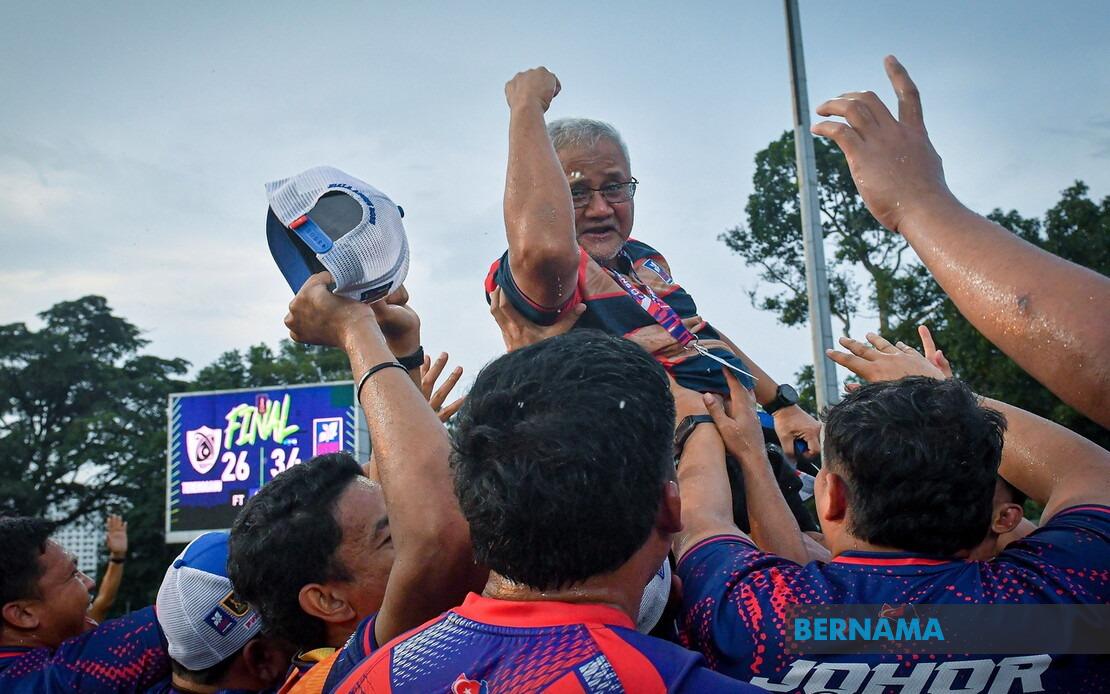
Johor rugby has returned to the championship podium after nearly a decade away, securing the 42nd Agong's Cup with a decisive 34-26 victory over Terengganu at the Universiti Teknologi MARA Stadium in Shah Alam. The triumph represents a significant milestone for the southern state's rugby programme, which had last tasted glory in 2017, ending one of the longest championship droughts in the tournament's modern history.
The final unfolded as a compelling narrative of resilience and tactical adjustment. Terengganu dominated the opening period, establishing a 19-17 advantage at the interval and appearing positioned to claim their own championship moment. However, Johor's coaching staff orchestrated a comprehensive second-half transformation, with the team fundamentally shifting their approach to exploit weaknesses in Terengganu's defensive structure. This comeback victory underscores the importance of adaptability in rugby union, where momentum swings and tactical recalibrations frequently determine outcomes in high-stakes encounters.
For Johor, this championship marks only the third occasion they have captured rugby's most coveted domestic trophy. Their first triumph arrived in 2013, establishing a foundation for sustained competitiveness. The nine-year gap since their 2017 victory had raised questions about the sustainability of the state's rugby infrastructure and player development pathways, concerns that this victory decisively answers. The turnaround suggests investment in coaching, recruitment, and training methodologies has yielded tangible results at the highest competitive level.
The tournament's third-place playoff delivered its own drama, with Kelantan edging the Royal Malaysia Police in an extraordinarily tight contest that finished 43-41. This result highlights the competitive equilibrium characterizing Malaysian rugby at present, where multiple states possess the capability to compete at elite levels. The narrow margins separating top-four finishers indicate that success increasingly depends on fine margins—execution, individual brilliance, and psychological resilience under pressure.
Monetary recognition reflected the hierarchical finishing positions, with Johor pocketing RM20,000 as champions, substantially more than Terengganu's runner-up prize of RM15,000. Third-placed Kelantan received RM10,000, while PDRM claimed RM5,000 for fourth position. These financial awards, though modest by international sporting standards, remain significant within Malaysia's domestic rugby ecosystem, where institutional funding and sponsorship opportunities remain constrained compared to football and other mainstream sports.
Aqasha Daniel Irwan's recognition as the tournament's most outstanding player, accompanied by RM1,000 in prize money and a commemorative plaque, acknowledges individual excellence within Johor's championship campaign. Such awards function beyond mere recognition; they establish benchmarks for aspiring players and create tangible incentives for peak performance. Irwan's selection suggests he delivered consistently impactful contributions throughout the tournament, likely combining ball-handling proficiency, defensive intensity, and decision-making acumen.
The 42nd Agong's Cup maintains its position as Malaysian rugby's premier domestic competition, drawing the nation's strongest provincial and organisational teams into competition. The tournament's prestigious history and royal patronage underscore rugby union's institutional importance within Malaysia's sporting hierarchy, despite significantly lower public visibility compared to football or badminton. Hosting the final at UiTM Stadium in Shah Alam provides appropriate infrastructure for a championship fixture, accommodating growing spectator interest and media coverage.
For Malaysian rugby's broader development trajectory, Johor's resurgence holds meaningful implications. State-level success generates local interest, encourages youth participation, and establishes pipelines feeding the national representative system. Players who excel in domestic competition become available for national squad consideration, strengthening Malaysia's capacity to compete in regional tournaments and World Cup qualifiers. Johor's demonstrated ability to compete at championship standard suggests the state possesses coaching expertise and player talent that could contribute to Malaysia's regional standing.
Terengganu's runner-up finish, despite their strong first-half performance, indicates the team possesses genuine competitive capacity. Their ability to establish and sustain a first-half advantage against an ultimately superior opponent suggests their rugby infrastructure has developed substantially. For the state to progress toward championship success, addressing second-half performance management and maintaining tactical discipline under pressure will prove essential. Such refinements typically emerge through continued competition and targeted coaching interventions.
The competitive landscape revealed across the 42nd Agong's Cup—with four states demonstrating genuine championship-calibre capacity—suggests Malaysian rugby has achieved a degree of competitive distribution previously absent. Rather than dominance concentrating among historical powerhouses, contemporary success depends increasingly on sustained institutional investment, coaching quality, and strategic player recruitment. This distribution benefits the sport's long-term health by creating multiple compelling narratives and maintaining broader stakeholder engagement.
Looking forward, Johor's management will prioritize maintaining this championship momentum through sustained player development and infrastructure investment. The nine-year gap between their 2017 and 2025 triumphs illustrates how quickly competitive advantage can dissipate without consistent programmatic focus. Defending their crown will require matching their current intensity and capitalizing on the confidence and experience this victory provides to their squad.

